

Yesterday we were talking about rabbits.
Not the sort that sit politely at the edge of the garden, but the troublesome ones. The ones that appear for half a second, vanish into the undergrowth, and somehow convince you that following them is a perfectly reasonable way to spend an afternoon.
We have been doing quite a bit of that lately on Unplugged Pagan.
Following names.
Following books.
Following old festivals and forgotten communities.
Following ideas through academic papers, fieldwork, memories, rituals, histories and places until one question becomes another question, and that question opens a door into something we were not really looking for when we began.
This particular rabbit started with six names:
Shelley Rabinovitch. Dodie Graham McKay. Martin Lepage. Marisol Charbonneau. Marion Bowman. Barbara Jane Davy.
They did not all ask the same questions.
They did not all study the same communities.
They did not all approach Paganism from the same academic discipline, the same period, or even the same relationship to the communities they were describing.
And that matters.
Before we go any farther down this rabbit hole, there is something worth saying clearly.
The observations that follow did not simply appear out of thin air.
They exist because people did the work.
They interviewed practitioners. They attended gatherings. They observed rituals. They read histories. They documented communities that might otherwise have left very little public record. They wrestled with questions of identity, ethnicity, gender, ancestry, nature, ecology, ritual and belonging.
Some of them spent years doing it.
There is a tendency, especially online, to grab one interesting sentence from a scholarly work, turn it into a meme-sized idea, and forget the person who spent hundreds or thousands of hours getting us to that sentence.
I do not want to do that here.
So this rabbit hole is partly ours.
But the trail was cut by others long before we arrived.
What Happens When We Put Their Work Beside One Another?
At first I expected the common thread to simply be Paganism.
That would be the obvious answer.
Rabinovitch documented modern Pagan and Witchcraft communities and helped map the extraordinary diversity existing beneath those labels.
Charbonneau examined contemporary Paganism in Montreal and explored how ethnicity, language, diversity and cultural setting influenced the form Paganism took there.
Lepage went deeper into that same Montreal landscape and examined ritual, gender, sexuality and queer identity.
Bowman studied nature, Pagan identity and what scholars often call vernacular religion: religion not merely as institutions define it, but as ordinary people actually live it.
Graham McKay documented Canadian Pagan communities from within their lived world: gatherings, festivals, sacred places, people, stories and the strange collection of relationships that eventually turns an event into a community.
Davy has examined contemporary Heathen ritual, ancestors, gifting, ecology, reciprocity and the relationships created among humans, land, gods, ancestors and other-than-human beings.
Six people.
Six bodies of work.
Many different questions.
But when those bodies of work are placed beside one another, something begins appearing beneath the differences.
And I do not think that something is belief.
I think it is relationship.
Perhaps that is where we have been looking in the wrong direction all along.
Maybe Belief Was Never the Centre
When we ask what a religion is, we have been trained to begin with belief.
What do its followers believe about God?
What do they believe about death?
What scripture do they follow?
What commandments govern them?
What doctrines define who belongs and who does not?
That works reasonably well when discussing religions built around formal creeds, scriptures and institutions.
Then we wander into Paganism carrying the same measuring stick and immediately run into trouble.
What do Pagans believe about the gods?
Well.
Which Pagans?
Some speak to gods as beings with wills, personalities and presence.
Some understand them through myth and archetype.
Some speak primarily of spirits.
Some of ancestors.
Some of land.
Some of divinity woven through nature.
Some comfortably hold several of those possibilities at once and feel no great need to solve the theological puzzle for anyone else.
Ask what happens after death and the trail branches again.
Ask which scripture defines Paganism and there is silence.
Ask who has the authority to decide what Paganism believes and somewhere, I suspect, a thousand Pagans begin arguing before the question has even finished being asked.
Perhaps that is not a weakness.
Perhaps we have simply been asking Paganism to behave like religions built very differently from it.
Maybe the question is not:
What must Pagans believe?
Maybe the more revealing question is:
What relationships are Pagans trying to establish, maintain and understand?
Once you ask that, the landscape changes.
Paganism Happens Between Things
This is where I think the work of these scholars begins quietly speaking to one another.
Not because they all made the same argument.
They did not.
This is my synthesis of what becomes visible when their work is viewed together.
Paganism keeps appearing in the spaces between things.
Between a person and a god.
Between a person and the land beneath their feet.
Between the living and the dead.
Between a community and the place where it gathers.
Between inherited tradition and contemporary experience.
Between personal identity and collective expectation.
Between memory and the present.
Between who we were told we should be and whoever we are slowly becoming.
Marion Bowman’s work is especially valuable here because vernacular religion asks us to pay attention to religion as people actually live it.
Religion does not exist only in books, temples or official statements.
It happens around kitchen tables.
At gravesides.
On pilgrimages.
In family traditions.
At festivals.
In stories.
Around fires.
In the strange little practices people repeat because somewhere along the line those practices became meaningful.
People inherit traditions, but they also interpret them.
They adapt them.
They combine them.
They forget parts.
Recover others.
Create something new.
Religion remains alive because someone keeps entering into relationship with it.
Marisol Charbonneau’s work in Montreal shows us another part of that process.
Paganism grows somewhere.
And wherever it grows leaves fingerprints upon it.
Language matters.
Ethnicity matters.
Culture matters.
History matters.
The people in the room matter.
The city outside the ritual space matters.
Montreal is not merely the location where Paganism happens.
Montreal becomes part of the Paganism being lived there.
Martin Lepage follows another trail through that same forest and encounters gender, sexuality and queer identity.
Again, Paganism is doing more than transmitting doctrine.
Ritual becomes a place where human beings ask questions about themselves.
Who am I?
What was assigned to me?
What did I inherit?
What do I accept?
What do I reject?
What may I become?
And what happens when those questions are carried into sacred space?
Shelley Rabinovitch’s work helps us see just how diverse the modern Pagan landscape actually is.
The word Pagan does not resolve the differences.
It contains them.
Witches, reconstructionists, polytheists, ceremonial practitioners, nature-centred traditions, magical traditions, devotional traditions and all manner of things living somewhere around their edges.
That diversity itself becomes important.
There may never have been a single theological centre to discover.
Dodie Graham McKay brings us out of theory and onto the ground.
Festivals.
Communities.
Campgrounds.
Work weekends.
Rituals.
Stories.
People returning year after year.
People teaching.
People building things.
People remembering.
People arguing.
People belonging.
Her work reminds us that religion is not only what a community says it believes.
It is what people actually do together.
And then Barbara Jane Davy takes us into a particularly deep part of the woods.
Gift.
Reciprocity.
Ancestor.
Ritual.
Land.
Ecology.
Relationship.
Her work on contemporary Heathenry gives scholarly language to something that practitioners may understand almost instinctively:
We do not exist alone.
We exist within networks of relationship.
And relationships create consequences.
Nothing Stands Alone
There is something quietly Pagan about that idea even before we attach the name of a god to it.
Nothing stands entirely by itself.
The tree outside the window exists in relationship with soil, water, fungi, insects, birds, sunlight and weather.
The fire exists because someone gathered wood.
The wood exists because something grew.
The person tending the fire learned how from someone, somewhere.
Perhaps from a parent.
Perhaps from another Pagan.
Perhaps from a book written by someone long dead.
The story being told beside that fire came from another story.
The ritual contains gestures borrowed from another ritual.
The words have histories.
The symbols have travelled.
Even the solitary Pagan sitting alone beneath a tree is surrounded by relationships.
The solitude is real.
But so is the web.
Perhaps Paganism has always lived somewhere inside that tension.
Individual experience woven into something larger.
Not in the object.
In the connection.
The Land Remembers
This also changes how we understand sacred places.
Land is spoken about rather casually in modern spirituality.
Connect with nature.
Honour the land.
Walk barefoot.
Sit beneath a tree.
All fine things.
But relationship with place becomes very different when time enters the picture.
Walk the same path for twenty years and it is no longer simply a path.
Light the same fire every autumn and eventually that fire carries memory.
Hold rituals beside the same well.
Scatter ashes beneath the same trees.
Celebrate births there.
Mourn deaths there.
Meet friends there.
Lose friends there.
Work the soil.
Carry stones.
Repair fences.
Build shrines.
Tell the story about what happened beneath a certain tree fifteen summers ago.
Eventually the landscape stops being scenery.
It becomes biography.
This is part of what makes Davy’s work around Heathen ritual and Raven’s Knoll so interesting.
A ritual performed repeatedly in a place does something more than commemorate an old story.
It creates relationships among the participants, the ritual, the remembered past and the land where the ritual occurs.
That does not require us to solve every metaphysical question about sacred places.
We can observe what happens.
People remember.
People return.
People care for places.
They attach stories to them.
They behave differently toward them.
The geography gathers meaning.
A place becomes sacred not because someone printed the word sacred on a map.
It becomes sacred because relationships accumulate there.
And perhaps, sometimes, the place returns the favour.
Community Is Built the Same Way
Community may not be terribly different.
We sometimes speak about Pagan community as though it comes automatically with the label.
A Pagan festival is announced.
Pagans arrive.
Therefore Pagan community exists.
But the work documented by people like Graham McKay, Charbonneau, Lepage, Rabinovitch and Davy suggests something far more complicated.
Perhaps community is not simply a noun.
Perhaps community is something people keep doing.
Someone arrives early and helps another person put up a tent.
Someone teaches a workshop.
Someone brings extra coffee.
Someone tends the fire after most people have gone to bed.
Someone welcomes the newcomer standing awkwardly at the edge of the circle.
Someone cooks.
Someone cleans.
Someone performs ritual.
Someone remembers the names of people who are no longer there.
Someone keeps returning.
Years pass.
Children grow up.
People age.
Traditions change.
Arguments happen.
Friendships form.
Friendships break.
New people arrive.
Old stories become community folklore.
And somewhere along the way a collection of individuals becomes something resembling a people.
That may be why the loss of spiritual community can hurt so deeply.
You have not merely lost access to an event.
You may have lost relationships.
A fire you knew.
A path you walked.
A ritual calendar that helped divide your year.
Jokes nobody outside the group understands.
People who remember earlier versions of you.
Places where pieces of your life happened.
When people say, “It was home,” perhaps they are not speaking metaphorically at all.
Perhaps home is simply what we call a place where enough relationships have gathered.
Even the Past Is a Relationship
Then there is history.
Pagans can become wonderfully obsessive about history.
Was this ritual really ancient?
Did the Norse actually do this?
Did Druids believe that?
Where did this symbol come from?
Is this authentic?
Was this reconstructed in 1973 and then somehow transported backward into the Iron Age by the internet?
Those questions matter.
The scholars matter here too.
Part of the gift of scholarship is that somebody does the uncomfortable work of checking our stories.
They compare sources.
They question assumptions.
They distinguish evidence from folklore.
They point out when a beautiful story is probably modern.
Sometimes that ruins a perfectly good legend.
Good.
History deserves better than being used merely as decoration.
But scholarship can also teach us something subtler.
The past reaches us in fragments.
Stories.
Artifacts.
Names.
Folklore.
Burial goods.
Poetry.
Language.
Later accounts.
Archaeology.
Reconstructed possibilities.
And enormous stretches of silence.
We are not ancient Celts.
We are not Viking Age Norse farmers.
We are not living in pre-Christian Europe.
We stand here.
Now.
So every attempt to build a modern Pagan practice from the past requires a relationship between evidence and imagination.
Between inheritance and reconstruction.
Between what we know and what we desperately wish we knew.
Honesty lives somewhere inside that space.
Perhaps we do not honour the past by pretending the centuries between us never happened.
Perhaps we honour it by acknowledging the distance.
Learning what can be learned.
Admitting what cannot be known.
And still finding ways to carry something living forward.
Relationship Is Not Always Comfortable
And then the rabbit reaches the difficult part.
Relationships create obligations.
Barbara Jane Davy’s work on reciprocity and gifting makes this particularly difficult to ignore, but I think the question echoes through the work of all six.
If I claim relationship with land, what do I owe the land?
If I claim relationship with gods, what does devotion ask of me?
If I claim relationship with ancestors, which ancestors do I mean?
If I claim relationship with history, what obligation do I have to tell the truth about it?
If I claim relationship with community, what happens when community becomes inconvenient?
If I call someone kin, what does that word mean when agreement disappears?
If I borrow ritual or symbolism from another culture, what responsibilities come with that borrowing?
If I say a place is sacred, how should I behave toward it?
Suddenly Paganism is no longer merely about identity.
It becomes a question of conduct.
Not:
What label do I wear?
But:
What do my relationships require of me?
That is a much harder question.
An altar can be photographed.
A necklace can be worn.
A label can be placed in a biography.
Relationship has to be lived.
So What Is Paganism?
After wandering through the work of Rabinovitch, Graham McKay, Lepage, Charbonneau, Bowman and Davy, I find myself circling around a definition we have been slowly developing here at Unplugged Pagan.
Not because these scholars collectively wrote this definition.
They did not.
This is my synthesis of the landscape their work helps reveal.
And it should be presented as exactly that.
A reader standing upon foundations laid by people who spent years examining different pieces of the Pagan world and asking what those pieces might tell us.
From that vantage point, perhaps we can say:
Paganism is a lived and relational religious practice through which people establish and maintain relationships with gods, ancestors, land, community, memory and self, using historical inheritance, personal experience and contemporary reconstruction while remaining accountable for how those relationships are represented and enacted.
It is not a creed.
It is not the definition.
I doubt the Pagan world would tolerate a definitive definition for more than fifteen minutes anyway.
But perhaps it describes the shape of something.
The gods differ.
The myths differ.
The rituals differ.
The histories differ.
Languages differ.
Traditions disagree.
Practitioners contradict one another.
And yet again and again, in community after community and study after study, human beings appear reaching outward.
Toward gods.
Toward land.
Toward ancestors.
Toward one another.
Toward story.
Toward memory.
Toward identity.
Toward something beyond the small border of the individual self.
Perhaps Paganism is not a single road.
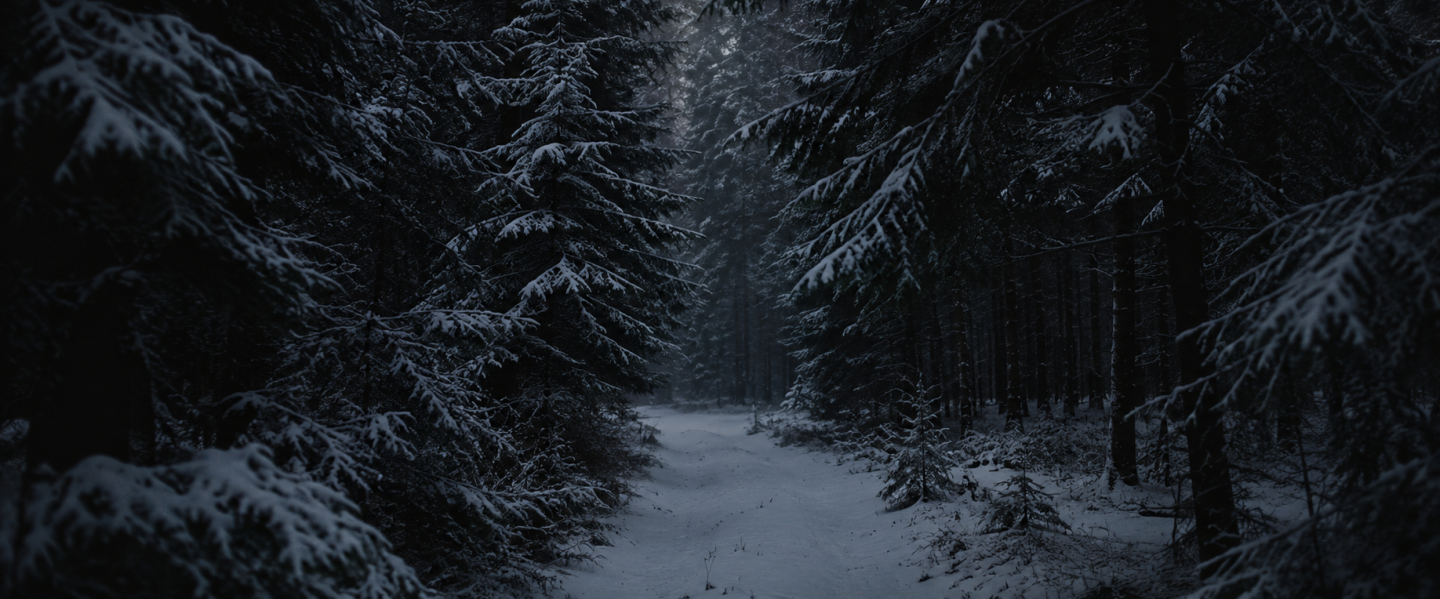
Perhaps it is more like an old forest.
There are hundreds of paths through it.
Some ancient.
Some newly cut.
Some carefully reconstructed from old maps.
Some little more than deer trails vanishing beneath the ferns.
And scattered through that forest are people who have spent years mapping portions of it.
Rabinovitch mapped some trails.
Bowman mapped others.
Charbonneau walked through Montreal.
Lepage followed paths through ritual and identity.
Graham McKay recorded the gathering places.
Davy followed the trail into ritual, gifting, ancestors and ecology.
None mapped the entire forest.
Neither will we.
But because they walked carefully, took notes, asked questions and left markers behind, those of us coming later can see farther than we could have seen alone.
That is worth acknowledging.
Scholarship does not remove the mystery from Paganism.
At its best, it teaches us where the mystery actually begins.
And perhaps beneath all those paths are roots.
Crossing.
Entangling.
Sharing soil.
Touching things we cannot see from the surface.
Maybe that is the common thread.
Not that Pagans believe the same things.
We quite obviously do not.
Perhaps the common thread is that Paganism repeatedly asks us to enter into relationship.
With something.
With someone.
With somewhere.
And then, sooner or later, comes the question that may matter far more than what we call ourselves:
What does that relationship ask of us?
Six scholars helped lead us to the edge of that question.
We simply followed the rabbit a little farther.
There it goes again.
Godspeed.


