
There is a strange thought that has been sitting with me:
At some point, the absent began commanding the living.
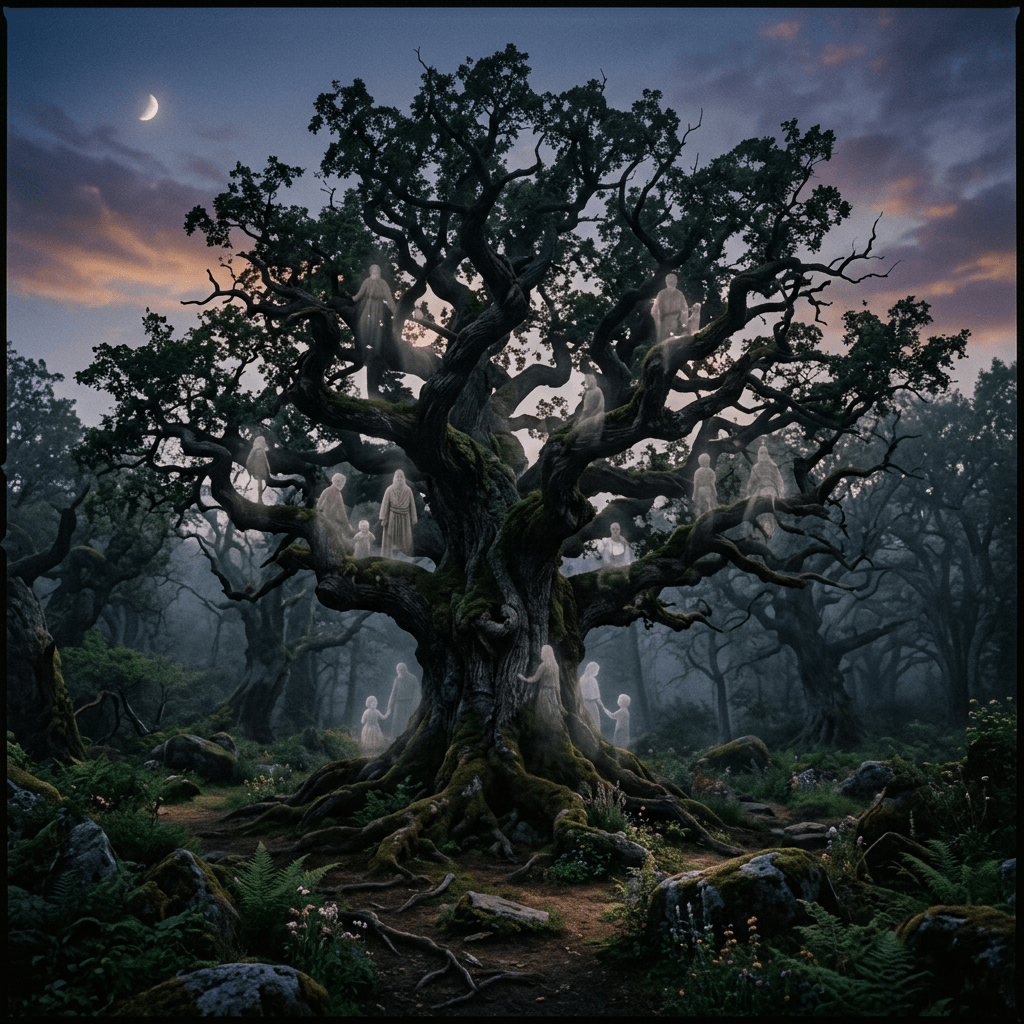
By absent, I mean the dead first and foremost. The ancestors. The ones no longer sitting at the table. The ones whose boots no longer touch the floor, whose hands no longer open the door, whose voices no longer call down the hallway.
And yet, somehow, they still speak.
Not always as ghosts in the Hollywood sense. Not always as whispers in the dark or footsteps in an empty room. Sometimes the dead speak through habit. Through guilt. Through family sayings. Through inherited land. Through old wounds. Through recipes, tools, songs, photographs, names, graves, and promises made long before we understood the weight of making them.
The dead do not need to be alive to shape the living.
That may be one of the oldest truths mankind ever discovered.
The Human World Is Full of Absence
Animals live close to what is present. Hunger. Weather. Danger. Mating. Offspring. Territory. Pain. Sleep. The immediate world presses against them, and they respond.
Humans do something stranger.
We obey things that are not here.
A dead father’s expectation. A grandmother’s warning. A family name. A god unseen. A vow spoken years ago. A homeland we left. A betrayal we still carry. A grave we still visit. A future child not yet born. A people long gone. A story older than our blood.
That is not weakness. That is part of what makes us human.
But it is also dangerous.
Because once absence gains authority, mankind becomes capable of both reverence and madness.
We build shrines for the dead. We also fight wars over ancient wounds. We honour ancestors. We also inherit their grudges. We keep tradition alive. We also let dead hands steer living lives into the ditch.
So perhaps one of the great pagan questions is not, “Do the dead speak?”
Perhaps the better question is:
Which absent voices deserve obedience?
The Dead as the First Gods
I have often wondered whether the first gods were not gods in the way we later imagined them. Perhaps the first sacred powers were the dead.
The mother who knew the herbs.
The hunter who knew the trail.
The elder who remembered the flood.
The child who died too soon and left a wound in the camp that no one could name.
The founder. The warrior. The midwife. The singer. The one who crossed the river and did not return.
Before temples, before scriptures, before priesthoods, before doctrine, there would have been grief. There would have been memory. There would have been burial. There would have been the terrifying sense that the person was gone, and yet somehow not gone.
The body returns to the earth. The breath leaves. But the name remains.
And the name has power.
Say the name of someone dead and watch what happens inside the living. The room changes. The past steps forward. The absent arrives.
That is sacred territory.
Paganism and the Living Presence of Absence
For a pagan, this idea does not feel foreign.
We already live in a world where the visible and invisible overlap. The tree is a tree, yes, but it is not only lumber. The fire is heat, yes, but it is not only combustion. The river is water, yes, but it is not only a resource. The land is land, yes, but it is not only property.
There is presence in things.
There is memory in places.
There is spirit in land.
There is weight in oath.
There is a difference between walking through a forest and walking through a forest that knows your name.
This is where the modern world often fails. It tries to flatten everything into material use. Land becomes real estate. Fire becomes utility. Water becomes infrastructure. The dead become records. Religion becomes opinion. Memory becomes nostalgia.
But paganism, at its best, refuses that flattening.
It says the world is alive with relationship.
Not everything is human. Not everything is friendly. Not everything is there to serve us. But everything has place. Everything has consequence. Everything belongs to a web older than our convenience.
The absent are part of that web.
The Ancestors Are Not Automatically Wise
Here is where we need to be careful.
Ancestor honour does not mean ancestor worship without judgment.
The dead were human.
That means some were kind, some were cruel, some were broken, some were brave, some were foolish, some were trapped by the limits of their time, and some passed their damage forward like an unwanted inheritance.
Not every ancestor deserves a throne in the soul.
Some deserve honour.
Some deserve understanding.
Some deserve pity.
Some deserve to be laid down.
And some need to be told, firmly and without apology:
Your pain stops here.
That, too, is sacred work.
Breaking a harmful pattern is not betrayal. Sometimes it is the first honest offering ever made to the bloodline.
To honour the dead does not mean becoming their prisoner. It means knowing what they carried, what they gave, what they broke, what they survived, and what must not be repeated.
The Gods as Great Absences
The gods, too, live partly in this mystery of absence.
Brigid is not standing in the room like a neighbour dropping by for tea, and yet her presence can be felt in flame, craft, healing, poetry, and the stubborn will to keep the hearth alive.
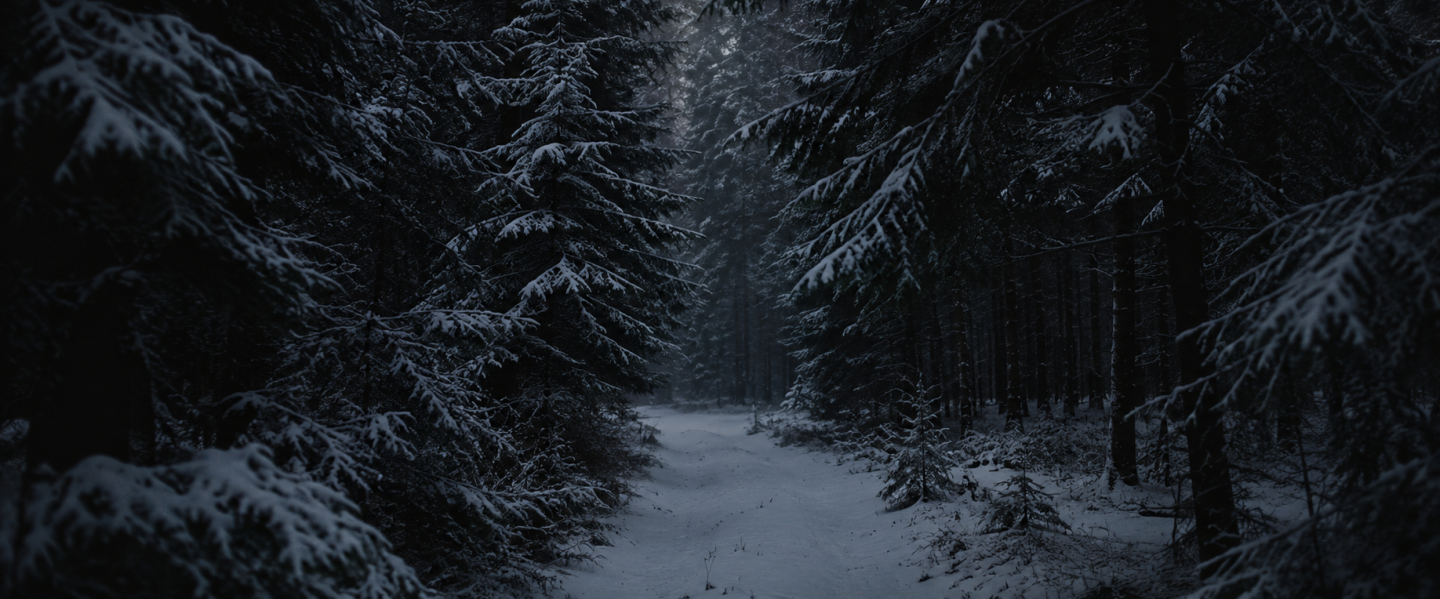
Skadi does not need to appear at the door with snow on her shoulders for winter to carry her lesson: endurance, distance, silence, clean judgment, and the hard beauty of survival.
Ratatoskr does not need to chatter from a branch above us for us to understand the sacred danger of messages, gossip, movement, and the words that travel between worlds.
The fir tree does not speak English. It does not have to. It speaks in endurance. In green through winter. In rootedness. In the refusal to become empty simply because the season has turned against it.
The land spirits do not need our permission to exist. They were not born from our belief. At most, belief gives us the humility to notice them.
That is paganism to me: not blind belief, but relationship with a world that does not require human approval to be sacred.
When Memory Becomes Law
The danger comes when the absent stop being honoured and start being weaponized.
A dead founder becomes an excuse.
A tradition becomes a cage.
A god becomes a banner for cruelty.
An old wound becomes a permanent war.
A family name becomes a chain around the neck.
A sacred place becomes private possession.
A memory becomes a tool for control.
This is where humans go wrong again and again. We take the sacred force of absence and turn it into authority without accountability.
“This is what the ancestors wanted.”
“This is how it has always been.”
“This is what God commands.”
“This is what the old ways demand.”
Maybe.
Or maybe the living are hiding behind the dead because the dead cannot correct the quote.
That is why discernment matters.
The absent may command the living, but the living still have responsibility.
The Unborn Are Also Absent
There is another side to this.
The absent are not only behind us.
They are ahead of us.
The unborn also command the living, or they should.
When we care for land we may never fully enjoy, we are obeying the unborn.
When we refuse to poison water for short-term gain, we are obeying the unborn.
When we plant trees under whose shade we may never sit, we are obeying the unborn.
When we preserve stories, skills, rituals, songs, names, tools, and sacred places, we are making offerings forward.
That may be one of the most pagan acts possible: to live as though the future has a claim upon us.
Not because of guilt.
Because of kinship.
Kith and kin do not only stretch backward into graves. They stretch forward into cradles not yet built.
Choosing the Right Ghosts
So maybe the human question is not whether we are ruled by ghosts.
We are.
Every one of us carries absent voices.
The question is whether we know which ones we are obeying.
Are we obeying the dead who loved us, or the dead who wounded us?
Are we honouring tradition, or are we hiding inside it?
Are we listening to the gods, or only to our own fear wearing a divine mask?
Are we serving the land, or using sacred language to justify ownership?
Are we carrying memory, or are we being dragged by it?
Are we making offerings to the future, or stealing from it?
These are not small questions.
They are the questions that decide whether a person becomes rooted or haunted.
A Small Ritual Thought
Perhaps this is worth doing sometime.
Light a candle.
Name the dead who still shape you.
Name the places that still call you.
Name the promises that still bind you.
Name the fears that are not yours but were handed down.
Name the future that deserves better from you.
Then ask, plainly:
Which of these am I willing to obey?
Not every voice gets a seat at the fire.
Not every ghost gets the keys to the house.
Not every ancestor gets to steer the bloodline.
Not every tradition deserves another generation.
But some do.
Some dead are worth feeding.
Some stories are worth carrying.
Some vows are worth keeping.
Some gods are worth kneeling to.
Some fires are worth tending until your hands are ash.
The Living Must Answer
The absent command the living.
That is true.
But the living are not helpless.
We are the hinge between grave and cradle. Between what was done and what may yet be done. Between old wound and new choice. Between inherited story and deliberate action.
The dead hand us memory.
The gods hand us mystery.
The land hands us consequence.
The unborn hand us obligation.
What we do with those things is on us.
That may be the real sacred work of being human.
Not escaping the absent.
Not blindly obeying them.
But learning which unseen powers deserve a place at the hearth, and which ones need to be thanked, named, and finally buried.
Because the dead may speak.
The gods may call.
The land may remember.
The future may wait.
But the living must answer.
 Unplugged Pagan