
Hey there, Unplugged Pagans.
As I was out on the road today, another thought came to me. One of those thoughts that arrives sideways, out of the corner of the eye.
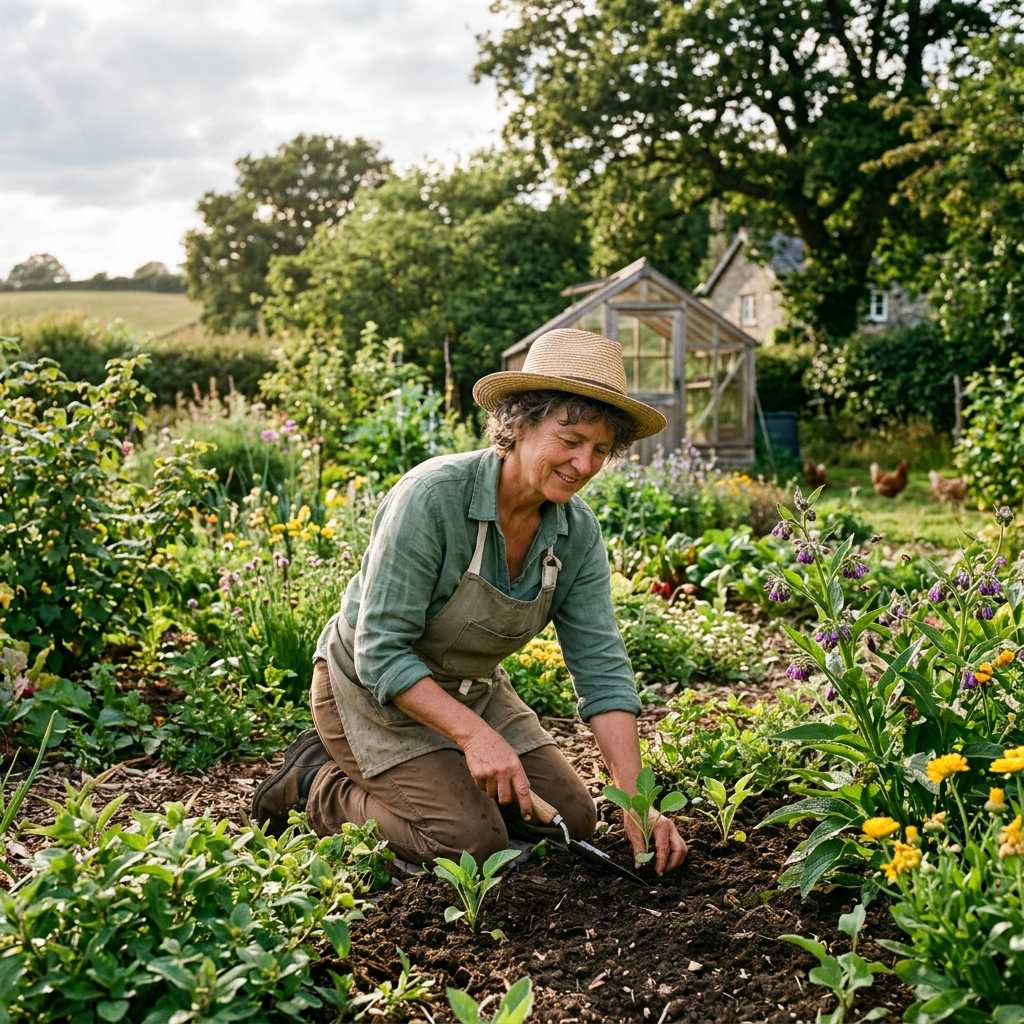
I noticed someone working a raised flowerbed along the front lawn. Nothing dramatic. Nothing unusual. Just a person tending plants.
But it got me thinking about stewardship of the land.
Not ownership.
Not control.
Not forcing the land to become whatever we want it to be.
Stewardship.
There is a difference.
The Earth Will Outlast Us
Yesterday, I wrote about the hard reality that the Earth does not need saving in the sentimental way people often frame it.
The Earth will survive us.
We may not survive ourselves.
That is the part people do not like to face.
Climate change frightens people for many reasons, but one of the deeper fears is this: it reminds us that we are not outside nature. We are not above the cycle. We are not exempt from consequence.
Human beings may continue. Human beings may change into something we would barely recognize. Human beings may one day disappear completely. I am not saying that with joy. I am saying it because every living thing, every species, every civilization, every empire, every arrangement eventually changes or passes away.
That is not despair.
That is reality.
And paganism, at its best, should be brave enough to face reality.
Raised Beds and the Human Habit of Overriding the Ground
Now, let me be fair before I go any further.
Raised beds have their place.
If the soil is contaminated, if the ground is too compacted, if drainage is terrible, if someone has mobility issues and cannot safely garden at ground level, then yes, a raised bed can be a practical and compassionate tool.
But that is not the part I am questioning.
What I am questioning is the mindset.
There is a way of gardening that looks at the land and says, “What are you? What do you need? What will grow here? How do I improve you over time?”
And there is another way that says, “I do not want to learn you. I will build over you.”
That second one feels like the old human sickness to me.
We do not listen first. We impose first.
We do not learn the soil. We import a solution.
We do not ask what belongs. We ask how to force what we want.
That is not stewardship.
That is domination wearing gardening gloves.
Our Ancestors Had to Learn the Land
Our ancestors did manipulate land. Of course they did. They cleared, planted, burned, terraced, drained, fenced, harvested, and stored.
But the wise ones also learned.
They learned frost dates.
They learned which plants survived in their region.
They learned which trees meant wet ground, which winds meant a storm, which birds meant a season was turning.
They learned what the soil would give and what it would refuse.
That is the difference.
Working with the land is not the same thing as pretending the land has no voice.
You would not grow an orange tree in the Northwest Territories and then blame the land for being wrong.
The land is not wrong.
Your expectation is wrong.
That is a hard lesson for modern people because we have been trained to believe everything should be available everywhere, all the time, in every season.
But nature does not work that way.
The landvættir do not work that way.
The spirits of place do not say, “Yes, import anything, force anything, consume anything, and call it abundance.”
They say, “Learn where you are.”
Eat Where You Stand
This brings me to food.
We have become used to eating as if geography does not matter.
Bananas in winter. Avocados from far away. Mangoes, dragon fruit, specialty foods, tropical fruits, fragile greens, and out-of-season luxuries that have no natural relationship to the place we live.
Now, I am not saying nobody should ever enjoy anything imported. That would be dishonest. Most of us do. I have. You probably have too.
But maybe we need to stop treating faraway food as normal and local food as quaint.
Maybe we need to reverse that.
Maybe the sacred question is not, “Can I buy this?”
Maybe the sacred question is, “What does my land actually provide?”
What grows here?
What stores here?
What can be preserved here?
What did people eat here before the grocery store trained us to expect strawberries in February and tropical fruit in every season?
That is not just an environmental question.
That is a spiritual question.
The Local Does Not Have to Be Perfect to Matter
There is research that complicates this conversation, and it is worth being honest about.
Food miles are not the whole story. Sometimes what you eat matters more than how far it travelled. A local high-impact food can still carry a heavier footprint than a lower-impact food shipped from elsewhere.
So this is not a simple bumper sticker.
But the deeper point remains.
Eating with the land is not only about carbon accounting. It is about relationship.
It is about remembering that food comes from soil, water, weather, labour, season, storage, and death.
It is about remembering that the Earth is not a vending machine.
It is about recovering some humility.
Brigid, Skadi, Ratatoskr, and the Fir Tree
Brigid reminds us that the hearth is sacred. Not the luxury pantry. Not endless choice. The hearth. The simple flame. The meal that nourishes. The practical act of feeding the body with reverence.
Skadi reminds us that climate is real. Winter is real. Harsh land is real. You do not survive the mountain by pretending it is a beach.
Ratatoskr reminds us to be careful of the messages we carry up and down the tree. Modern culture keeps whispering, “You can have everything, everywhere, whenever you want.”
But not every message is wisdom.
The fir tree reminds us of rootedness. It does not chase another climate. It does not try to become a palm tree. It stands where it is and learns endurance from the place that holds it.
And the landvættir, the spirits of the land, remind us that place is not empty.
The land beneath us is not just property.
It is relationship.
Say No to the Avocado, At Least Sometimes
So yes, maybe sometimes the answer is simple.
Say no to the avocado.
Say no to the fantasy that every climate owes you every fruit.
Say no to the idea that abundance means having the whole planet shrink-wrapped and shipped to your table.
Say yes to potatoes.
Say yes to squash.
Say yes to beans, peas, apples, carrots, onions, cabbage, rhubarb, berries in season, herbs that will actually grow where you live, and the humble crops that know your weather better than you do.
Say yes to improving the ground under your own feet.
Say yes to compost.
Say yes to learning your soil.
Say yes to the food that belongs to your place.
Not because imported food is evil.
Because forgetting the land is dangerous.
The Pagan Practice of Staying Rooted
This is where paganism becomes more than candles, cards, gods, and pretty seasonal posts.
It becomes practice.
It becomes the question of how we live.
Do we know the land we claim to honour?
Do we know what grows here?
Do we know what the soil needs?
Do we know what is in season?
Do we know what we are asking the Earth to carry on our behalf?
Because the Earth will carry on after us.
That is not the question.
The question is whether we will learn enough humility to carry ourselves differently while we are still here.
Work with the land.
Eat where you stand.
Learn what belongs.
And remember that stewardship begins when we stop treating the ground as something to conquer.
Godspeed.
 Unplugged Pagan