The Flower Moon and Gramma’s Rule

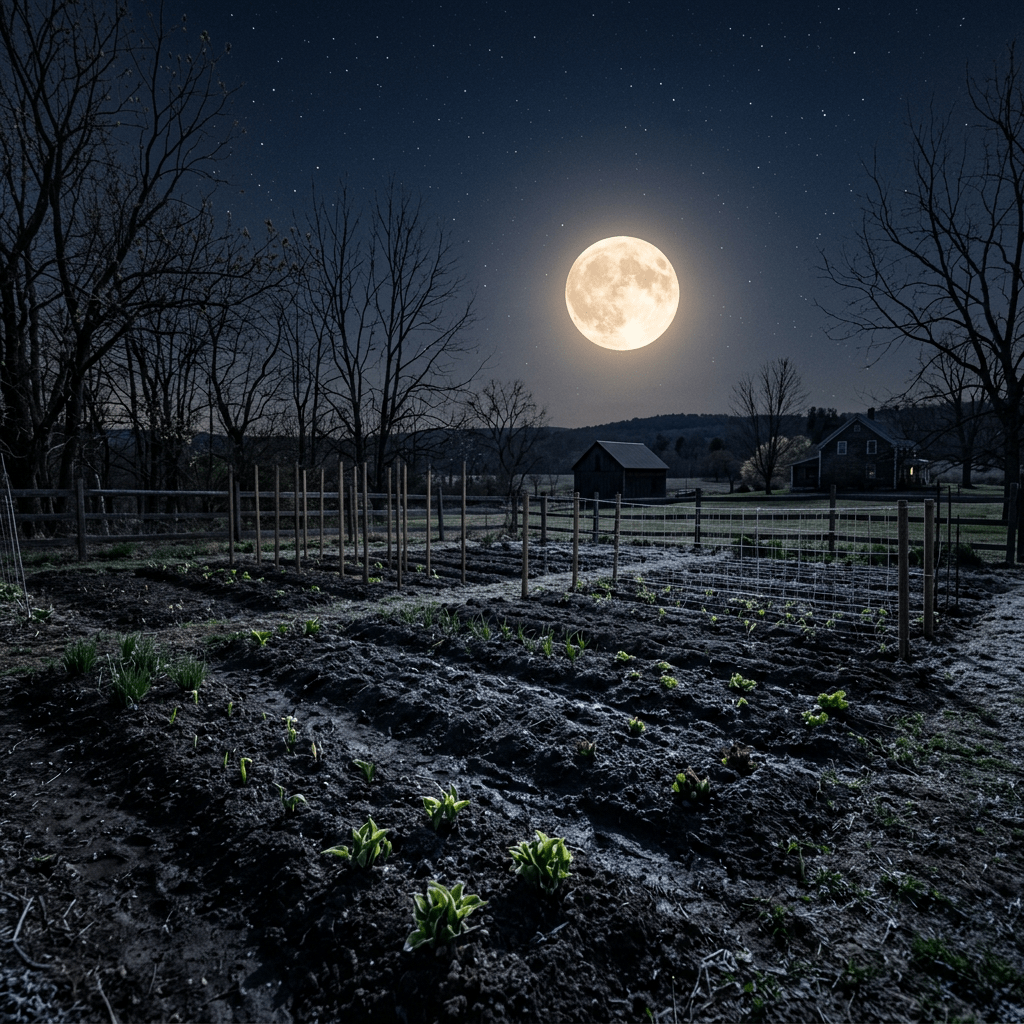
Young plants growing in garden beds under full moon and starry night

Hey there, Unplugged Pagans. How are you today?

Today is May 1st, and we are sitting under the light of the Flower Moon.

Now, let me correct myself right off the top before the moon herself corrects me. This is not technically a Blood Moon. A Blood Moon is tied to an eclipse. What we have this month is even stranger in its own quiet way: two full moons in May. Tonight brings us the Flower Moon, and at the end of the month, we get the second full moon, the Blue Moon.

So yes, May is giving us a double lunar month.

Interesting times indeed.

And fitting, really.

Because today, as beautiful as the moon may be, the ground is still cold. It is currently sitting around minus two, and the next couple of days are not exactly screaming “plant the tomatoes.” There is still cold in the air, still frost in the ground, and still enough risk that if you are thinking about putting your garden in this weekend, forget it.

Do not do it.

Do not even think about it.

Prepare your garden all you want. Clear the beds. Turn the soil if it is ready. Gather your tools. Make your plans. Stand there with a coffee and imagine what it will look like in July.

But do not put tender plants out yet.

I live by my grandmother’s rule on this one:

No gardening before the May long weekend.

Or as she would have said it, not until after the Queen’s birthday.

That is the golden rule of thumb.

You can argue with it if you want. You can get impatient. You can let one warm afternoon fool you. But the frost will not care about your optimism.

The land has its own timing.

Learn it.

A Virtual Full Moon Reading

Tonight’s reading is virtual again.

No big altar setup. No long ceremony. No drawn-out ritual. I want to get this done, get home, and go straight to bed.

But that does not make the reading less sacred.

Sometimes the sacred is not the long ritual.

Sometimes the sacred is the honest one.

So tonight, under the Flower Moon, I asked for a four-card Rider Waite spread:

Past. Present. Future. Querent.

And into this reading we invite Brigid, Skadi, Ratatoskr, the fir tree, and the landvættir — the spirits of the land beneath our feet, the ones who know better than we do when the soil is ready.

Moonchild Weather for May 1st

For Cancer, for the Moonchild, the theme today is emotional clarity.

There may be feelings sitting close to the surface. There may be people, memories, or familiar connections stirring something in the heart. Today asks the Moonchild not to hide from that, but also not to drown in it.

That is always the Cancer balancing act.

Feel deeply.

But do not let the feeling drive the whole wagon.

There is a difference between intuition and emotional weather. Today asks us to listen carefully enough to know which one is speaking.

Past — Nine of Pentacles Reversed

The Nine of Pentacles reversed speaks to a past where comfort, stability, and independence may have felt less secure than they looked from the outside.

This is the card of the garden that is not quite as settled as it appears.

There may have been work done. There may have been progress. There may have been signs of growth. But underneath it, there was still strain. Still uncertainty. Still the feeling that the ground could shift.

That fits the season.

We look outside and see spring trying to arrive. We see the promise of green. We see the sun climbing higher. But the soil says, “Not yet.”

Brigid steps into this card as the keeper of the hearth. She reminds us that abundance is not just what we harvest. It is what we protect before the harvest comes.

The lesson of the past is this:

Do not mistake appearances for readiness.

Present — Queen of Wands Reversed

The Queen of Wands reversed is today’s honest mood.

There is fire here, but it may be tired fire. Rushed fire. Irritated fire. The kind of fire that wants to get things done but is running low on patience.

That sounds about right.

May arrives. The moon is full. The garden calls. The weather says no. The body says bed. The spirit says, “Can we at least do something?”

This card says yes, but carefully.

You do not need to force the season.

You do not need to prove your devotion by burning yourself out.

You do not need to plant too early just because waiting feels like doing nothing.

Skadi stands in this card with cold, practical wisdom. She does not care how badly you want the mountain to soften. She cares whether you have respected the conditions in front of you.

The present lesson is this:

Power without patience becomes self-sabotage.

Future — Four of Wands Reversed

The Four of Wands reversed is a warning and a promise.

Upright, this card is celebration, homecoming, gathering, and stability. Reversed, it says the foundation is not quite ready yet.

Not destroyed.

Not doomed.

Just not ready.

That is the whole garden message today.

You can see the celebration coming. You can imagine the plants in the ground, the beds full, the green returning, the hands in the soil, the first real signs that winter has finally backed off.

But the landvættir are saying, “Wait.”

Not forever.

Just long enough.

Ratatoskr runs through this card as the messenger between impatience and wisdom. He says be careful what message you carry to yourself. Do not let one cold morning become despair. Do not let one warm afternoon become foolishness.

The future lesson is this:

Celebration comes stronger when the foundation is ready.

Querent — Ten of Cups Reversed

The card representing the querent is the Ten of Cups reversed.

That is a deep one.

This is the card of emotional fulfillment, home, belonging, family, peace, and the dream of everything finally feeling whole. Reversed, it does not mean those things are gone. It means there may be a gap between the dream and the current reality.

And honestly, that is a very Moonchild card.

Cancer carries the idea of home inside the ribs. Not just a house, not just four walls, but the feeling of being safe, rooted, loved, and at peace.

When the Ten of Cups is reversed, it asks:

What does home mean when the season is not ready yet?

What does peace mean when the ground is still cold?

What does fulfillment mean when you are tired and just trying to get through the day?

The fir tree answers this one.

It says: stay rooted.

The fir does not need summer to prove it is alive. It does not panic because the cold remains. It knows how to stand in between seasons.

The querent lesson is this:

Your peace does not have to be perfect to be real.

The Message From the Spirits

Brigid says: tend the hearth before you tend the garden. Rest is not wasted time. Warmth matters.

Skadi says: respect the cold. Respect the conditions. Do not let impatience put tender things at risk.

Ratatoskr says: watch the messages running through your mind. Not every thought is guidance. Some are just weather.

The fir tree says: endurance is quiet. Stand where you are. Do not rush the season.

The landvættir say: the ground is speaking. Listen before you plant.

Grandmother’s Rule

So here is today’s practical pagan wisdom:

Do not put the garden in too early.

Prepare, yes.

Plan, yes.

Clean up, yes.

Dream over seed packets, yes.

But do not confuse preparation with planting.

There is wisdom in waiting.

There is wisdom in watching the frost.

There is wisdom in the old rules that survived because somebody learned them the hard way.

No gardening before the May long weekend.

That rule has roots.

Full Moon Blessing

May this Flower Moon bless what is not ready yet.

May it bless the seeds still waiting.

May it bless the cold ground.

May it bless the tired gardener.

May it bless the Moonchild trying to feel deeply without being swept away.

May it bless the home we are still building, the peace we are still learning, and the season that will arrive when it is good and ready.

Godspeed, and may the full moon bless you.
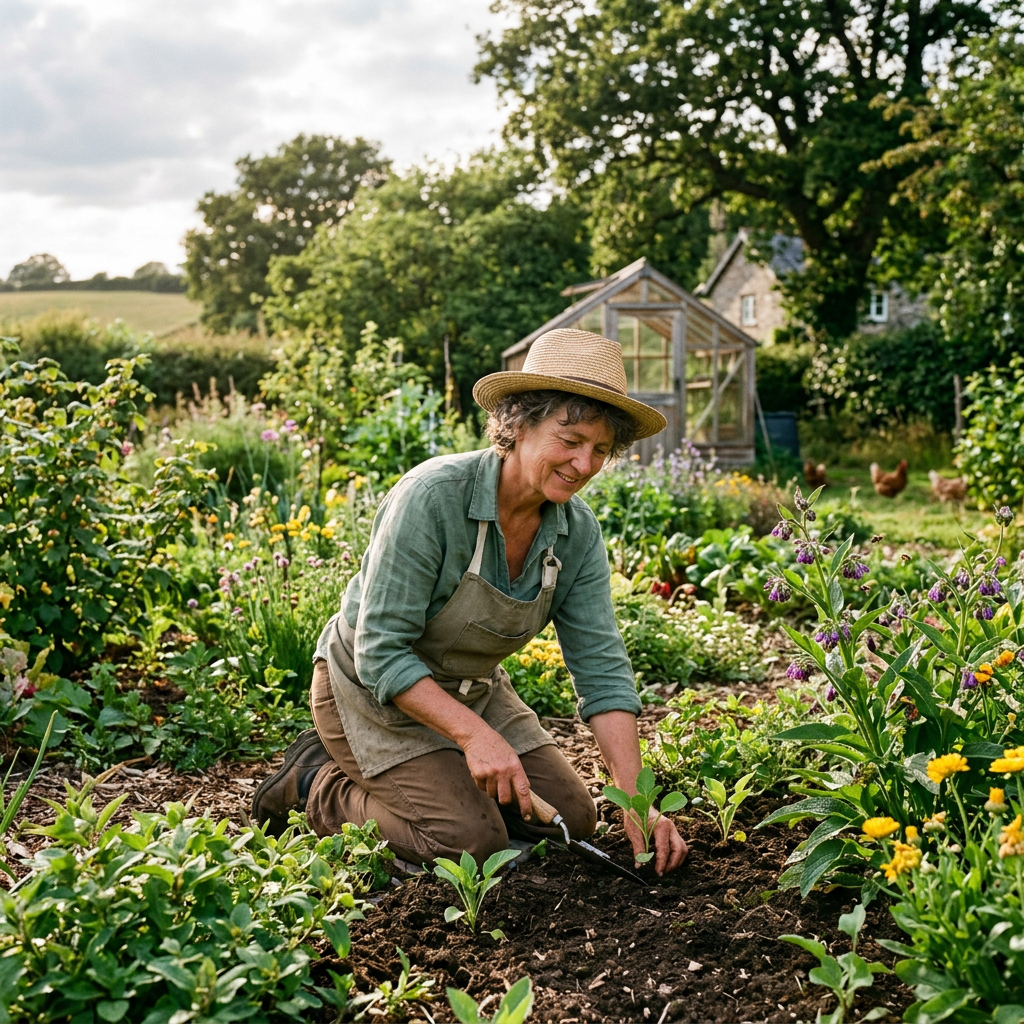
Eat Where You Stand: A Pagan Argument for Learning the Land

Woman kneeling and planting seedlings in a garden bed

Hey there, Unplugged Pagans.

As I was out on the road today, another thought came to me. One of those thoughts that arrives sideways, out of the corner of the eye.

I noticed someone working a raised flowerbed along the front lawn. Nothing dramatic. Nothing unusual. Just a person tending plants.

But it got me thinking about stewardship of the land.

Not ownership.

Not control.

Not forcing the land to become whatever we want it to be.

Stewardship.

There is a difference.

The Earth Will Outlast Us

Yesterday, I wrote about the hard reality that the Earth does not need saving in the sentimental way people often frame it.

The Earth will survive us.

We may not survive ourselves.

That is the part people do not like to face.

Climate change frightens people for many reasons, but one of the deeper fears is this: it reminds us that we are not outside nature. We are not above the cycle. We are not exempt from consequence.

Human beings may continue. Human beings may change into something we would barely recognize. Human beings may one day disappear completely. I am not saying that with joy. I am saying it because every living thing, every species, every civilization, every empire, every arrangement eventually changes or passes away.

That is not despair.

That is reality.

And paganism, at its best, should be brave enough to face reality.

Raised Beds and the Human Habit of Overriding the Ground

Now, let me be fair before I go any further.

Raised beds have their place.

If the soil is contaminated, if the ground is too compacted, if drainage is terrible, if someone has mobility issues and cannot safely garden at ground level, then yes, a raised bed can be a practical and compassionate tool.

But that is not the part I am questioning.

What I am questioning is the mindset.

There is a way of gardening that looks at the land and says, “What are you? What do you need? What will grow here? How do I improve you over time?”

And there is another way that says, “I do not want to learn you. I will build over you.”

That second one feels like the old human sickness to me.

We do not listen first. We impose first.

We do not learn the soil. We import a solution.

We do not ask what belongs. We ask how to force what we want.

That is not stewardship.

That is domination wearing gardening gloves.

Our Ancestors Had to Learn the Land

Our ancestors did manipulate land. Of course they did. They cleared, planted, burned, terraced, drained, fenced, harvested, and stored.

But the wise ones also learned.

They learned frost dates.

They learned which plants survived in their region.

They learned which trees meant wet ground, which winds meant a storm, which birds meant a season was turning.

They learned what the soil would give and what it would refuse.

That is the difference.

Working with the land is not the same thing as pretending the land has no voice.

You would not grow an orange tree in the Northwest Territories and then blame the land for being wrong.

The land is not wrong.

Your expectation is wrong.

That is a hard lesson for modern people because we have been trained to believe everything should be available everywhere, all the time, in every season.

But nature does not work that way.

The landvættir do not work that way.

The spirits of place do not say, “Yes, import anything, force anything, consume anything, and call it abundance.”

They say, “Learn where you are.”

Eat Where You Stand

This brings me to food.

We have become used to eating as if geography does not matter.

Bananas in winter. Avocados from far away. Mangoes, dragon fruit, specialty foods, tropical fruits, fragile greens, and out-of-season luxuries that have no natural relationship to the place we live.

Now, I am not saying nobody should ever enjoy anything imported. That would be dishonest. Most of us do. I have. You probably have too.

But maybe we need to stop treating faraway food as normal and local food as quaint.

Maybe we need to reverse that.

Maybe the sacred question is not, “Can I buy this?”

Maybe the sacred question is, “What does my land actually provide?”

What grows here?

What stores here?

What can be preserved here?

What did people eat here before the grocery store trained us to expect strawberries in February and tropical fruit in every season?

That is not just an environmental question.

That is a spiritual question.

The Local Does Not Have to Be Perfect to Matter

There is research that complicates this conversation, and it is worth being honest about.

Food miles are not the whole story. Sometimes what you eat matters more than how far it travelled. A local high-impact food can still carry a heavier footprint than a lower-impact food shipped from elsewhere.

So this is not a simple bumper sticker.

But the deeper point remains.

Eating with the land is not only about carbon accounting. It is about relationship.

It is about remembering that food comes from soil, water, weather, labour, season, storage, and death.

It is about remembering that the Earth is not a vending machine.

It is about recovering some humility.

Brigid, Skadi, Ratatoskr, and the Fir Tree

Brigid reminds us that the hearth is sacred. Not the luxury pantry. Not endless choice. The hearth. The simple flame. The meal that nourishes. The practical act of feeding the body with reverence.

Skadi reminds us that climate is real. Winter is real. Harsh land is real. You do not survive the mountain by pretending it is a beach.

Ratatoskr reminds us to be careful of the messages we carry up and down the tree. Modern culture keeps whispering, “You can have everything, everywhere, whenever you want.”

But not every message is wisdom.

The fir tree reminds us of rootedness. It does not chase another climate. It does not try to become a palm tree. It stands where it is and learns endurance from the place that holds it.

And the landvættir, the spirits of the land, remind us that place is not empty.

The land beneath us is not just property.

It is relationship.

Say No to the Avocado, At Least Sometimes

So yes, maybe sometimes the answer is simple.

Say no to the avocado.

Say no to the fantasy that every climate owes you every fruit.

Say no to the idea that abundance means having the whole planet shrink-wrapped and shipped to your table.

Say yes to potatoes.

Say yes to squash.

Say yes to beans, peas, apples, carrots, onions, cabbage, rhubarb, berries in season, herbs that will actually grow where you live, and the humble crops that know your weather better than you do.

Say yes to improving the ground under your own feet.

Say yes to compost.

Say yes to learning your soil.

Say yes to the food that belongs to your place.

Not because imported food is evil.

Because forgetting the land is dangerous.

The Pagan Practice of Staying Rooted

This is where paganism becomes more than candles, cards, gods, and pretty seasonal posts.

It becomes practice.

It becomes the question of how we live.

Do we know the land we claim to honour?

Do we know what grows here?

Do we know what the soil needs?

Do we know what is in season?

Do we know what we are asking the Earth to carry on our behalf?

Because the Earth will carry on after us.

That is not the question.

The question is whether we will learn enough humility to carry ourselves differently while we are still here.

Work with the land.

Eat where you stand.

Learn what belongs.

And remember that stewardship begins when we stop treating the ground as something to conquer.

Godspeed.

Spring Fire in Printed Pots

plants

Hey there, all my Pagan friends.

Spring is busy here, and in the best possible way.

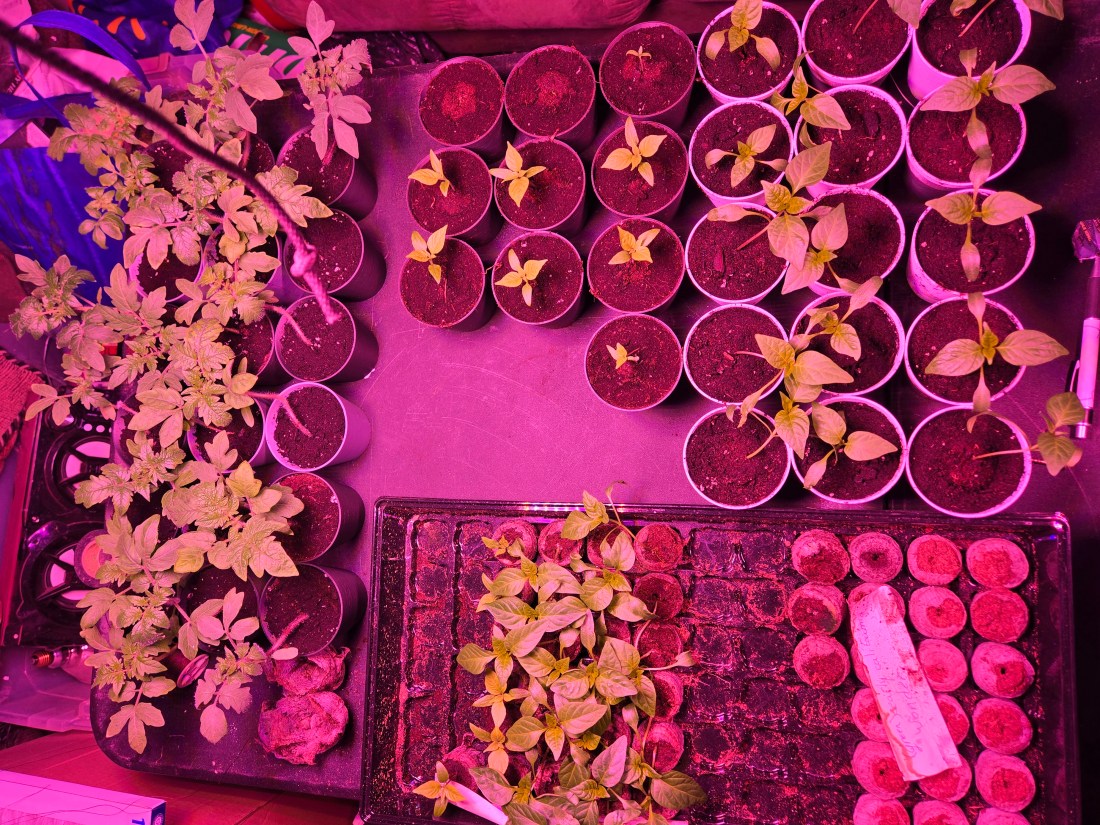
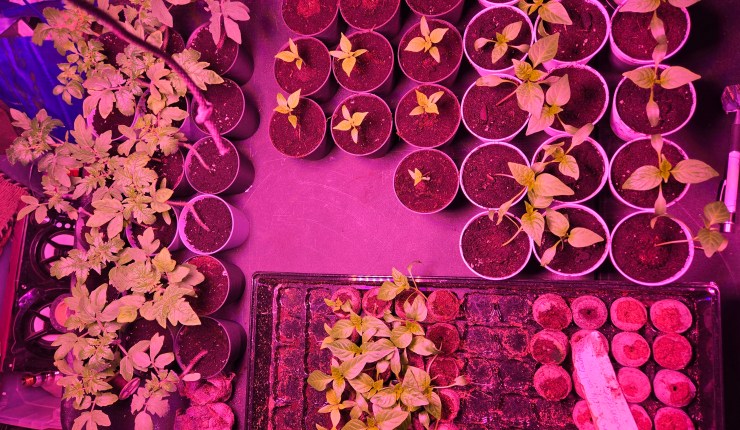
We have been transplanting this year’s parcel crop, moving tender little lives from seed trays into their next homes, and with each pot filled and each root settled, the season feels a little more real. The garden is no longer just a plan. It is becoming.

This year we have beefsteak tomatoes, early California green peppers, red bell peppers, and ghost peppers all on the go. So far, we are sitting at about 18 tomato plants, about 18 early California green peppers, and about 16 ghost peppers, with more still being transplanted as we go. If all goes well, it is going to be one fine summer garden.

And yes, if you are wondering where all these neat little eight-ounce planter pots came from, I printed them myself on the 3D printer. I figured I might as well make use of the machine and print something useful. There is something satisfying about that, something almost magical in its own way—taking modern tools and using them in service of growing living things. Filament, soil, water, seed, sunlight. Different forms of craft, all working together.

That feels fitting for this season.

Spring is the time of beginning again, but not in some grand dramatic sense. Not all at once. Not with instant abundance. Spring is quieter than that. It begins in trays and pots, in damp soil under fingernails, in careful hands, in watching light shift through the window, in the old instinct to prepare for what is coming. It begins in faith that what looks small today may feed you later.

And that is a sacred thing.

For those of us who walk a Pagan path, this time of year carries its own kind of blessing. The earth softens. The wheel turns. What slept begins to stir. We see again that life is not gone, only waiting for the right conditions to return. The old stories of fertility, renewal, and tending are not abstract ideas this time of year. They are right here in the practical work of spring planting.

Every seedling becomes a quiet reminder that growth is rarely loud in the beginning.

Tomatoes and peppers are warm-season plants. They do not thrive when rushed into cold soil or handed over too early to the whims of the weather. They need warmth. They need time. They need to be hardened off and strengthened before they face the full world outside. Honestly, there is wisdom in that beyond gardening. Not everything fragile is weak. Sometimes it is simply unfinished. Sometimes the strongest thing you can do is give living things the conditions they need before asking them to carry the full weight of the season.

That feels true for people too.

The ghost peppers may be the wildest part of this year’s growing adventure. They are beautiful little troublemakers, really. Tiny green promises of future fire. If all goes well, they should make for a very interesting harvest later on. There is something almost mythic about growing peppers like that—plants with heat fierce enough to command respect, born from patient care and ordinary daily tending. Even fire has to start somewhere.

And maybe that is part of spring’s lesson as well.

Not all sacred power arrives as lightning. Sometimes it arrives as a seedling in a printed pot. Sometimes it arrives as a tray of peppers waiting on a windowsill. Sometimes it arrives as the simple act of choosing to tend what you hope will live.

The garden is still young. There is more to plant. More to move. More to prepare. But the work is underway now, and that matters. The season has opened its door, and we are stepping through it with dirt on our hands and hope in tow.

Here’s hoping all these little darlings survive, thrive, and bless the summer with a fine and fiery harvest.

That’s it for Unplugged Pagan for now.

Talk to you later, all my Unplugged Pagans. Bye-bye.

plants