The Pain That Remains: Phantom Limbs, Trauma, and the Mind’s Fight to Heal

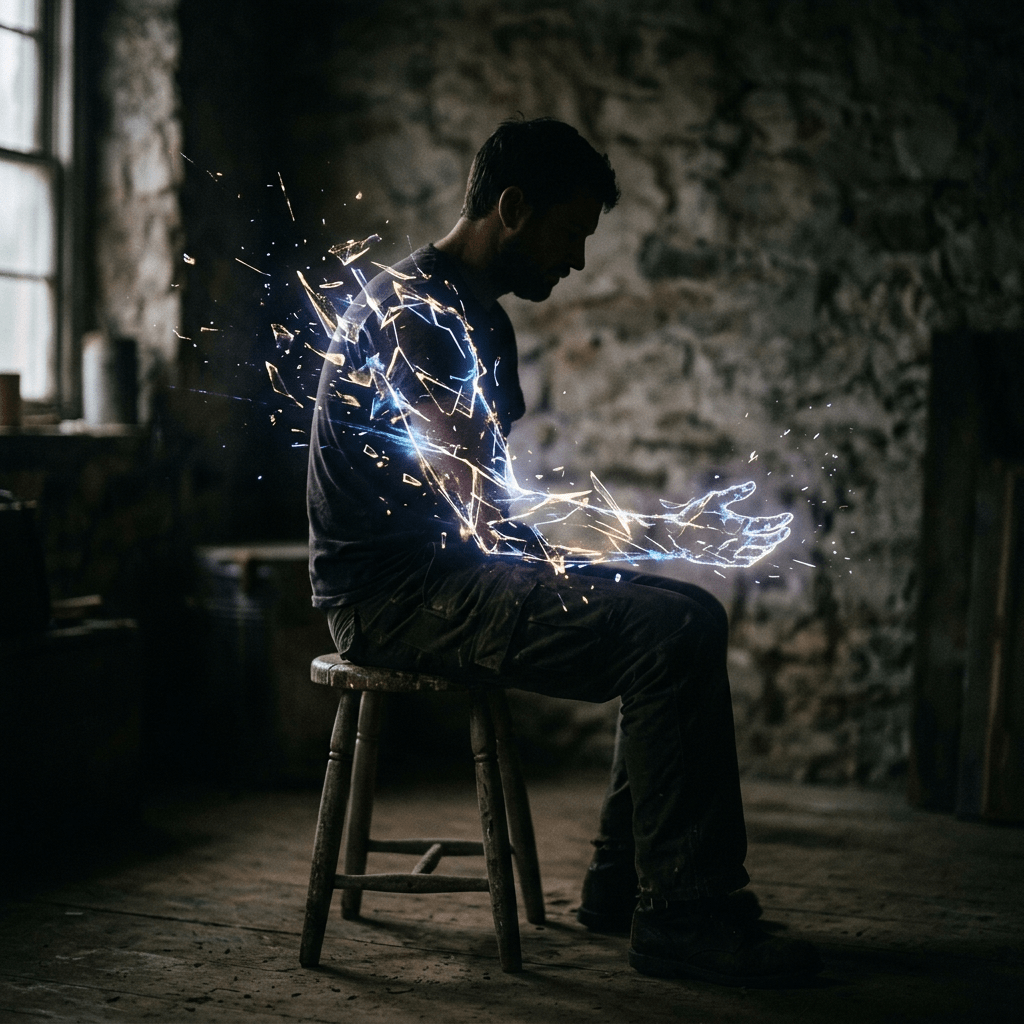
A man sitting on a wooden stool with a glowing digital arm hologram extending from him

A while back, when I was working through my Intro to Psychology course, I spent some time looking at post-traumatic stress disorder and the treatments being studied for it. One of those treatments was MDMA-assisted therapy.

Some people know MDMA by its street name: ecstasy. But there is an important distinction to make right away. Street ecstasy is uncontrolled, illegal, and unpredictable. Clinical MDMA is administered in a controlled therapeutic setting, with screening, monitoring, preparation, therapeutic support, and follow-up. Those are not the same thing.

That distinction matters.

The point was not, “Take a drug and trauma disappears.” That is not how trauma works. The point was that, under very controlled conditions, MDMA appeared to help some people approach traumatic memories without being overwhelmed by the same level of fear, shutdown, or emotional flooding.

In a 2023 phase 3 trial published in Nature Medicine, MDMA-assisted therapy showed significant improvement in PTSD symptoms and functional impairment over an eighteen-week period. The study reported that 86.5% of participants in the MDMA-assisted therapy group achieved a clinically meaningful benefit, and 71.2% no longer met PTSD criteria by the end of the study.

That is not nothing.

But science is not faith healing. It does not get to stop at hope. In 2024, the U.S. Food and Drug Administration did not approve the MDMA-assisted therapy application as submitted and requested further evidence, including another clinical trial. In Canada, access to substances such as MDMA and psilocybin may be requested through Health Canada’s Special Access Program in limited circumstances, but those requests are assessed case by case and are not the same as general approval or personal possession.

So the honest answer is this: MDMA-assisted therapy is promising, but it is not a free-for-all, not a miracle cure, and not something anyone should confuse with street use. The setting, the therapist, the screening, the dose, the support, and the follow-up are not side details. They are the treatment.

And that brings me to another strange and fascinating area of pain: phantom limb pain.

I came across a story about a veteran who had lost part of an arm and continued to feel severe pain in the missing limb. Pain medication did not solve it. Nerve blocks did not solve it. The pain was so bad he would drink himself into oblivion just to escape it for a while.

Now, some people hear “phantom pain” and think that means imaginary pain.

It does not.

My father is an amputee. He lost part of his leg when he was much younger, in his late teens. Even now, roughly sixty-five years later, he can still feel pain in the part of the leg that is no longer there. That sounds impossible until you remember that pain is not only located in flesh. Pain is also processed in the nervous system. The body may lose the limb, but the brain does not always lose the map.

Cleveland Clinic describes phantom limb pain as real pain felt in a missing body part after amputation. It can feel like aching, burning, itching, stabbing, tingling, throbbing, twisting, or temperature change. More than half of people who lose a limb experience some form of phantom pain.

That matters because pain being “in the brain” does not mean pain is fake. All pain is processed by the brain. The question is not whether the person is imagining it. The question is what the nervous system is doing, what signals are being misread, and whether the brain can be helped to redraw the map.

That is where mirror box therapy comes in.

The basic idea is almost absurdly simple. A mirror is placed so that the person sees the reflection of their intact limb where the missing limb would be. The person moves the intact limb while looking at the reflection, creating the illusion that the missing limb is also moving. In plain language, it is a conversation with the brain.

The brain says, “The hand is clenched. The foot is cramped. The missing limb is hurting.”

The mirror replies, “Look. It is moving. It is opening. It is not trapped.”

And sometimes, the brain listens.

Mirror therapy is often connected to the work of neuroscientist V. S. Ramachandran in the 1990s, who used mirror visual feedback to help some amputees experience movement and relief in phantom limbs. The therapy works by creating visual feedback that can conflict with, and sometimes soften, the brain’s painful map of the missing limb.

But the science is not as clean as the popular story sometimes makes it sound. Some studies and reviews suggest mirror therapy can help, especially as part of a broader rehabilitation approach such as graded motor imagery. Other reviews argue that the evidence for mirror therapy by itself remains mixed, and more robust long-term research is still needed.

Again, that is where honesty matters.

Not every treatment works for every person. Not every hopeful result becomes standard care. But these treatments tell us something powerful about human suffering: the mind and body are not separate kingdoms. They are one system speaking in different languages.

Trauma can live in memory, but also in the nervous system. Phantom pain can come from a missing limb, but be felt as sharply as any wound. A person can know intellectually that the danger has passed, while the body still reacts as if the danger is happening now. A person can know the limb is gone, while the brain still cries out from the place where it used to be.

That does not make the person weak.

That makes the person human.

This is where I think the lesson belongs on Unplugged Pagan. Not because MDMA therapy or mirror boxes are Pagan practices. They are not. But because Paganism, at its best, does not teach us to despise the body. It teaches us to listen to land, season, fire, memory, grief, and presence.

The body is land.

The nervous system is weather.

Pain is not always an enemy; sometimes it is a messenger whose language has become distorted.

The old wound keeps speaking.

The missing limb keeps speaking.

The trauma keeps speaking.

The question becomes: how do we answer without destroying ourselves?

Some people answer with drink. Some answer with silence. Some answer with rage. Some answer by pretending nothing happened. But healing, real healing, seems to require something harder. It requires the courage to turn toward the signal and ask:

What is this?

Where is this coming from?

Is this pain warning me about the present, or is it echoing from the past?

That is true of phantom pain. It is true of PTSD. It is true of grief. It is true of betrayal. It is true of the invisible wounds people carry while still showing up to work, still paying bills, still smiling at the grocery store, still pretending they are fine because explaining the wound would take too long.

The pain is real.

Even when others cannot see the limb.

Even when others cannot see the trauma.

Even when the wound has no blood on it.

And maybe that is the deeper point here. Science is beginning to show us that healing is not always about cutting something out, numbing something down, or telling someone to “get over it.” Sometimes healing is about giving the brain new information. Sometimes it is about creating a safe enough space for the memory to be touched without being relived. Sometimes it is about showing the nervous system that the trapped limb can move, the frozen moment can pass, and the body is not condemned to remain inside the first injury forever.

That is not magic.

But it is close enough to wonder.

Godspeed.


Sources

Fire and Field Notes

Woman sitting at wooden desk with open notebook, book, laptop, and papers, looking out window thoughtfully

I am not easily summed up.

I am a practical person, but I am not only practical. I believe in structure, communication, responsibility, documentation, and doing the work that has to be done. But I also believe in fire, ritual, memory, land, spirit, silence, and the things that do not always fit neatly into a spreadsheet.

Both are me.

I am one person trying to understand life through more than one language.

Sometimes I speak through lessons learned the hard way. Sometimes I speak through reflection. Sometimes through frustration. Sometimes through faith. Sometimes through humour. Sometimes through grief. Sometimes through a candle lit in the quiet when there are no easy answers left.

I pay attention. Maybe too much sometimes. I notice tone. I notice silence. I notice effort and the lack of it. I notice when words and actions do not line up. I notice when people say community, but practise exclusion. I notice when people talk about care, but avoid accountability.

That does not mean I am always right. It means I am watching. It means I am trying to understand what is real.

I want connection, but not fake connection.
I want community, but not performance.
I want honesty, but not cruelty.
I want peace, but not the kind of peace that requires everyone to pretend nothing is wrong.

I have been through collapse. I have been through loss. I have been through endings I did not ask for and changes I did not welcome. I have had to rebuild more than once. And when I rebuild, I do not simply move on as if nothing happened. I look at the wreckage. I ask what broke. I ask what I missed. I ask what can be learned. I ask what can be made useful.

That is part of who I am.

I turn experience into meaning. I turn hard lessons into words. I turn confusion into reflection. I turn damage into something I can carry, examine, and maybe hand to someone else so they do not feel quite so alone when their own ground gives way.

But I am also learning that not everything has to become a lesson right away.

Some things hurt.

Some things disappoint.

Some things need to be released without being analyzed to death.

Some things need a candle, a breath, a walk outside, a night of sleep, or simply the honesty to say: this mattered to me, and it hurt.

I am compassionate, but I am not submissive. I can be patient. I can try to understand. I can give people room. But I am not built to live comfortably inside dishonesty, avoidance, or shallow performance. Eventually, if something feels wrong, I will name it. Maybe imperfectly. Maybe too strongly at times. But usually because I am trying to get to something honest.

I am not looking to be the loudest person in the room.

What I want is witness.

I want real things to be seen. Real effort. Real harm. Real rebuilding. Real care. Real contradiction. Real community, if community is the word we are going to use.

I am socially selective. Not antisocial. Selective. There is a difference. I can talk. I can write. I can show up. But shallow connection drains me. I would rather have one honest conversation than a dozen polite performances.

I am spiritual, but not decorative about it. For me, spirituality is not an aesthetic. It is not a costume. It is not a slogan. It is part of how I stay grounded in a world that often feels careless and loud. It is how I remember that I am more than my work, more than my losses, more than my anger, more than my unfinished business.

I am a person of fire and field notes.

That may sound strange, but it is true.

I need both the sacred and the practical. I need both the ritual and the record. I need both the candle and the notebook. I need both the meaning and the method.

I am still learning when to speak, when to stay quiet, when to document, when to let go, when to challenge, and when to simply keep walking.

I do not claim to have it all figured out.

I am not presenting myself as healed, enlightened, wise, or above the mess of being human. I am in the mess too. I get angry. I get tired. I overthink. I care more than I sometimes want to admit. I can say I do not care while absolutely caring. I can want connection and distance at the same time.

That is human.

That is me.

What I know is this: I am still here. I am still paying attention. I am still trying to tell the truth as best I can. I am still trying to build something useful from what life has handed me. I am still trying to stay honest without becoming bitter. I am still trying to stay open without becoming foolish. I am still trying to keep the fire lit.

And maybe that is the simplest way to say who I am.

I am someone who has fallen, watched, learned, questioned, rebuilt, and kept going.

I am someone who wants meaning, not performance.

I am someone who still believes honesty matters.

I am someone who still believes the fire is worth tending.

Godspeed.

Making Room for Questions, Care, and Community

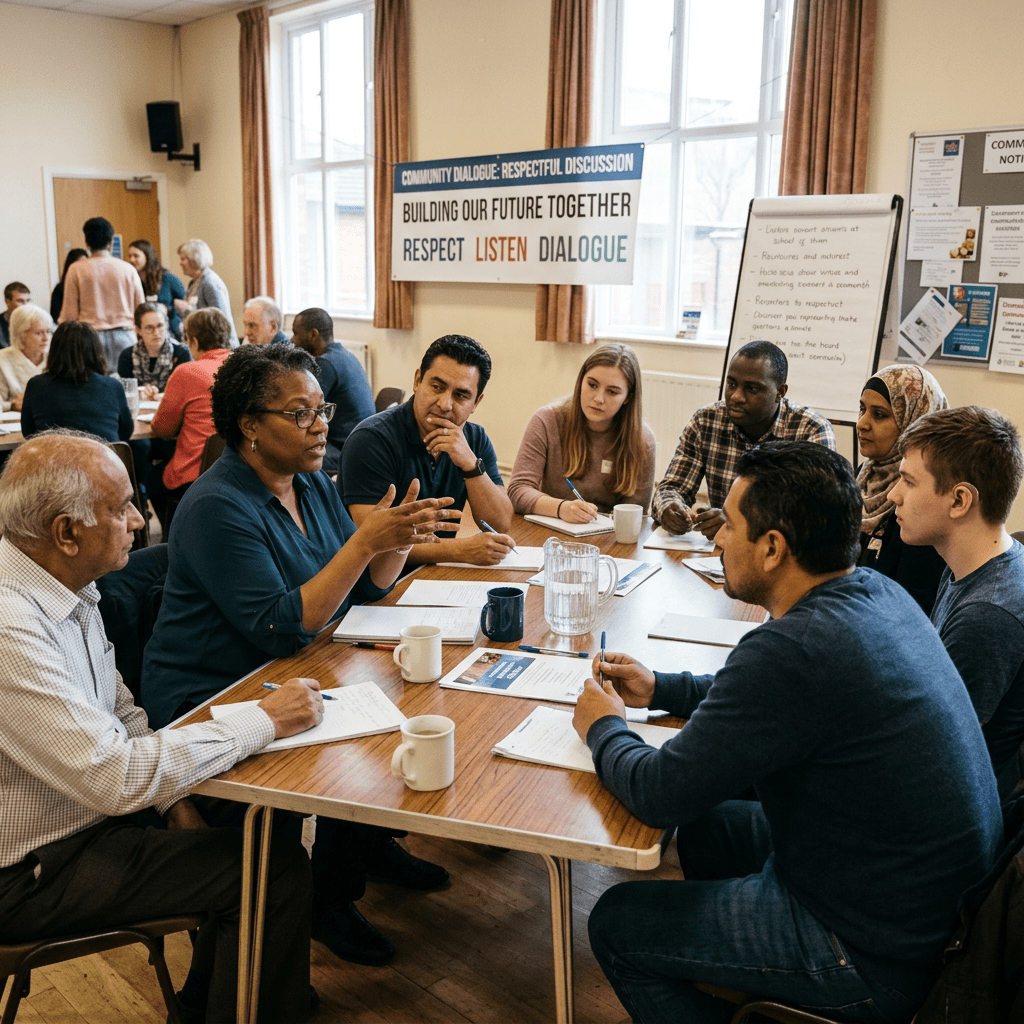
Diverse adults sitting around a table in discussion during a community dialogue meeting

Note: This is a personal reflection offered in good faith. It is not an accusation, not a claim of wrongdoing, and not a statement against any individual, group, organization, or community space.

Hey there, my dear Unplugged Pagans.

This is a follow-up to my earlier post.

Yes, it generated some traffic. Yes, I understand that some people may have strong feelings about it. When people care deeply about a community, a place, a festival, a tradition, or a shared history, emotions can rise quickly.

I want to begin from a place of respect.

I am not insinuating wrongdoing. I am not accusing anyone of anything. I am not suggesting that any individual has acted improperly. I am not speaking from private conversations I have not had.

As I said before, I have not had discussions with anyone connected to that pagan space regarding these concerns.

What I shared was personal reflection. Personal concern. Personal opinion. Questions from a general perspective.

And I believe there is room for that.

Concern Can Come From Care

Sometimes concern is not an attack.

Sometimes concern is a sign that something still matters to us.

When we notice change in a community space, it does not mean we are against that space. It may mean we remember what it has meant to people. It may mean we are trying to understand where it is going. It may mean we are trying to hold memory, care, and hope at the same time.

That is where I am trying to stand.

I am not interested in tearing anything down. I am not interested in assigning blame. I am not interested in creating division for the sake of division.

I am interested in honest reflection, careful language, and the hope that community can make room for questions without immediately turning those questions into conflict.

Communication Under Load

One of the lessons I keep returning to from Standing on the Ledge, and from my work around communication and conflict management, is this:

When pressure rises, clarity matters.

Under pressure, people can hear concern as accusation. They can hear questions as judgment. They can hear reflection as attack.

That is why I want to slow this down and be clear.

I am asking questions from a place of care, not condemnation.

I am sharing concerns from a place of reflection, not accusation.

I am speaking as someone who values community, tradition, shared spaces, and the people who have helped build them.

Change Is Not Always Simple

From an organizational behaviour perspective, communities change over time.

Volunteer spaces can become more structured. Informal gatherings can develop formal systems. Festivals can grow, move, reorganize, professionalize, or take on new responsibilities.

None of that is automatically wrong.

Growth can be good. Structure can be useful. Leadership can be necessary. Change can help something survive.

At the same time, change can also feel complicated for people who remember earlier versions of a space. Some may feel excited. Some may feel uncertain. Some may feel nostalgic. Some may need time to understand what has shifted.

That does not make anyone the enemy.

It simply means people are processing change from different places.

Questions Can Strengthen Community

I believe healthy communities can hold thoughtful questions.

Not hostile questions. Not cruel questions. Not questions meant to wound.

But honest questions.

Questions about direction. Questions about belonging. Questions about memory. Questions about how change is communicated. Questions about how people remain connected as a space evolves.

Those questions do not have to weaken a community.

Handled well, they can strengthen it.

They can help people listen better. They can help clarify misunderstandings. They can help honour what came before while still making room for what comes next.

Why I Am Not Retracting the Previous Post

At this point, am I going to retract the previous post?

Most likely not.

Not because I want conflict. Not because I want anyone upset. Not because I believe anyone has done anything wrong.

I am not retracting it because it was my personal opinion and my personal reflection.

It was not an allegation. It was not a charge. It was not a statement of wrongdoing. It was not aimed at any individual.

It was a reflection on change, community, and concern.

People are allowed to disagree with me. People are allowed to see things differently. People are allowed to feel protective of the spaces they love.

I respect that.

My hope is that disagreement does not have to become hostility.

Standing on the Evidence, Not the Heat

One of the ideas from Standing on the Ledge that applies here is the difference between reacting from heat and returning to evidence.

The heat says, “People are upset, so everything must be broken.”

The evidence says, “What was actually said? What was not said? What can be clarified? What tone can be improved? What care can still be offered?”

So here is the clarification, offered plainly and respectfully:

I am not making accusations.

I am not insinuating wrongdoing.

I am not claiming private knowledge.

I am not asking anyone to take sides.

I am sharing personal concerns, personal observations, and general questions about community, change, communication, and belonging.

And I am doing my best to do that with care.

A Hopeful Way Forward

My hope is simple.

I hope we can care about community spaces without becoming afraid to ask questions.

I hope we can disagree without assuming the worst of one another.

I hope we can honour the people who built things, the people who maintain things, and the people who are trying to understand where things are going.

I hope we can remember that a community is not only a place or an event. It is also the way people speak to one another when things feel uncomfortable.

That is the ground I am trying to stand on.

With respect, care, and hope.

Thank you.

Godspeed.

Broken, Still Trying: Light, Shadow, and the Ones Who Had Our Back

Some days, “still trying” is the whole victory.

Good evening. Standing on the Ledge.

I’m not sure yet whether this belongs on Unplugged Pagan or Standing on the Ledge. Maybe it belongs in both places — because some truths don’t care what label we put on them. They just show up when we need them.

Something crossed my feed today — a meme that was titled “Broken but Still Trying.” It hit that familiar nerve: the quiet kind of tired, the private kind of pain, the kind you carry without putting it on display.

I’m not going to repost it word-for-word here. But the heart of it was simple: some days I feel broken… and still I wake up and try again. Small steps. Easy steps. Breathing through the ache. Not giving up.

And that brought me back to an old friend — someone I’ve mentioned before. He’s not with us anymore. I miss him. And I want to share something he wrote that once steadied me:

When you are on your path and are walking towards that which lights your way, there will be a shadow behind you. If you don’t see the shadow, but trust that it is with you, then you’re going in the right direction. Keep moving forward, and we will have your back.

There was another line that circled this same idea — sometimes attributed as a Māori proverb, sometimes shared without a clear source:

Turn your face to the sun, and the shadows will fall behind you.

My friend went further in that post, and it stuck with me:

I like the idea that there are always lights, and where there are lights, there are shadows. If we are the shadows, we can keep the bad things away.

Knowing him, it’s a little haunting and a little perfect. He dressed in black. He lived near the edges of rooms. He had that way of “lurking” that wasn’t menace — it was watchfulness. Protective. Like he was taking the seat nobody else wanted, because he believed someone had to.

And it makes me wonder what he meant by “bad things.” What was he chasing off? What was he guarding against?

I don’t know. But I recognize the shape of it.

Sociologically, people like that often become unofficial keepers of the perimeter. Every group has them — the ones who notice what others ignore, who absorb tension so others can laugh, who stand between the fragile and the sharp. Sometimes they do it because they’ve learned the world can turn fast. Sometimes because nobody protected them when it mattered. So they choose to be the shadow on purpose.

Psychologically, this is what meaning-making can look like when life has left dents. If you can’t erase pain, you try to give it a job. You turn it into vigilance, loyalty, guardianship. You make a story strong enough to carry what you’ve survived.

Someone else commented on that same thread: “It is in the darkest shadows that the work is done for the brightest lights.” And another: “The brighter the flames, the darker the shadows.”

Light and dark. Flame and shadow. Trying and breaking and trying again.

Here’s what I’m taking from all this tonight:

If you’re still moving — even badly, even slowly, even with tears in your throat — you’re not finished. If you’re facing the light, the shadow behind you isn’t proof that something is wrong. It can be proof that you’re walking forward.

And if you can’t see who has your back right now — if the grief is loud, if the room feels empty — you can still trust this: the people who mattered leave their fingerprints on how we keep going. Sometimes that’s the only kind of “afterlife” we can prove. A sentence that steadies you. A memory that stands watch. A shadow that says, keep moving.

That’s all for today. Godspeed.