Naw meeeting link, I cannot embed the video, learned some things, like promises made by DNR that were not fulfilled, and these were things that were pitched to council a year ago to allow the festival to proceed.
NAW council meeting Post Rave


Festivals, death, suicide, Drumming, Fire Keeping, Spirituality, Pagan, Paganism, Brighid,
Naw meeeting link, I cannot embed the video, learned some things, like promises made by DNR that were not fulfilled, and these were things that were pitched to council a year ago to allow the festival to proceed.
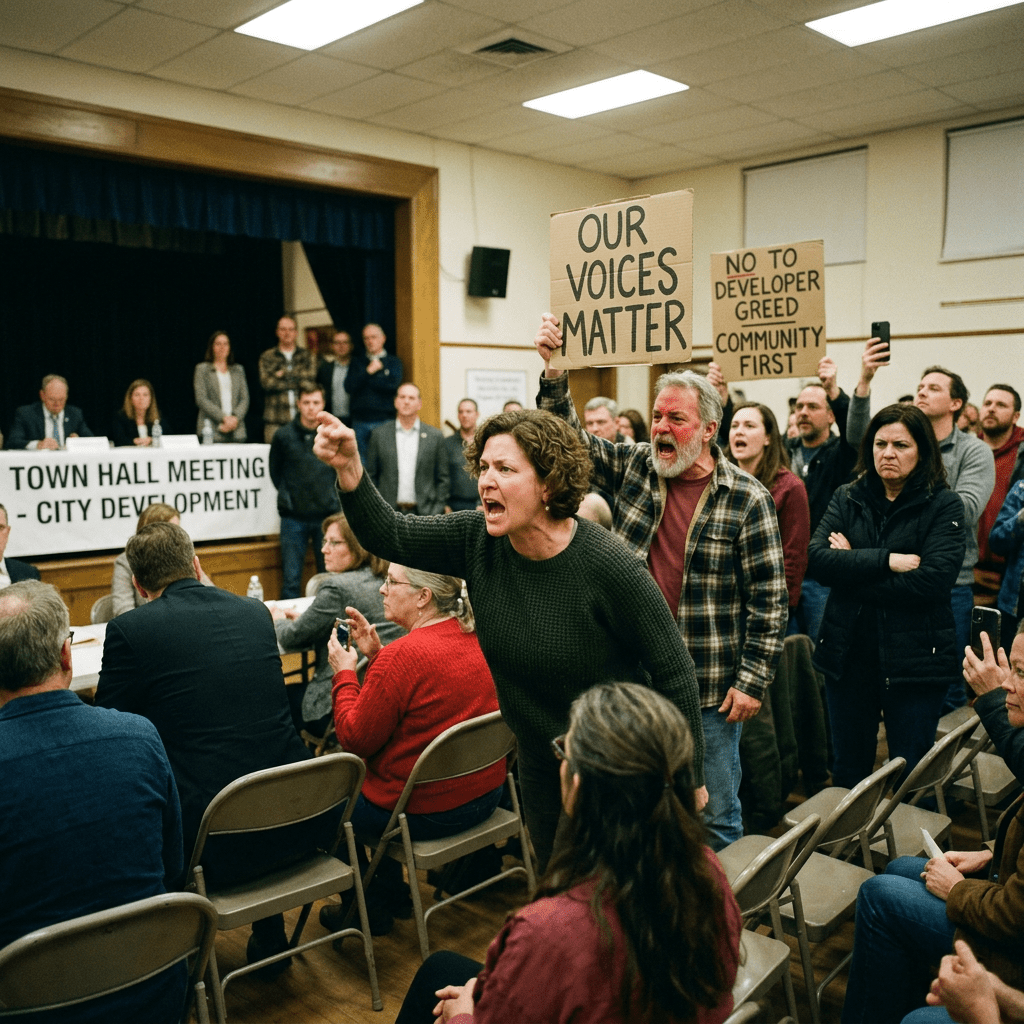
you be the judge, read between the lines i find often the downplayed snippets are far more significant than they are made to be, what is mentioned as not an issue… really was an issue. From what I know the issues are far greater than portrayed. The residents of multiple municipalities are not pleased, the fact that the two hosts no showed at the meeting speaks volumes.
for the expense put in by DNR, vs attendance this was a major financial FLOP.
NAW is reviewing it’s noise bylaws to address this and other issues surrounding the festival (first hand knowledge) this is not speculative. This has become an election issue.
Author’s note: I have not had direct conversations with the owners, stewards, or current administration of Raven’s Knoll about KN¿WHERE Festival. I am not speaking for Raven’s Knoll, Kaleidoscope Gathering, Hail and Horn Gathering, KN¿WHERE, or the wider Pagan community. These are my own personal reflections, and mine alone, based on public information, memory, history, and concern for land that has meant a great deal to many of us.
There is a strange spell moving over Raven’s Knoll this year.
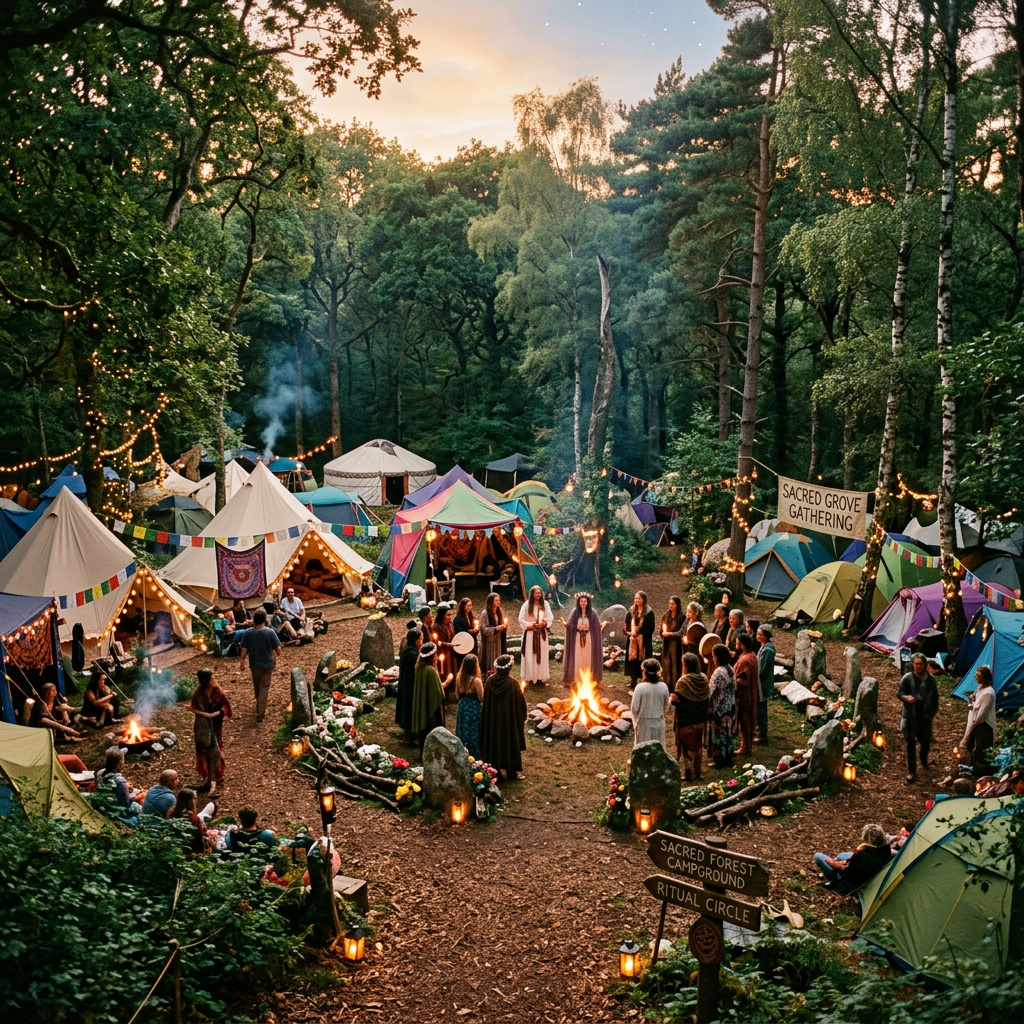
KN¿WHERE Festival is scheduled for early June at Raven’s Knoll, bringing a large electronic music and camping festival onto land that many Pagans and Heathens do not see as just a campground.
That distinction matters.
Raven’s Knoll has been many things over the years. It has been a campground. It has been a festival site. It has been a work site. It has been a business. It has been a gathering place. It has been, for some of us, home.
But it has also been sacred land.
That is the part I keep coming back to.
For many Pagans in Ontario and beyond, Raven’s Knoll became a home space around 2010, 2011, when Kaleidoscope Gathering found a permanent site there. Before that, Kaleidoscope Gathering had a more transient nature. It moved. It lived where it could live. Bob’s land. Gina’s land. Whispering Pines. Other places. It was carried by volunteers, by people showing up, by folk doing the work because the festival mattered enough to keep alive.
In those earlier days, my memory of KG is that the goal was simple: make enough money to run again next year.
That was the business model, if we can even call it that.
Survive. Gather. Feed the thing. Keep the doors open for next year.
Over time, that changed.
Kaleidoscope Gathering became tied to Raven’s Knoll as a permanent home. Raven’s Knoll itself became more established. The land developed. Sacred spaces were created. Structures changed. Policies changed. Leadership changed. The feel of things changed.
And somewhere along the way, at least from my own perspective, KG moved from being a festival shaped heavily by the people who attended it toward being a festival shaped more clearly by the people who run it.
That is not automatically evil.
Large events need structure. Land needs maintenance. Insurance exists. Hydro exists. Roads, toilets, wells, equipment, staffing, emergency plans, vendor systems, ticketing, food safety, fire rules, and municipal expectations do not magically take care of themselves.
But something changes when a folk gathering becomes a managed entity.
Something changes when a community space becomes a venue.
Something changes when sacred land also has to function as a business property.
And I think we need to be honest enough to sit with that tension.
The Heathen festival I was referring to was Hail and Horn Gathering.
That matters because Hail and Horn is not just another event on the calendar. It is tied directly to the Vé, to god-poles, to blót, húsel, symbel, the raising of sacred structures, and the maintenance of a Heathen sacred enclosure.
Looking at recent public materials, Hail and Horn itself appears to have gone through visible changes over the last few years. There have been changes in scheduling, volunteer structure, feast logistics, recognition practices, accessibility, non-alcoholic participation, and the way community decision-making is handled.
Again, change is not automatically bad.
Sometimes change is needed because a thing has grown.
Sometimes change is needed because the old structure can no longer carry the weight.
Sometimes change is a sign of health.
But sometimes change also leaves people wondering where the centre is now.
Who is the land for?
Who gets heard?
Who is considered part of the folk?
Who is a volunteer?
Who is staff?
Who is family?
Who is a customer?
And who gets called “not a team player” when they no longer fit the direction things are going?
I need to name my own baggage here.
I volunteered at Kaleidoscope Gathering for roughly eight years. I volunteered at Raven’s Knoll. I lived there for a time. I worked. I helped. I cared about the place.
Then it became time for me to move on.
About a year after that, I was deemed by the owners to be “not a team player” and removed from staff at Raven’s Knoll and from staff at Kaleidoscope Gathering.
That is a sore spot for me.
I would be lying if I pretended otherwise.
And because it is a sore spot, I have to be careful. My hurt is not evidence of current wrongdoing. My personal history is not proof of anyone’s present motives. My experience does not give me the right to turn this into a revenge piece.
But it does shape the question I keep asking:
What does “team player” mean in the current Raven’s Knoll structure?
Does it mean someone who serves the land?
Does it mean someone who serves the community?
Does it mean someone who supports the owners?
Does it mean someone who does not question the direction?
Does it mean someone who helps keep the machine running?
I do not know the answer.
But when sacred land is also a business, the meaning of loyalty can get complicated very quickly.
This is where KN¿WHERE Festival becomes more than just another booking.
A rave-style bass music festival at Raven’s Knoll is not automatically a disaster. I want to be clear about that.
Rave culture, at its best, carries its own forms of community, embodiment, music, movement, release, care, chosen family, and ecstatic experience. Pagans should not be too quick to sneer at dancing, altered states, night music, drums, lights, or people seeking freedom in a field.
We have our own versions of that.
So this is not “ravers bad, Pagans good.”
That would be lazy.
The issue is not the music.
The issue is not the dancing.
The issue is not outsiders coming onto the land.
The issue is whether sacred land can host a large non-Pagan festival without having its sacredness reduced to atmosphere.
That is the line.
Raven’s Knoll contains sacred gardens, art, ritual spaces, installations, shrines, the Vé, the Sacred Well, and places that have meaning because people have returned to them again and again with devotion.
Those spaces are not decorations.
They are not photo backdrops.
They are not “cool forest features.”
They are not interactive art unless they were created to be interacted with.
They are not rave infrastructure.
They are not there to add mystical branding to someone else’s weekend.
Most damage to sacred things does not begin with malice.
Often, it begins with ignorance.
Someone wanders somewhere they should not. Someone takes a picture they should not. Someone climbs something they do not understand. Someone leaves garbage. Someone thinks a shrine is an art piece. Someone thinks a god-pole is a prop. Someone thinks a sacred boundary is just rope.
And by the time everyone agrees that it mattered, the damage is already done.
Some of us remember Witches’ Sabbat at Raven’s Knoll.
Some remember it fondly. Some remember the way it ended. Some remember the spiral. Some remember the spitting incident. Some remember the rupture that followed.
I am not going to re-litigate that here. I was not in every room. I do not know every side. I am not turning memory into courtroom testimony.
But I will say this: Raven’s Knoll has already seen what happens when sacred space, conflict, public festival culture, and community trust collide.
You can repair a physical object.
You can clean stone.
You can rebuild a path.
You can replace rope.
You can replant a garden.
Trust is harder.
Trust is the real sacred infrastructure.
This remains the question I cannot shake.
What happens if one of the sacred spaces is defaced?
What happens if multiple sacred spaces are disturbed?
What happens if someone wanders into the Vé?
What happens if someone messes with the Sacred Well?
What happens if someone treats a shrine as festival décor?
What happens if there is spray paint, stickers, carving, broken glass, garbage, bodily fluids, or some “funny” social media moment that is not funny to the people who hold the land sacred?
And more importantly:
Is there a clear plan before anything happens?
Because if there is a plan, then this is a managed risk.
If there is no plan, then this is a test of luck.
Sacred land should not be protected by luck.
I do not know what has been arranged between Raven’s Knoll and KN¿WHERE. There may be strong protections already in place. There may be maps, signage, security, restricted areas, and staff briefings I know nothing about.
I hope there are.
If I were looking at this as someone who cares about the land, I would hope for at least the following:
That last one matters.
If something happens and the response is silence, minimization, or “it was just a festival,” the wound will be larger than the damage itself.
That is harder to answer.
From what I can find publicly, much of the visible discussion around KN¿WHERE is not coming from Pagan spaces. It is coming from local residents, municipal concerns, rave communities, and festivalgoers trying to decide whether they trust the event after previous issues.
Some people seem excited.
Some people seem skeptical.
Some people want Ontario to have a strong bass music festival.
Some people are worried about logistics, trust, noise, safety, fire, refunds, and whether the event is ready.
But I have not seen enough public Pagan commentary to say, “the Pagan community thinks this.”
And maybe we will not really know until after the event happens.
That may be the uncomfortable truth.
My concern is not only KN¿WHERE.
My concern is the direction of the land.
Over the last five years, Raven’s Knoll has changed. Kaleidoscope Gathering has changed. Hail and Horn Gathering has changed. The land itself has changed. The language around events has changed. The structure has changed.
Some of those changes may be necessary.
Some may be good.
Some may be overdue.
But change always raises a stewardship question:
What is being preserved while the structure evolves?
If Raven’s Knoll becomes more financially stable but less spiritually rooted, is that a win?
If more people come to the land but fewer understand what the land is, is that growth?
If sacred spaces remain physically intact but become background scenery for non-Pagan branding, have they really been protected?
If the land survives as a venue but weakens as a home space, what exactly has been saved?
I do not believe the answer is to close the gates forever.
I do not believe every non-Pagan event is a threat.
I do not believe Pagans should respond with panic, purity politics, or mob behaviour.
Hospitality matters.
Shared space matters.
Financial survival matters.
But hospitality without boundaries is not hospitality.
It is surrender.
If Raven’s Knoll is going to welcome large non-Pagan events, then the sacred identity of the land has to be made plain. Not hidden. Not assumed. Not whispered among those who already know.
Plain.
This land has sacred spaces.
This land has gods and spirits honoured on it.
This land has community memory embedded in it.
This land is not blank.
Come dance here if you are invited.
Come camp here if you are invited.
Come celebrate here if you are invited.
But do not mistake welcome for ownership.
Do not mistake beauty for permission.
Do not mistake sacred space for scenery.
I think respectful questions are fair.
Those are not hostile questions.
Those are stewardship questions.
If a place is sacred to a community, the community is allowed to care how it is protected.
My hope is simple.
I hope nothing bad happens.
I hope KN¿WHERE comes and goes cleanly.
I hope people dance, camp, listen to music, respect the land, respect the rules, and leave Raven’s Knoll no worse than they found it.
I hope the organizers understand they are not just renting a field.
They are stepping onto land with history.
Land with memory.
Land with devotion.
Land with wounds.
Land with gods.
Land with community ghosts, living and dead.
I hope Raven’s Knoll remains Raven’s Knoll.
Not just a venue.
Not just a brand.
Not just “a cool place for a festival.”
A Pagan home space.
A Heathen home space.
A place where sacred things still mean something.
The real test is not whether Raven’s Knoll can host a rave.
The real test is whether Raven’s Knoll can host a rave and still be recognized afterward as sacred land.
That is the spell being cast.
And like all spells, the result will depend on preparation, intention, boundaries, and what people are willing to protect.
Godspeed.
The following information is gathered from multiple posts sourced on the website for Ravens Knoll.
More commonly referred to as HHG, Hail and Horn is an annual gathering organized by Canadian Heathens to express in fullness an ancient religious custom. The gathering is anchored by three intertwined rituals – blót, húsel and symbel – and a deep reverence for the Gods.
HHG seeks to appeal to as many interests our varied participants enjoy. It is hoped that those who come will be able to express their relationships to the Gods, Ancestors and community however they feel most comfortable. That said, a happy medium between boisterous and introspective behaviour is the goal, so that everyone respects each other’s sensibilities at the proper times and places.
The festival is named for the values that are embodied each year in the actions of the people who attend.
“Hail” is about the worship of the Gods. The word “hail” means something which is healthy, holy, and wholesome. The whole of the HHG experience is orchestrated around the worship of the various holy powers (Gods, Ancestors, and land-spirits). Each year a new Goddess or God is selected to be given a central place in the community’s worship and a god-pole is raised by the folk to their honour, constituting a blót. The central theme of the weekend event is constructed around the mythos and esthetics of that deity so that a right ritual experience is the result.
“Horn” is about sacred social communion. The use of the “horn” is both symbolic and physical, as we not only share good words with each other in the hall, but also ever bear in mind the social bonds that rallying around the horn entails. At the ritual of symbel (sumbel) we sit within a metaphoric hall, upon benches pressed shoulder-to-shoulder, speaking boldly of our successes and gratitude to friends, family, and Ancestors.
A “gathering” is a time and place where community is built through the work of frið. HHG encourages kindreds, circle, study groups, groves, banners, hearths, and individuals to be together with other Heathen folk. We all recognize each group and person’s individuality, but also that we share common bonds and can work side-by-side with one another to accomplish shared goals, shared laughs by the hearth fire, or share a relationship with the holy powers. Gatherings of friends, kinships, and individuals was an important historic activity, as it is today. At HHG community building is a principle focus.
HHG is constructed to be a holistic, immersive experience. All of the rituals are connected to one another. It is hoped that those coming to the festival will feel drawn to a high degree of participation and engagement. It is an event of the folk, for the folk. It is not an event for tourists. The registration fees are structured to reflect this philosophy. (See “Are gifts required?” for more context on this second point.)
That said, it is understood that people can find the weekend to be a demanding one, physically, mentally, and emotionally. Also, some people simply do not have the time off work or have child-care responsibilities to which they must see. Therefore, any level of participation must be determined on a personal basis.
Many do find volunteering “behind the scenes”, prepping food or setting tables, to be an important act of devotion to the Gods as well as folk. This is always appreciated by all.
So, yes, it is possible, but it is not encouraged and doing so is less cost effective.
It is difficult to fully describe the feel of the rituals, but we will do our best.
Some have commented that the rituals are both powerful and introspective. Others find greater happiness in the sharing of food with friends, than the raising of a god-pole. As there are many different people coming to HHG, the “feels” of each are manifold. Many will tell you that at least one of the rituals has been incredibly meaningful and transformative.
The rituals are, in reality, not truly separate from one another. They are threads woven together to create a grander ceremony that is the tapestry of the whole festival. Each ritual relates to the others of the weekend, which is why people are encouraged to attend for the entire weekend. The esoteric rite often stands most apart from the other rituals, but it can provide a keystone of understanding linking the entire weekend’s experience for some people.
Ask a hundred Heathens, you will get a hundred answers. Therefore, we will describe blót in the context of HHG. Each year, a God or Goddess aligned with the ætt (tribe or clan) of the Æsir is carved into a pole which is raised in the Æsir Vé by the folk. Many offerings are given to the Gods, foremost of which are some of the raw ingredients which will be used to prepare the húsel feast on the next day. Once the god-pole (an idol) is raised, the folk are welcome to return throughout the weekend (and in the future) to give further offerings, building upon the gift cycle. This is the ritual where the most personal interactions with the Gods takes place.
Most anything can be a suitable offering. Many folk give mead (or other alcoholic strong drink), coins, jewelry, fruit, etc. Whatever is of importance to the giver is believed to be well-received in the Vé. Some give in relation to the nature of their request or as a thank you for favours already received. Offerings are usually symbolic and/or personal. For the most part, offerings that are considered to contravene the rules of the Vé are forbidden (such as items containing human body fluids).
Offerings are removed periodically from the Vé to be sunk in the Raven’s Knool Sacred Well or burnt in a sacred fire if it is not possible to sink them in the Well. Thus, please refrain from offering plastics or polluting items. Also, food items are much more likely to be quickly removed from the Vé and ritually transformed and sent on their way, in order to protect the lives of local wildlife that could become problematic visitors (such as bears and coy-wolves).
An esoteric ritual at HHG is a ritual containing mainly sorcerous or mystical elements. Long after nightfall on the night of the blót, a ritual is held to honour of Holy Power of the year. The ritual may include elements of divination, trance-work, possession, or performance. These rituals tend to by heavily influenced by personal or collective gnosis and may have more syncretic elements than other rituals at the gathering. It is important to note that not everyone is expected to participate. Some HHG participants prefer to relax after a long day by the hearth fire and reflect upon moments experienced at the blót. This is the ritual where the mystical and otherworldly experiences tend to occur (or, in reflection, afterwards).
The húsel is a sacred feast. The feast consists of a multi-course menu, thematically connected to the nature of the God or Goddess honoured in the given year. The menu is balanced and is inspired by the historic foodways of Heathen peoples and those they encountered. The meal is considered a sacral feast and is not just a meal with entertainment. The húsel is the link between the blót and symbel. The blót is for the Gods, the húsel is where the folk eat with one another, with the Gods, and with the Ancestors. We eat the same foods at húsel that are offered to the Gods in blót, húsel is an extension of blót. Many attendees volunteer to prepare the feast, others selflessly offering to provide table service to the majority and all enjoying the privilege of soulful eating in pleasant company. We serve each other and the Gods at húsel. This is the ritual where less formal relations are developed between people, the Gods, and the Ancestors.
The symbel (sumbel) is a form of communal ritual where words are spoken over a horn from which one drinks. At HHG, we use a more historically-inspired form of symbel than most. We sit in hall-like tents, side-by-side at the bench. An alcoholic beverage is used to fill the ceremonial drinking horn, Friðdrífa. The drink is made sacred through a blessing (i.e., hammer hallowed). A Byrele (Hornbearer) carries the drinking vessel to those who would speak. They may give toasts to whomever they wish and boast how they will. At a point, gifts are exchanged by those who would do so, during a part of the symbel called the “Giftstool” (the gifting round). At HHG, we do not oath at symbel as, understanding the sacral mechanics of the ritual, we cannot hold each other to follow-through as vast distances may separate us. It should be noted that boasting about something that is going to happen in the future gets into the realm of an oath, so the wording for such an utterance must be chosen carefully or avoided. This is the ritual were the most personal interactions between people takes place.
 Unplugged Pagan