Don’t Cut Off the Roots

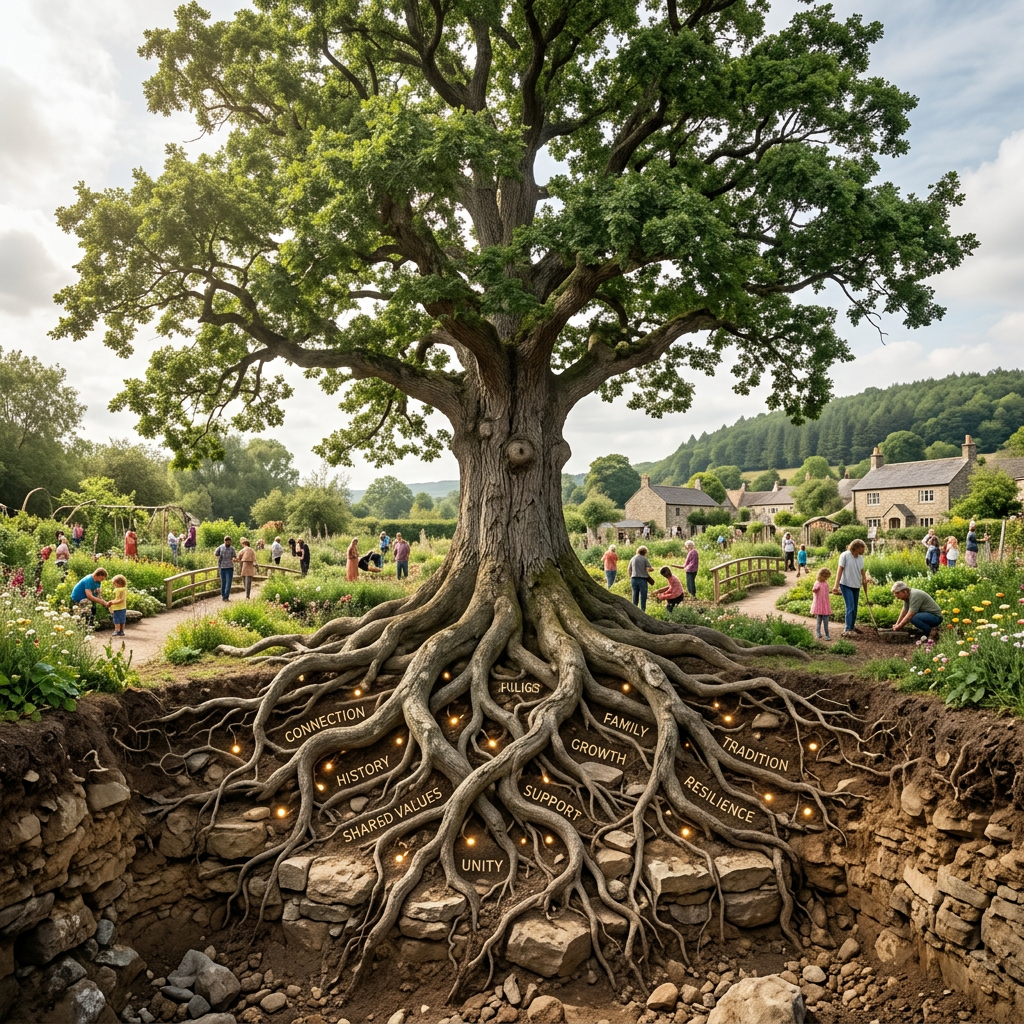
Large tree with roots labeled connection, history, shared values, unity, support, family, growth, resilience, tradition

Don’t Cut Off the Roots

Well, my dear Unplugged Pagans, this one may get a little metaphorical, so walk with me for a moment.

A tree is only as strong as the root system that supports it.

That sounds simple enough, but there is a lot of truth buried in that image. A tree can have a strong trunk. It can have healthy branches. It can stand tall, green, and impressive for everyone passing by to see. But if the roots are damaged, starved, ignored, or cut away, that tree is already in trouble.

It may not fall immediately.

It may not look sick right away.

It may still stand there for a season, maybe even several seasons, pretending by appearance that all is well.

But without its roots, it will weaken.

Without its roots, it will wither.

Without its roots, it will eventually die.

And lately, as I look around at life, community, memory, faith, and the places people build together, I find myself thinking about roots.

Some places seem to forget theirs.

Some places drift from the very people, stories, labour, rituals, memories, and quiet acts of care that made them what they were in the first place. Some places keep the name, the sign, the surface, the public face, and the outward shape, but slowly begin cutting away the roots beneath them.

And when that happens, something changes.

You may still have the trunk.

You may still have the branches.

You may still have the appearance of health.

But the life beneath it has been weakened.

This is not just true of trees. It is true of people. It is true of families. It is true of communities. It is true of spiritual places. It is true of pagan circles, old friendships, shared rituals, and the quiet ecosystems of belonging we often do not notice until they are gone.

Psychology tells us that human beings have a deep need to belong. We are not made only of individual willpower. We are also shaped by attachment, memory, recognition, and relationship. We come to know part of who we are through the people and groups we have stood beside. Sociology says something similar when it speaks of collective memory: communities remember through shared stories, shared places, shared practices, and shared meaning.

In plain language, roots matter.

Roots are not nostalgia.

Roots are not weakness.

Roots are not dead weight.

Roots are the living system that holds the tree in place.

I remember a time when someone decided that the pine needles on a forest floor were a problem. They saw the layer of fallen needles and thought it looked messy. They thought it needed to be cleaned up. Removed. Tidied. Made proper.

But the forest did not see those pine needles as garbage.

The forest knew better.

That layer of needles served a purpose. It held moisture. It slowed the drying of the soil. It sheltered small life. It fed the ground as it broke down. It helped support the fungal life beneath the surface. And that fungal life was part of the larger health of the forest.

Remove enough of that living layer, and the system changes.

The soil dries faster.

The balance shifts.

The small hidden relationships that kept things steady begin to weaken.

And then people stand back surprised when the trees start to suffer.

But the trees were not suffering because of one dramatic act. They were suffering because the quiet supports had been stripped away.

That is the lesson.

Sometimes what looks messy is actually protective.

Sometimes what looks old is actually foundational.

Sometimes what looks unnecessary is doing work you do not understand.

Sometimes the fallen needles are holding the forest together.

And so it is with our roots.

Our roots may be old stories. They may be elders. They may be former volunteers. They may be first fires, first rituals, first songs, first gatherings, first mistakes, first lessons. They may be the people who carried wood, washed dishes, watched gates, cleaned up after everyone went home, tended sacred spaces, held memory, welcomed strangers, and kept something alive before it had polish, structure, or public recognition.

Those people matter.

Those memories matter.

Those early acts of care matter.

And when a place forgets that, it risks becoming all canopy and no soil.

Pretty from a distance.

Weak underneath.

Now, to be clear, roots do not mean we never grow. Roots do not mean we stay frozen in the past. A healthy tree still reaches upward. A healthy forest still changes. Branches break. New shoots rise. Old trees fall and feed the next generation. Change is not the enemy.

But growth without roots is not growth.

It is drift.

It is performance.

It is a tree pretending it can live without soil.

For us as pagans, this should matter deeply.

We speak often of the land. We speak of ancestors. We speak of spirits, seasons, memory, offerings, fire, water, soil, and sacred place. But those words ask something of us. They ask us to pay attention to what holds life together beneath the surface.

They ask us not to confuse neatness with health.

They ask us not to confuse control with care.

They ask us not to confuse cutting away with cleansing.

Sometimes the sacred thing is not the polished altar.

Sometimes the sacred thing is the old layer of pine needles underfoot.

Sometimes the sacred thing is the story someone still remembers.

Sometimes the sacred thing is the person who has been quietly holding part of the root system while everyone else looked up at the branches.

So do not forget your roots.

Do not cut them off just because they are no longer convenient.

Do not dismiss them because they are old, complicated, imperfect, or covered in the debris of time.

Roots are rarely pretty.

Roots are tangled.

Roots are buried.

Roots are hard to show off.

But roots are what keep the tree standing when the weather turns.

And the weather always turns.

A forest is only as strong as its ecosystem. A person is only as steady as the truths they remain connected to. A community is only as healthy as the relationships, memories, and acts of care it refuses to forget.

So tend the roots.

Honour the soil.

Respect the old needles on the forest floor.

Remember what fed you.

Remember who helped build the path before you walked it.

And when you grow, grow upward from something real.

That is it. That is all for now, my Unplugged Pagans.

Godspeed.

Notes Beneath the Roots

This reflection draws on a few grounded ideas: the human need for belonging, social identity, collective memory, and the ecological role of forest-floor material, fungi, soil, and roots. In plain language, both people and forests depend on hidden systems of support.

The Flower Moon and Gramma’s Rule

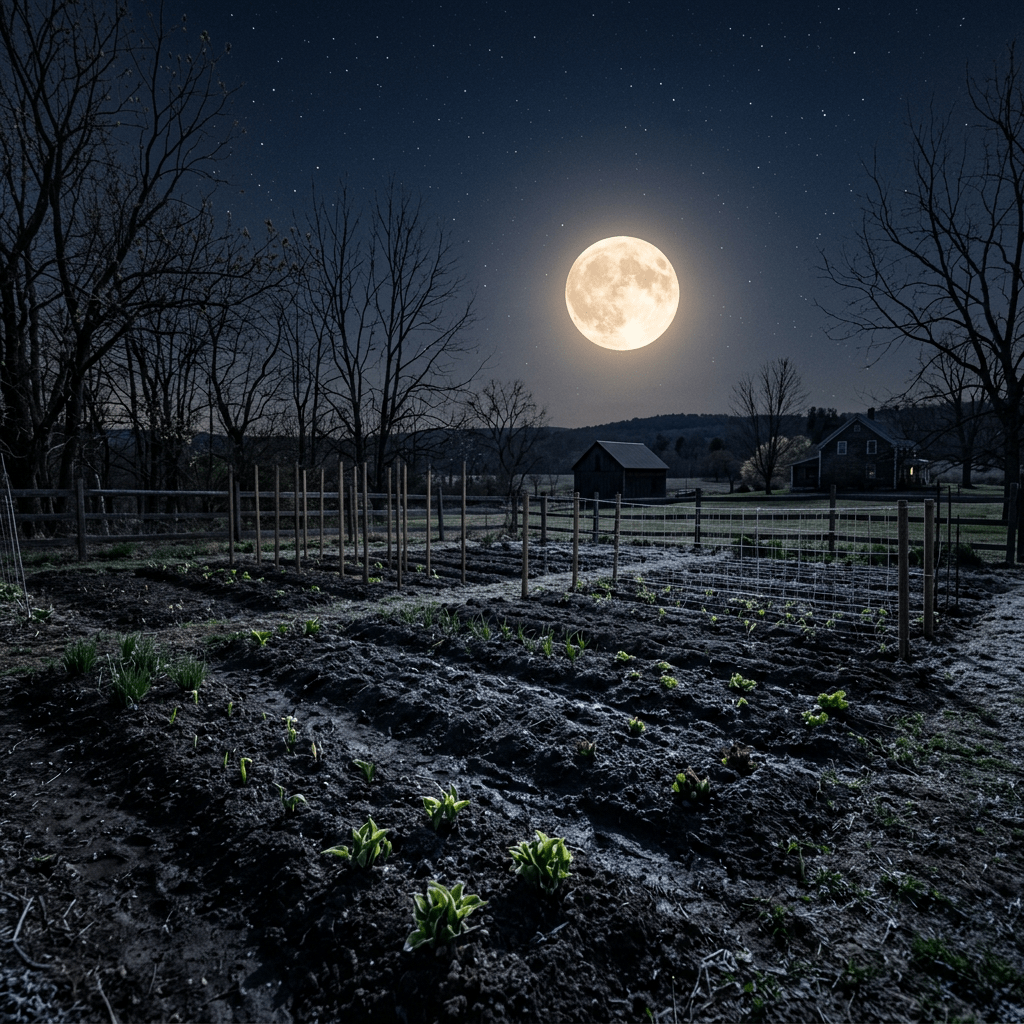
Young plants growing in garden beds under full moon and starry night

Hey there, Unplugged Pagans. How are you today?

Today is May 1st, and we are sitting under the light of the Flower Moon.

Now, let me correct myself right off the top before the moon herself corrects me. This is not technically a Blood Moon. A Blood Moon is tied to an eclipse. What we have this month is even stranger in its own quiet way: two full moons in May. Tonight brings us the Flower Moon, and at the end of the month, we get the second full moon, the Blue Moon.

So yes, May is giving us a double lunar month.

Interesting times indeed.

And fitting, really.

Because today, as beautiful as the moon may be, the ground is still cold. It is currently sitting around minus two, and the next couple of days are not exactly screaming “plant the tomatoes.” There is still cold in the air, still frost in the ground, and still enough risk that if you are thinking about putting your garden in this weekend, forget it.

Do not do it.

Do not even think about it.

Prepare your garden all you want. Clear the beds. Turn the soil if it is ready. Gather your tools. Make your plans. Stand there with a coffee and imagine what it will look like in July.

But do not put tender plants out yet.

I live by my grandmother’s rule on this one:

No gardening before the May long weekend.

Or as she would have said it, not until after the Queen’s birthday.

That is the golden rule of thumb.

You can argue with it if you want. You can get impatient. You can let one warm afternoon fool you. But the frost will not care about your optimism.

The land has its own timing.

Learn it.

A Virtual Full Moon Reading

Tonight’s reading is virtual again.

No big altar setup. No long ceremony. No drawn-out ritual. I want to get this done, get home, and go straight to bed.

But that does not make the reading less sacred.

Sometimes the sacred is not the long ritual.

Sometimes the sacred is the honest one.

So tonight, under the Flower Moon, I asked for a four-card Rider Waite spread:

Past. Present. Future. Querent.

And into this reading we invite Brigid, Skadi, Ratatoskr, the fir tree, and the landvættir — the spirits of the land beneath our feet, the ones who know better than we do when the soil is ready.

Moonchild Weather for May 1st

For Cancer, for the Moonchild, the theme today is emotional clarity.

There may be feelings sitting close to the surface. There may be people, memories, or familiar connections stirring something in the heart. Today asks the Moonchild not to hide from that, but also not to drown in it.

That is always the Cancer balancing act.

Feel deeply.

But do not let the feeling drive the whole wagon.

There is a difference between intuition and emotional weather. Today asks us to listen carefully enough to know which one is speaking.

Past — Nine of Pentacles Reversed

The Nine of Pentacles reversed speaks to a past where comfort, stability, and independence may have felt less secure than they looked from the outside.

This is the card of the garden that is not quite as settled as it appears.

There may have been work done. There may have been progress. There may have been signs of growth. But underneath it, there was still strain. Still uncertainty. Still the feeling that the ground could shift.

That fits the season.

We look outside and see spring trying to arrive. We see the promise of green. We see the sun climbing higher. But the soil says, “Not yet.”

Brigid steps into this card as the keeper of the hearth. She reminds us that abundance is not just what we harvest. It is what we protect before the harvest comes.

The lesson of the past is this:

Do not mistake appearances for readiness.

Present — Queen of Wands Reversed

The Queen of Wands reversed is today’s honest mood.

There is fire here, but it may be tired fire. Rushed fire. Irritated fire. The kind of fire that wants to get things done but is running low on patience.

That sounds about right.

May arrives. The moon is full. The garden calls. The weather says no. The body says bed. The spirit says, “Can we at least do something?”

This card says yes, but carefully.

You do not need to force the season.

You do not need to prove your devotion by burning yourself out.

You do not need to plant too early just because waiting feels like doing nothing.

Skadi stands in this card with cold, practical wisdom. She does not care how badly you want the mountain to soften. She cares whether you have respected the conditions in front of you.

The present lesson is this:

Power without patience becomes self-sabotage.

Future — Four of Wands Reversed

The Four of Wands reversed is a warning and a promise.

Upright, this card is celebration, homecoming, gathering, and stability. Reversed, it says the foundation is not quite ready yet.

Not destroyed.

Not doomed.

Just not ready.

That is the whole garden message today.

You can see the celebration coming. You can imagine the plants in the ground, the beds full, the green returning, the hands in the soil, the first real signs that winter has finally backed off.

But the landvættir are saying, “Wait.”

Not forever.

Just long enough.

Ratatoskr runs through this card as the messenger between impatience and wisdom. He says be careful what message you carry to yourself. Do not let one cold morning become despair. Do not let one warm afternoon become foolishness.

The future lesson is this:

Celebration comes stronger when the foundation is ready.

Querent — Ten of Cups Reversed

The card representing the querent is the Ten of Cups reversed.

That is a deep one.

This is the card of emotional fulfillment, home, belonging, family, peace, and the dream of everything finally feeling whole. Reversed, it does not mean those things are gone. It means there may be a gap between the dream and the current reality.

And honestly, that is a very Moonchild card.

Cancer carries the idea of home inside the ribs. Not just a house, not just four walls, but the feeling of being safe, rooted, loved, and at peace.

When the Ten of Cups is reversed, it asks:

What does home mean when the season is not ready yet?

What does peace mean when the ground is still cold?

What does fulfillment mean when you are tired and just trying to get through the day?

The fir tree answers this one.

It says: stay rooted.

The fir does not need summer to prove it is alive. It does not panic because the cold remains. It knows how to stand in between seasons.

The querent lesson is this:

Your peace does not have to be perfect to be real.

The Message From the Spirits

Brigid says: tend the hearth before you tend the garden. Rest is not wasted time. Warmth matters.

Skadi says: respect the cold. Respect the conditions. Do not let impatience put tender things at risk.

Ratatoskr says: watch the messages running through your mind. Not every thought is guidance. Some are just weather.

The fir tree says: endurance is quiet. Stand where you are. Do not rush the season.

The landvættir say: the ground is speaking. Listen before you plant.

Grandmother’s Rule

So here is today’s practical pagan wisdom:

Do not put the garden in too early.

Prepare, yes.

Plan, yes.

Clean up, yes.

Dream over seed packets, yes.

But do not confuse preparation with planting.

There is wisdom in waiting.

There is wisdom in watching the frost.

There is wisdom in the old rules that survived because somebody learned them the hard way.

No gardening before the May long weekend.

That rule has roots.

Full Moon Blessing

May this Flower Moon bless what is not ready yet.

May it bless the seeds still waiting.

May it bless the cold ground.

May it bless the tired gardener.

May it bless the Moonchild trying to feel deeply without being swept away.

May it bless the home we are still building, the peace we are still learning, and the season that will arrive when it is good and ready.

Godspeed, and may the full moon bless you.

The Hermit’s Cabin

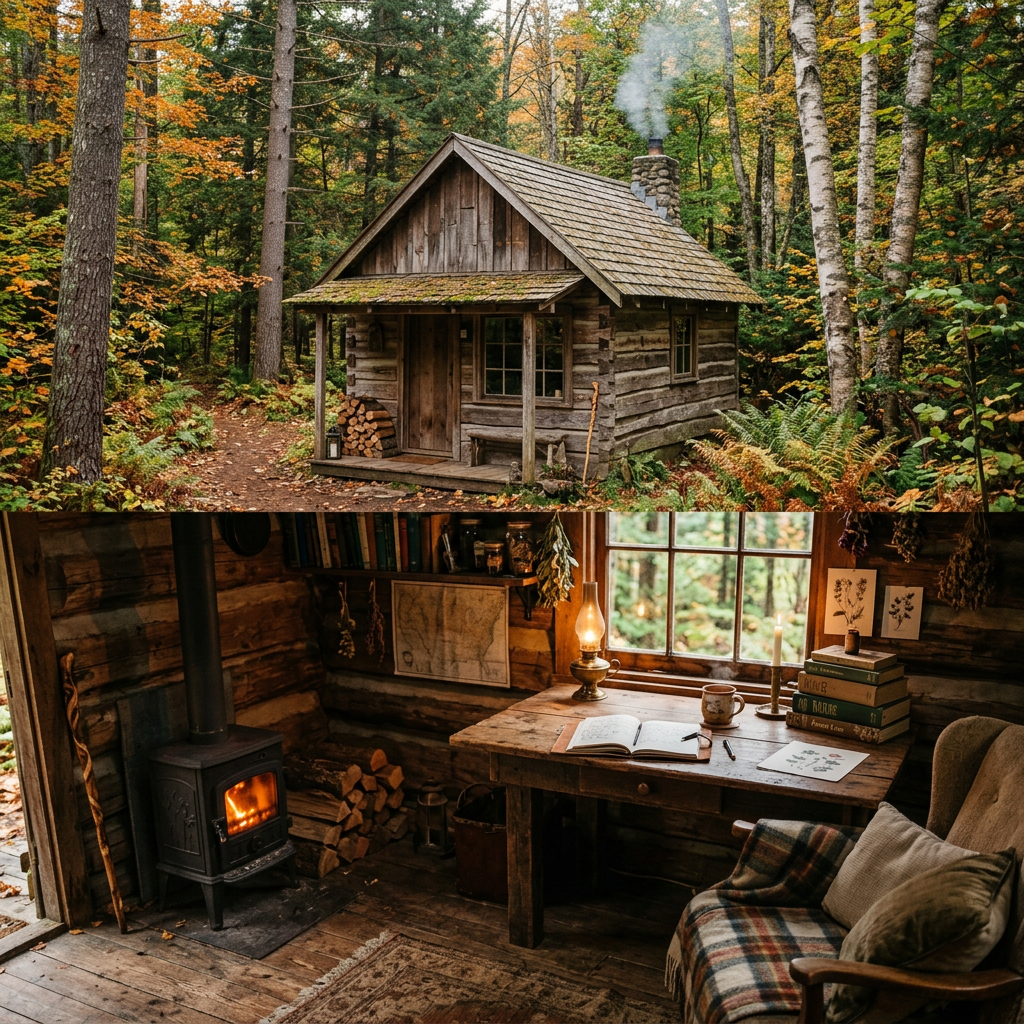
Small wooden cabin in forest with wood stove and cozy interior

Years ago, I wrote a short reflection about the perfect space for reading and writing.

At the time, it was mostly an image.

A cabin.

A quiet room.

Books close at hand.

A place to sit, read, think, write, and be left alone long enough for the mind to settle.

I said then that I might come back to it someday and add more.

Well, here we are.

And I think I understand the need better now.

Because the older I get, the less that cabin feels like fantasy.

It feels like a spiritual requirement.

Not Escape. Refuge.

There is a difference between running away and seeking refuge.

Running away is avoidance.

Refuge is recovery.

Running away says, “I do not want to face the world.”

Refuge says, “I need a place where the world cannot keep eating me alive.”

That is what the hermit’s cabin represents to me now.

Not some romantic disappearance from responsibility.

Not a dramatic exit from society.

Not a fantasy where bills, work, grief, family, health, memory, and obligation magically vanish at the tree line.

No.

The cabin is the place where a person can hear themselves again.

And in a noisy world, that is no small thing.

The Shape of the Room

I can see it clearly.

Not large.

It does not need to be large.

A small cabin tucked somewhere quiet. Trees close enough to feel like company, but not so close that the sky disappears. A little porch. A place for boots by the door. Maybe a woodpile stacked neatly along one side, because even dreams should come with chores.

Inside, there is a stove.

Not just for heat, though heat matters.

A stove changes the entire spirit of a room.

It gives the room a center.

It gives the cold somewhere to go.

It reminds you that comfort is not automatic. It is tended. It is fed. It is earned one split log at a time.

There would be a chair near the stove.

A real chair.

Not some decorative thing that looks good in a picture but punishes your back after twenty minutes.

A chair meant for long reading, long thinking, and the strange half-silence that comes when you stare into flame and realize your mind has finally stopped sprinting.

There would be a desk by a window.

That matters.

A desk should face something alive.

Trees. Field. Snow. Rain. Birds. Wind moving through branches. The ordinary world doing ancient things without needing applause.

That kind of view reminds a writer to stop being clever and start being honest.

Books as Companions

There would be books, of course.

Not endless shelves for performance.

Not a wall of books meant to impress visitors who were never invited in the first place.

Useful books.

Old favourites.

Myth and folklore.

Poetry.

History.

Psychology.

Sociology.

Pagan practice.

Field guides.

A few heavy books that demand a pencil in hand.

A few worn books that ask nothing from me except return.

Books are not just information.

They are company.

They are elders, tricksters, witnesses, argument partners, mirrors, maps, and occasionally good solid bricks for the rebuilding of a life.

In the hermit’s cabin, books would not be decoration.

They would be part of the hearth.

The Altar and the Workbench

There would be an altar, but not an overly polished one.

I have never been drawn to spiritual spaces that look too staged.

Give me something lived in.

A candle.

A bowl.

A stone picked up on a hard day.

A feather found by chance.

A small image or symbol for Brigid.

Something cold and clean for Skadi.

A branch, nut, or small token for Ratatoskr.

A piece of fir, or a cone, or even just the scent of evergreen in the room.

There would be incense sometimes.

There would be cards on the table.

There would be silence.

But the altar would not sit apart from the practical work of the room.

That matters to me.

The sacred does not need to be quarantined.

The altar and the workbench belong in conversation.

The candle and the notebook.

The prayer and the plan.

The old story and the next paragraph.

The ritual and the grocery list.

That is real life.

That is where practice lives.

A Room of One’s Own

Virginia Woolf wrote about the need for a room of one’s own, and I understand that more with every passing year.

A person needs space.

Not just square footage.

Not just storage.

Not just somewhere to sleep before work starts again.

Space.

Actual interior permission.

A door that closes.

A table that does not have to be cleared for someone else’s emergency.

A silence that is not immediately filled by demand.

A place where the mind can unfold without being interrupted halfway through the sentence.

For some people, that room is a studio.

For some, it is a garage.

For some, a garden shed, a basement corner, a spare bedroom, a library table, a parked car, a trail, a church pew, or a kitchen before sunrise.

For me, the image has always been the cabin.

The hermit’s cabin.

The place at the edge of things.

Close enough to the world to return.

Far enough away to remember who is returning.

The Hermit Is Not Empty

People sometimes misunderstand the Hermit.

They see isolation and think loneliness.

They see withdrawal and think failure.

They see solitude and think something has gone wrong.

But the Hermit is not empty.

The Hermit carries a lantern.

That part matters.

Solitude, at its best, is not the absence of life.

It is the tending of light.

The cabin is not where I would go to become less human.

It is where I would go to become more honest.

To read without rushing.

To write without performing.

To pray without explaining.

To sit with the gods, the ancestors, the old stories, the hard lessons, and the quiet stubborn flame that has somehow stayed alive through all of it.

Off-Grid, But Not Unrooted

There is also something appealing about the off-grid part of the dream.

Not because technology is evil.

I am not that naïve.

I use technology constantly. I write with it. I learn with it. I communicate through it. I build with it.

But there is a difference between using a tool and being swallowed by a system.

The cabin dream has less to do with rejecting the modern world and more to do with remembering that life does not have to be plugged into noise at every moment.

Wood heat.

Water carried or carefully stored.

Lantern light.

Simple food.

Books.

Paper.

Weather.

A rhythm that does not depend on a screen telling me what to care about next.

That is not poverty of life.

That is richness of attention.

The Sacred Need for Quiet

I think quiet has become one of the most underrated spiritual needs.

Not silence as punishment.

Not silence as abandonment.

Not the cold silence of being ignored.

I mean chosen quiet.

Restorative quiet.

The kind of quiet where thoughts stop shouting and start lining up.

The kind of quiet where grief can speak without being rushed.

The kind of quiet where a card reading has room to breathe.

The kind of quiet where a sentence arrives whole.

The kind of quiet where the gods do not need to compete with notifications.

That is the quiet I imagine in the hermit’s cabin.

Not dead silence.

Living quiet.

Stove ticking.

Wind outside.

Birds in the morning.

Rain on the roof.

Pen on paper.

Breath returning to its proper depth.

The Cabin I Can Build Now

Of course, I do not currently live in that perfect cabin.

Most of us do not live inside the image our soul keeps handing us.

But that does not make the image useless.

A vision can still teach.

The question is not only, “Can I build the cabin tomorrow?”

The question is, “What part of the cabin can I build now?”

A better reading chair.

A cleaner desk.

A candle before writing.

A shelf that holds the books I actually return to.

A morning ritual that does not begin with the phone.

A small altar that feels lived in, not staged.

A few minutes of fire, even if the fire is only a candle.

A little less noise.

A little more room.

A little more honesty.

Maybe that is how the hermit’s cabin begins.

Not with land, lumber, and a perfect life.

But with one protected corner.

One honest chair.

One flame.

One book.

One page.

The Place I Keep Returning To

So yes, I still think about that perfect space for reading and writing.

But I understand it differently now.

It is not just about comfort.

It is about attention.

It is about spiritual maintenance.

It is about the kind of solitude that does not make a person disappear, but helps them return with something worth carrying.

The hermit’s cabin is the place in my mind where the page, the hearth, the altar, and the self all meet without apology.

It is where Brigid gets her flame.

Where Skadi can stand outside in the cold without being feared.

Where Ratatoskr can chatter in the branches without taking over the whole room.

Where the Fir remains green at the edge of the clearing.

And where I sit, finally quiet enough to read, write, listen, and remember that a life does not have to be loud to be sacred.

Godspeed.