Gold, Silver, and the Roots we refuse to cut

Family of two adults and two children hugging happily outdoors with banknotes flying in the background

To quote an old friend: “You have chosen gold and silver over kith and kin.”

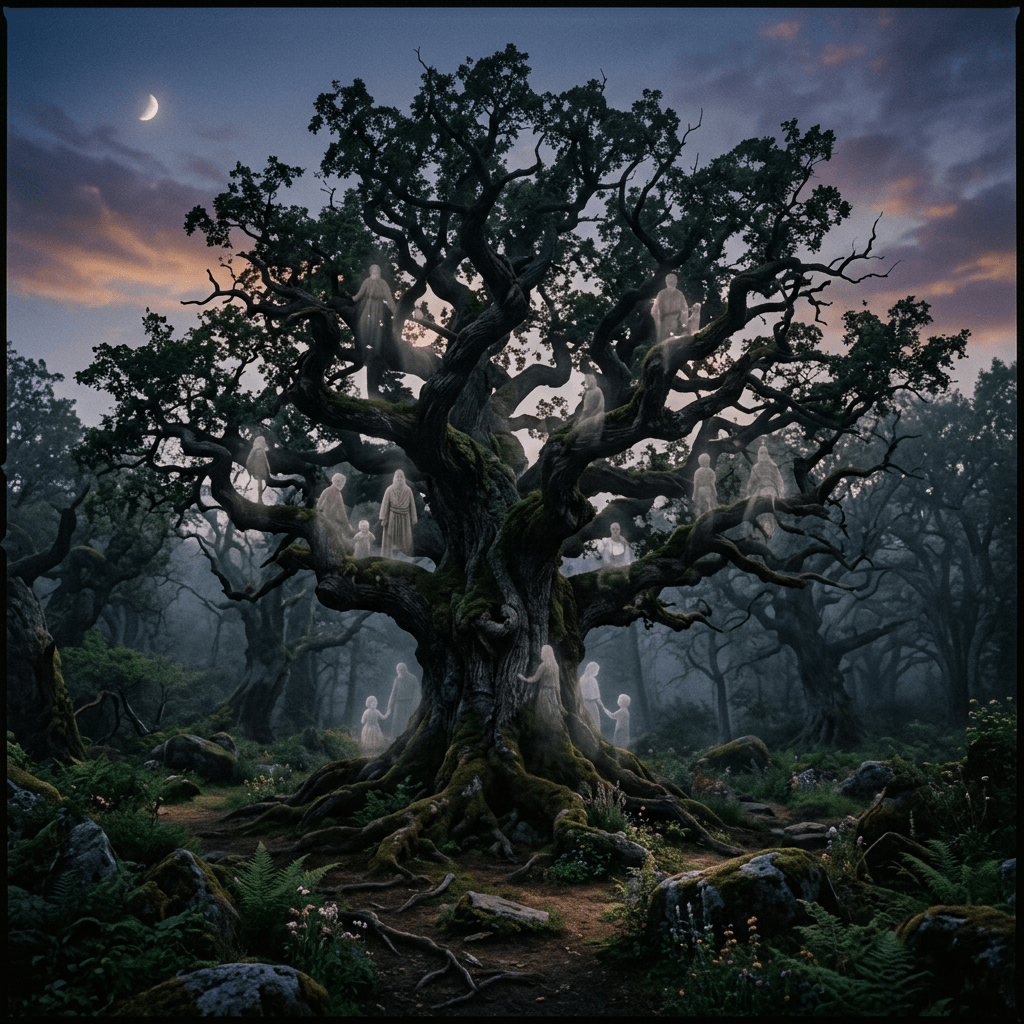
Those words tie directly into my earlier reflection, Don’t Cut Off the Roots. A tree may have strong branches. It may have a solid trunk. It may appear healthy from the outside. But if the roots are cut away, starved, ignored, or treated as disposable, the tree will eventually suffer. It may stand for a while. It may even look fine for a season. But the damage has already begun beneath the surface.

Today was a difficult choice day.

The quote I opened with rings more true than I ever thought it would. I never thought I would see the day where it would feel so personally accurate. Yet quite a few folk have reached out to me, and while they may not use those exact words, the sentiment is the same. Something has shifted. Something has been chosen. And what has been chosen does not appear to be kith and kin.

I choose kith and kin over gold and silver any day.

That does not mean gold and silver do not matter. Money keeps a roof over your head. It pays the hydro bill. It keeps the lights on. It pays for food, fuel, repairs, land, tools, buildings, amenities, and all the practical things that life requires. Pretending otherwise would be foolish.

But gold and silver do not sit beside you when the world is falling apart.

Gold and silver do not give you comfort when your spirit is tired.

Gold and silver do not restore your self-worth when you have been made to feel disposable.

Gold and silver do not remember your name around the fire.

Gold and silver do not become community. They do not become kinship. They do not become roots.

In Christian tradition, greed, or avarice, is counted among the seven deadly sins. In pagan language, I would say it another way: greed is what happens when the hoard becomes more sacred than the hearth. It is what happens when the keeping of things matters more than the keeping of bonds.

Words from the Wise One

The Hávamál, the sayings of the High One, has something sharp to say about wealth:

“Wealth is just like the winking of an eye, it’s the most fickle of friends.”

Hávamál, stanza 78

That line cuts cleanly. Wealth is not condemned outright. The old wisdom does not pretend that a person can live on air and good intentions. But wealth is called fickle. It comes and goes. It promises security, but it does not always keep that promise. It can vanish quickly. It can turn people against one another. It can make a person believe they are secure while everything human around them is being weakened.

And elsewhere, the Hávamál reminds us:

“Cattle die and kinsmen die, thyself too soon must die.”

Hávamál, stanza 75

That is not a cheerful line, but it is an honest one. Everything passes. Wealth passes. Status passes. Ownership passes. Even the people we love pass. The question is not whether we can hold everything forever. We cannot. The question is what we chose while we were here.

Did we choose the hoard, or did we choose the hearth?

Did we choose gold and silver, or did we choose kith and kin?

Did we remember the roots, or did we cut them off and then wonder why the forest grew sick?

A community is not made healthy by money alone. A sacred place is not made sacred by buildings alone. A gathering is not made whole by schedules, ticket sales, rules, or polished language. These things may support the structure, but they are not the roots.

The roots are the people.

The roots are the old bonds.

The roots are the ones who showed up before it was profitable, before it was polished, before it was convenient, before it became something that could be packaged and sold.

When those roots are forgotten, something living begins to dry out.

So today, I come back to the same place in my heart. I choose kith and kin. I choose the hearth over the hoard. I choose the roots over the shine of silver. I choose the people who remember what this was supposed to be, even when remembering hurts.

Gold and silver may keep the lights on.

But kith and kin are why we light the fire in the first place.

Godspeed to kith and kin.

The Earth Will Survive Us

Silhouette of a person dissolving into glowing particles with a sunset mountain landscape
CAUTION THIS POST MAY OFFEND SOME

There is something deeply uncomfortable about admitting that humanity is temporary.

Not metaphorically temporary.

Not politically temporary.

Not “we need to change our ways or things will get difficult” temporary.

I mean temporary in the older, colder, truer sense.

One day, human beings will be gone.

Maybe by our own hand. Maybe by disease. Maybe by climate, war, asteroid, famine, mutation, time, or some force we do not yet have a name for. Maybe not for thousands of years. Maybe not for millions.

But eventually?

Yes.

Eventually, we pass too.

Reader’s Moment

If that thought unsettles you, good.

It should.

Not because it is hopeless, but because it cuts through one of the deepest illusions modern humanity carries: the belief that we are permanent.

We build as if we are permanent.

We consume as if we are permanent.

We make plans as if history bends toward us forever.

Even our environmental language often carries the same arrogance.

We say we are going to save the Earth.

But are we?

Or are we trying to save the conditions that make human life comfortable, possible, and familiar?

That is not the same thing.

The Earth Is Not the Fragile One

The Earth has endured fire, ice, extinction, impact, flood, volcanic winters, shifting continents, poisoned atmospheres, and oceans that rose and fell long before anything resembling a human being stood upright and gave itself a name.

She has buried worlds before us.

She will bury ours too.

That is not cruelty.

That is time.

The Earth is not a glass ornament sitting on the edge of a shelf, waiting for humanity to catch it before it falls.

She is older than our prayers.

Older than our gods.

Older than our languages.

Older than our grief.

And if humanity vanished tomorrow, the wind would still move.

The rain would still fall.

The roots would still search downward.

The fungi would continue their quiet work.

Something would crawl, bloom, rot, adapt, and begin again.

Life may change shape, but the Earth does not require our permission to continue.

That Is the Revelation People Fear

I do not think people are only afraid of environmental collapse.

I think they are afraid of insignificance.

They are afraid of realizing that humanity may not be the main character of creation.

They are afraid of looking at the long story of this planet and seeing that we are recent.

A brief flame.

A loud animal.

A clever ape with tools, myths, machines, and a dangerous belief in its own importance.

That does not mean we are meaningless.

It means we are not eternal.

There is a difference.

The Problem With “Saving the Earth”

This is where I become cautious with some modern environmental thinking.

Not because I believe pollution is fine.

Not because I think forests should be stripped, rivers poisoned, animals erased, or every living thing turned into profit.

I do not believe that.

But I also do not believe every action taken under the banner of “saving the Earth” is automatically wise, balanced, or sacred.

Human beings have a bad habit of panicking in one direction after causing damage in another.

We create a problem through arrogance, then try to fix it with more arrogance.

We strip-mine in the name of green progress.

We industrialize our solutions.

We replace one form of extraction with another.

We call it sustainability because the slogan sounds cleaner than the machinery behind it.

That is not reverence.

That is rebranding.

A Pagan View of Extinction

From a pagan perspective, extinction is not unnatural.

That may be hard to hear.

But nature is not a museum.

Nature does not freeze every species in place because we find them beautiful, useful, symbolic, or emotionally comforting.

Things arise.

Things flourish.

Things decline.

Things vanish.

The leaf falls.

The body returns.

The bone becomes soil.

The old forest burns and something else grows where it stood.

This is not a failure of the sacred order.

This is the sacred order.

The mistake is believing humanity somehow stands outside that cycle.

We do not.

Humility, Not Hopelessness

Now, this does not mean we shrug and say, “Nothing matters.”

That is not wisdom.

That is laziness wearing a dark cloak.

The fact that humanity is temporary does not excuse carelessness.

A flower is temporary too.

So is a deer.

So is a fire.

So is a human life.

And yet we still tend the garden, feed the animals, honour the hearth, bury our dead, protect our children, and try not to poison the well we drink from.

Temporary things still matter.

Maybe they matter because they are temporary.

But we need to be honest about what we are protecting.

We are not saving the Earth.

We are trying to preserve a livable place for ourselves, our children, and the other beings currently sharing this age with us.

That is a worthy goal.

But it is not the same as pretending the planet cannot go on without us.

The Earth Does Not Need Our Ego

The Earth does not need our saviour complex.

She does not need our panic dressed up as virtue.

She does not need us to pretend every new technology is automatically salvation because someone placed a green label on it.

She does not need another priesthood of experts, corporations, politicians, and marketers telling ordinary people that salvation can be purchased in a newer, cleaner package.

What she may require from us, while we are here, is much simpler and much harder.

Restraint.

Humility.

Reverence.

Honesty.

The ability to say, “This helps us, but it still costs something.”

The ability to say, “This solution may not be as clean as we were told.”

The ability to say, “We are not gods. We are participants.”

The Old Lesson

The old ways never promised that human beings would last forever.

The old stories are full of endings.

Worlds burn.

Gods fall.

Winters come.

Kingdoms rot.

Heroes die.

Even the mighty are eventually taken back into the great turning.

That is not nihilism.

That is perspective.

To walk a pagan path is not to pretend nature is soft.

It is to know that nature is beautiful, brutal, generous, indifferent, intimate, and vast.

It feeds the lamb and the wolf.

It grows the healing herb and the poison berry.

It gives the harvest and the killing frost.

It gives birth, and it takes back.

Always.

So What Do We Do?

We live well while we are here.

We stop pretending our comfort is the centre of the universe.

We stop calling every human fear a planetary emergency.

We stop using “saving the Earth” as a way to avoid saying, “We are afraid of our own ending.”

We plant trees anyway.

We protect water anyway.

We waste less anyway.

We question easy answers anyway.

We resist greed anyway.

We honour the land anyway.

Not because we are immortal.

Not because we are saviours.

Not because the Earth will collapse into nothing without us.

But because relationship matters while it exists.

Because the hearth matters even though the fire eventually burns down.

Because the song matters even though the singer dies.

Because the path matters even though no one walks it forever.

The Hard Comfort

Humanity will pass.

That is not a curse.

That is the same law that governs leaf, bone, star, empire, forest, and flesh.

The Earth will survive us.

Perhaps changed by us.

Perhaps scarred by us.

Perhaps relieved of us.

But she will continue in some form, because continuation is what she has always done.

The question is not whether we can make ourselves eternal.

We cannot.

The question is whether, while we are here, we can become humble enough to live as kin instead of conquerors.

That may be the real spiritual work.

Not saving the Earth.

Saving ourselves from the illusion that we were ever outside her reach.

Godspeed, fellow walkers of the old paths.

Pagan Symbols Are Not Dictionaries

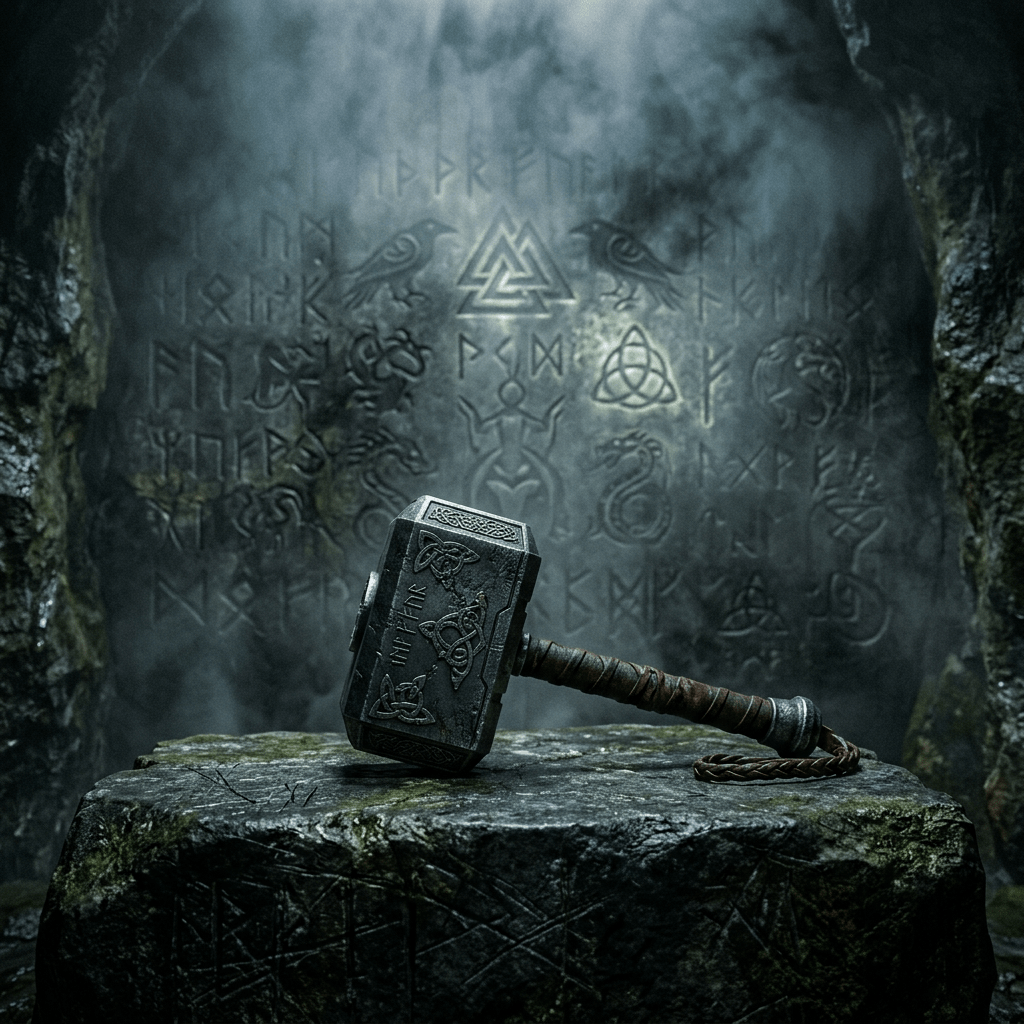
Norse hammer with runic engravings lying on stone altar in misty cave

In an earlier post, I wrote about the art on Mjölnir and what it really means.

Or maybe more honestly, what it can mean.

That distinction matters.

Because one of the traps modern pagans can fall into — and I include myself in this — is treating every symbol like a dictionary entry.

This mark means this.

That knot means that.

This rune always means protection.

That symbol always means Odin.

This design is ancient.

That design is Viking.

This one is definitely historical because somebody on the internet said it with confidence.

And there is the problem.

Confidence is not evidence.

Aesthetic is not history.

Personal meaning is not the same thing as documented tradition.

And yet, personal meaning is not worthless either.

That is the line I keep coming back to.

The Trouble With Certainty

Pagan symbolism sits in a strange place.

Some of it is old.

Some of it is reconstructed.

Some of it is modern.

Some of it is inspired by older material but not identical to anything our ancestors would have worn, carved, painted, or prayed over.

And some of it has been repeated so often online that people mistake repetition for proof.

That does not mean we throw everything away.

It means we slow down.

It means we ask better questions.

Where does this symbol actually appear?

How old is the evidence?

Is the name ancient, or is the name modern?

Was this used in a religious context, a decorative context, a magical context, a political context, or do we simply not know?

And maybe the most important question:

Am I saying “this is what it meant,” or am I saying “this is what it means to me”?

Those are not the same sentence.

Mjölnir Has Weight

Mjölnir is one of the easier symbols to talk about because it has real historical weight behind it.

Thor’s hammer appears across Norse material culture and myth. It has protective force. It has sacred force. It belongs to thunder, strength, blessing, defense, and the hallowing of important moments.

That does not mean every modern hammer pendant is a perfect copy of an ancient artifact.

It does not mean every decorative knot or animal shape carved into one has one single fixed meaning.

But Mjölnir itself has roots.

It is not just an internet invention.

It is not just a fantasy logo.

It carries something older than the modern marketplace around pagan identity.

For me, that matters.

When I look at Mjölnir, I do not see only Thor as a comic-book thunder god or a simplified symbol of masculine force. I see protection. I see boundary. I see the power to hallow. I see the hammer that can bless, defend, and strike when needed.

But even there, I have to be careful.

That is my reading.

It is informed by tradition, but it is still my lived relationship with the symbol.

The Valknut, Vegvísir, and the Fog Around Symbols

Other symbols get foggier.

The Valknut is one of those symbols people often speak about with more certainty than the evidence allows.

It is powerful visually. Three interlocked triangles. Death, Odin, warriors, binding, sacrifice, the slain — those associations circle around it constantly in modern pagan spaces.

But when we speak about it, we should be honest about what we know and what we are interpreting.

“This symbol appears in contexts that may connect it to death, Odin, or the slain” is one kind of statement.

“This definitely meant exactly this to every Norse person who saw it” is another.

The first is careful.

The second is costume certainty.

Vegvísir is another good example.

It is beautiful. It is meaningful to many people. It is often treated online as an ancient Viking compass, but that simple version of the story is not the whole story.

Its documented history is later and more complicated than the popular internet version usually admits.

Does that make Vegvísir meaningless?

No.

But it does mean we should stop calling everything “ancient Viking” just because it looks good beside a longship.

There is nothing wrong with saying:

This symbol speaks to me.

This symbol helps me feel guided.

This symbol has become part of my practice.

This symbol carries personal meaning.

There is something wrong with pretending personal meaning automatically becomes historical fact.

Personal Meaning Is Not the Enemy

This is where people sometimes get defensive.

They hear caution and think it means dismissal.

They hear “that may not be historically accurate” and think it means “you are not allowed to use it.”

That is not what I am saying.

Modern paganism is not museum cosplay.

We are not living in the Viking Age, the Iron Age, or the old tribal worlds of Europe. We live now. We live with modern jobs, modern wounds, modern homes, modern technology, modern grief, modern confusion, modern loneliness, and modern spiritual hunger.

So yes, symbols evolve.

Yes, people form relationships with symbols in new ways.

Yes, a symbol can become spiritually meaningful even when its history is complicated.

But honesty matters.

I do not need to lie about a symbol’s age to let it matter to me.

I do not need to pretend a modern interpretation is ancient in order to make it sacred.

I do not need false certainty to have a real practice.

In fact, I think the practice gets stronger when I stop needing everything to be older, purer, or more official than it actually is.

Three Different Buckets

This is the way I try to sort it now.

First, there is evidence.

That is the historical bucket. Artifacts. manuscripts. carvings. archaeology. language. context. What can we reasonably say was there?

Second, there is tradition.

That is the inherited and reconstructed bucket. Stories, lore, repeated meanings, devotional patterns, and the ways communities have carried symbols forward.

Third, there is personal meaning.

That is the lived bucket. The symbol on your altar. The pendant around your neck. The mark you return to when you need courage, protection, guidance, remembrance, or grounding.

All three matter.

But they are not the same thing.

Confusing them creates shallow certainty.

Separating them creates deeper practice.

What the Art Means

So what does the art on Mjölnir mean?

Sometimes it means what we can historically support.

Sometimes it means what a maker intended.

Sometimes it means what a community has come to see in it.

Sometimes it means what you carry into it after years of wearing it close to the skin.

And sometimes, if we are honest, we do not fully know.

That should not scare us.

Mystery is not failure.

Not knowing everything about a symbol does not make it empty.

It may actually leave room for relationship.

The mistake is not loving a symbol whose history is complicated.

The mistake is refusing to admit the history is complicated.

A Better Way to Wear the Hammer

If I wear Mjölnir, I want to wear it honestly.

Not as a costume.

Not as a claim that I have solved Norse paganism.

Not as a badge of internet certainty.

But as a symbol of protection, blessing, strength, and sacred boundary.

As something rooted in old soil, yes, but still alive in the present.

As something that carries history, tradition, and personal meaning without forcing all three to become the same thing.

That, to me, is the more honest path.

Let the evidence be evidence.

Let tradition be tradition.

Let personal meaning be personal meaning.

And let the symbol breathe.

Pagan symbols are not dictionaries.

They are doors.

They are thresholds.

They are old marks carried into new hands.

Some come with clear stories.

Some come with fog.

Some come with warnings.

Some come with beauty.

And some simply sit against the chest, close to the heartbeat, reminding us that meaning does not always arrive as certainty.

Sometimes it arrives as relationship.

Godspeed.

In an earlier post, I wrote about the art on Mjölnir and what it really means.

Or maybe more honestly, what it can mean.

That distinction matters.

Because one of the traps modern pagans can fall into — and I include myself in this — is treating every symbol like a dictionary entry.

This mark means this.

That knot means that.

This rune always means protection.

That symbol always means Odin.

This design is ancient.

That design is Viking.

This one is definitely historical because somebody on the internet said it with confidence.

And there is the problem.

Confidence is not evidence.

Aesthetic is not history.

Personal meaning is not the same thing as documented tradition.

And yet, personal meaning is not worthless either.

That is the line I keep coming back to.

The Trouble With Certainty

Pagan symbolism sits in a strange place.

Some of it is old.

Some of it is reconstructed.

Some of it is modern.

Some of it is inspired by older material but not identical to anything our ancestors would have worn, carved, painted, or prayed over.

And some of it has been repeated so often online that people mistake repetition for proof.

That does not mean we throw everything away.

It means we slow down.

It means we ask better questions.

Where does this symbol actually appear?

How old is the evidence?

Is the name ancient, or is the name modern?

Was this used in a religious context, a decorative context, a magical context, a political context, or do we simply not know?

And maybe the most important question:

Am I saying “this is what it meant,” or am I saying “this is what it means to me”?

Those are not the same sentence.

Mjölnir Has Weight

Mjölnir is one of the easier symbols to talk about because it has real historical weight behind it.

Thor’s hammer appears across Norse material culture and myth. It has protective force. It has sacred force. It belongs to thunder, strength, blessing, defense, and the hallowing of important moments.

That does not mean every modern hammer pendant is a perfect copy of an ancient artifact.

It does not mean every decorative knot or animal shape carved into one has one single fixed meaning.

But Mjölnir itself has roots.

It is not just an internet invention.

It is not just a fantasy logo.

It carries something older than the modern marketplace around pagan identity.

For me, that matters.

When I look at Mjölnir, I do not see only Thor as a comic-book thunder god or a simplified symbol of masculine force. I see protection. I see boundary. I see the power to hallow. I see the hammer that can bless, defend, and strike when needed.

But even there, I have to be careful.

That is my reading.

It is informed by tradition, but it is still my lived relationship with the symbol.

The Valknut, Vegvísir, and the Fog Around Symbols

Other symbols get foggier.

The Valknut is one of those symbols people often speak about with more certainty than the evidence allows.

It is powerful visually. Three interlocked triangles. Death, Odin, warriors, binding, sacrifice, the slain — those associations circle around it constantly in modern pagan spaces.

But when we speak about it, we should be honest about what we know and what we are interpreting.

“This symbol appears in contexts that may connect it to death, Odin, or the slain” is one kind of statement.

“This definitely meant exactly this to every Norse person who saw it” is another.

The first is careful.

The second is costume certainty.

Vegvísir is another good example.

It is beautiful. It is meaningful to many people. It is often treated online as an ancient Viking compass, but that simple version of the story is not the whole story.

Its documented history is later and more complicated than the popular internet version usually admits.

Does that make Vegvísir meaningless?

No.

But it does mean we should stop calling everything “ancient Viking” just because it looks good beside a longship.

There is nothing wrong with saying:

This symbol speaks to me.

This symbol helps me feel guided.

This symbol has become part of my practice.

This symbol carries personal meaning.

There is something wrong with pretending personal meaning automatically becomes historical fact.

Personal Meaning Is Not the Enemy

This is where people sometimes get defensive.

They hear caution and think it means dismissal.

They hear “that may not be historically accurate” and think it means “you are not allowed to use it.”

That is not what I am saying.

Modern paganism is not museum cosplay.

We are not living in the Viking Age, the Iron Age, or the old tribal worlds of Europe. We live now. We live with modern jobs, modern wounds, modern homes, modern technology, modern grief, modern confusion, modern loneliness, and modern spiritual hunger.

So yes, symbols evolve.

Yes, people form relationships with symbols in new ways.

Yes, a symbol can become spiritually meaningful even when its history is complicated.

But honesty matters.

I do not need to lie about a symbol’s age to let it matter to me.

I do not need to pretend a modern interpretation is ancient in order to make it sacred.

I do not need false certainty to have a real practice.

In fact, I think the practice gets stronger when I stop needing everything to be older, purer, or more official than it actually is.

Three Different Buckets

This is the way I try to sort it now.

First, there is evidence.

That is the historical bucket. Artifacts. manuscripts. carvings. archaeology. language. context. What can we reasonably say was there?

Second, there is tradition.

That is the inherited and reconstructed bucket. Stories, lore, repeated meanings, devotional patterns, and the ways communities have carried symbols forward.

Third, there is personal meaning.

That is the lived bucket. The symbol on your altar. The pendant around your neck. The mark you return to when you need courage, protection, guidance, remembrance, or grounding.

All three matter.

But they are not the same thing.

Confusing them creates shallow certainty.

Separating them creates deeper practice.

What the Art Means

So what does the art on Mjölnir mean?

Sometimes it means what we can historically support.

Sometimes it means what a maker intended.

Sometimes it means what a community has come to see in it.

Sometimes it means what you carry into it after years of wearing it close to the skin.

And sometimes, if we are honest, we do not fully know.

That should not scare us.

Mystery is not failure.

Not knowing everything about a symbol does not make it empty.

It may actually leave room for relationship.

The mistake is not loving a symbol whose history is complicated.

The mistake is refusing to admit the history is complicated.

A Better Way to Wear the Hammer

If I wear Mjölnir, I want to wear it honestly.

Not as a costume.

Not as a claim that I have solved Norse paganism.

Not as a badge of internet certainty.

But as a symbol of protection, blessing, strength, and sacred boundary.

As something rooted in old soil, yes, but still alive in the present.

As something that carries history, tradition, and personal meaning without forcing all three to become the same thing.

That, to me, is the more honest path.

Let the evidence be evidence.

Let tradition be tradition.

Let personal meaning be personal meaning.

And let the symbol breathe.

Pagan symbols are not dictionaries.

They are doors.

They are thresholds.

They are old marks carried into new hands.

Some come with clear stories.

Some come with fog.

Some come with warnings.

Some come with beauty.

And some simply sit against the chest, close to the heartbeat, reminding us that meaning does not always arrive as certainty.

Sometimes it arrives as relationship.

Godspeed.