

Well, my dear Unplugged Pagans, we have reached the Summer Solstice.
The sun has climbed as high as it will climb. The day has stretched itself to its greatest length, and for one brief moment, the Wheel appears to pause beneath the long light.
This is traditionally a time of celebration: fire, flowers, gardens, green fields and the fullness of the living world.
But the Solstice is also a good place to stop and look behind us.
Not all the way back.
Just far enough to ask what has changed since the Spring Equinox.
What was planted?
What survived?
What failed to take root?
And what grew without us noticing?
The Season Began in Cold Ground
Spring did not arrive all at once this year.
The calendar said the season had changed, but the ground was still cold. Frost remained possible. Seedlings were ready in spirit long before the land was ready to receive them.
That became one of the first lessons of this season:
Do not force the planting simply because you are tired of waiting.
Some things need preparation before exposure.
Some things need another night indoors.
Some things must remain protected until their roots are strong enough to survive the weather.
That was true of the garden, but it was also true of me.
There were plans forming. Papers moving. Books being written. Courses beginning. Old structures closing and unfamiliar ones opening. There was a temptation to treat every movement as a demand for immediate action.
Spring kept answering:
Not yet.
Prepare the soil.
Clear the ground.
Strengthen the roots.
The season will come.
The Gods, Spirits and Sacred Companions
During these months, Brigid, Skadi, Ratatoskr, the fir tree and the landvættir became more than names spoken during a card reading or placed around a seasonal ritual.
They became ways of understanding the weather of my life.
Brigid and the Useful Flame
Brigid was found at the workbench and upon the page.
She was not merely the attractive flame upon an altar. She was the useful fire: the kettle, the desk lamp, the forge and the stubborn effort to make something worthwhile from whatever life had handed me.
Her fire did not demand spectacle.
It asked to be tended.
It reminded me that inspiration is not only the sudden arrival of beautiful words. Inspiration is also the discipline required to remain at the page until the words finally come.
Skadi and the Clean Boundary
Skadi stood at the cold boundary.
She did not pretend the mountain was warm. She did not apologize for the winter, nor did she promise that every path would be easy.
She taught that discomfort is not always danger, patience is not surrender and a clean boundary does not become cruelty simply because someone else dislikes it.
There are times to open the door.
There are also times to close it against the storm.
Ratatoskr and the Noise in the Branches
Ratatoskr ran through the noise.
Messages, worries, emails, interpretations, old memories and imagined disasters travelled endlessly between root and crown.
His lesson was not simply to listen.
It was to discern.
Not every thought is prophecy.
Not every message deserves an answer.
Not every fear needs to be carried from the roots to the highest branches.
The Fir Tree That Remained Standing
The fir tree remained standing.
Not untouched.
Not unweathered.
Standing.
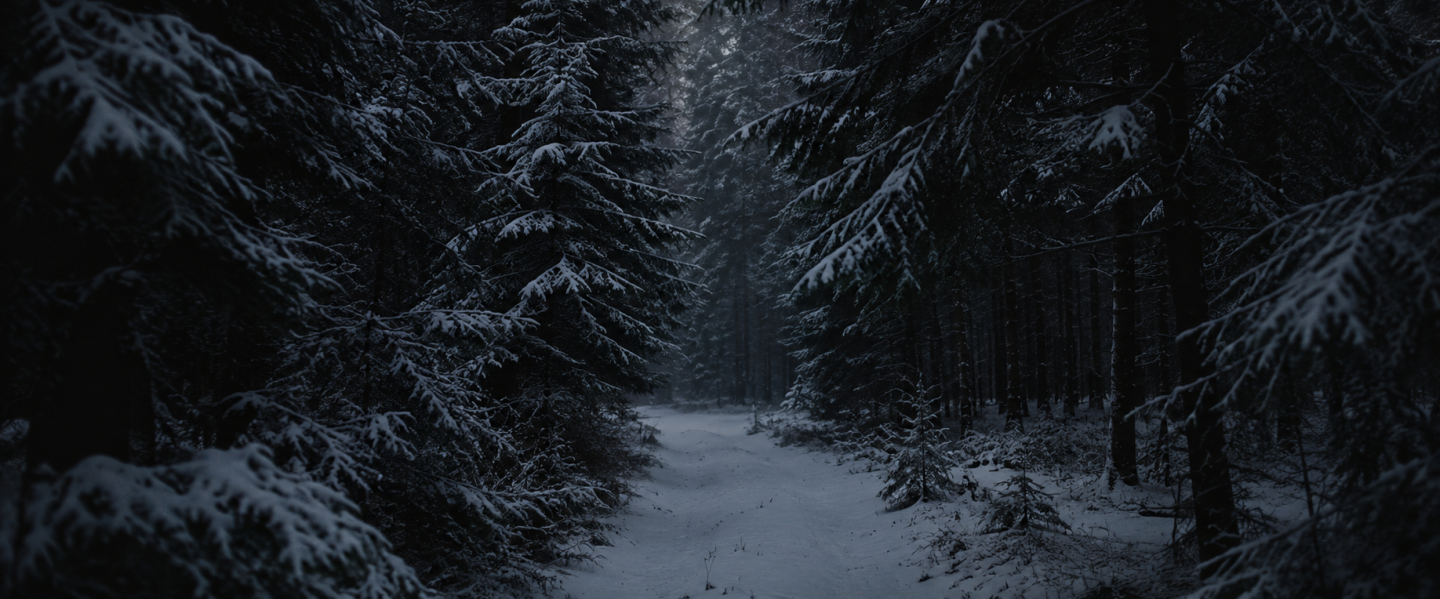
Evergreen did not mean that winter had failed to reach it. It meant that something living remained despite the winter.
That may be the clearest description of this spring.
Something living remained.
The Landvættir Beneath Every Step
The land spirits were present beneath all of it.
They were in the soil that accepted the seed, the stones that marked the boundaries, the trees that held the birds and the roadside places passed during long journeys.
The landvættir reminded me that no spiritual path exists entirely inside the mind.
We walk somewhere.
We plant somewhere.
We build, rest, grieve and begin again upon actual ground.
To honour the spirits of the land is to pay attention to where we place our feet and what we leave behind us.
Paganism Came Down From the Shelf
This season stripped away more of the performance surrounding spiritual practice.
The sacred did not always arrive through a formal ritual.
Sometimes it arrived through a roadside card reading.
Sometimes through cancelling an expense that no longer served.
Sometimes through planting potatoes left over from the previous harvest.
Sometimes through clearing a room, backing up an old computer, going to work, coming home or admitting that the body had carried enough for one day.
The altar and the workbench began speaking to one another.
The prayer and the plan sat at the same table.
Kevin and Lugh stopped appearing like two separate people and became two names belonging to one life.
One handles the paperwork.
One remembers the fire.
Most days, both are doing both.
That integration may be one of the most important things to have grown during this part of the Wheel.
Spirituality became less of a separate room entered for special occasions and more of a way to remain present while dealing with ordinary reality.
A candle does not solve the problem, but it may steady the hand that does.
Some Roots Had to Be Examined
Spring also brought old land, old relationships and old ideas of community back into view.
That was not always comfortable.
It raised questions about belonging, stewardship, memory, frith, loyalty and the difference between tending something and possessing it.
There are places we once called home that may no longer be home.
There are communities we helped build that may no longer remember the hands that carried the wood.
There are relationships that were real, meaningful and sacred in their season, yet no longer bind us in the same way.
Honouring the past does not require returning to live inside it.
Remembering does not create an obligation to repair everything we once touched.
Sometimes the sacred act is to stand at the edge of the old place and say:
I remember.
I honour.
I release what is no longer mine to carry.
Release does not mean forgetting the roots.
Roots are not always tidy. They are tangled, buried and difficult to display. They are the old stories, early labour, first fires, shared meals, mistakes, relationships and acts of care that allowed something to grow.
A tree may keep its sign, its branches and its impressive appearance for a time after its roots have been damaged.
But appearance is not health.
This spring taught me to pay closer attention to what exists beneath the surface.
To choose the hearth over the hoard.
To choose kith and kin over gold and silver.
To remember that community is not measured by how many people gather when the fire is spectacular. It is revealed by who carries wood, who respects the boundary and who remains when the ash must be dealt with.
The River Needed Banks
There was another lesson running through these months.
Compassion without boundaries becomes a flood.
A request is not the same as a command. Patience is not endless consent. Helping someone does not require becoming the storage place for everything they refuse to carry.
The river needed banks.
The fire needed a hearth.
The house needed room to breathe.
And the mind needed to stop treating every difficult day as a prophecy about the rest of life.
Exhaustion is not always revelation.
Loneliness is not always destiny.
A difficult day is not a life sentence.
Sometimes the most spiritual sentence available is simply:
I cannot take anything else on right now.
No elaborate ritual.
No dramatic declaration.
Just a boundary strong enough to keep the river from washing away its own shore.
And Still, Something Was Planted
By the time the soil warmed, the garden began moving.
Peas went into the earth.
Pepper plants faced the rain.
Old potatoes became seed for a new season.
That image has stayed with me.
Sometimes the old harvest becomes the next planting.
What survived winter may not look impressive. It may appear wrinkled, forgotten or past its usefulness. But under the right conditions, something within it still knows how to grow.
Perhaps that is what these months have really been about.
Not becoming someone entirely new.
Not pretending the winter never happened.
Taking what remained and placing it carefully into new ground.
Plant anyway.
Not recklessly.
Not before the soil is ready.
But when the season opens, plant.
Standing in the Long Light
And now we arrive here.
The Summer Solstice.
The longest day.
The high point of the sun.
Yet even this day casts a shadow.
That is not an insult to the light. It is what makes the light honest.
From here, the days begin to shorten. The Wheel turns even while we celebrate its fullness. Growth continues, but the first distant suggestion of harvest has already entered the field.
So what grew between Equinox and Solstice?
A clearer boundary.
A more honest practice.
A deeper understanding of the gods and spirits walking beside me.
A garden.
A body of writing.
A bridge between the spiritual and practical parts of my life.
A willingness to remember old roots without chaining myself to old ground.
And perhaps most importantly, the understanding that being a firekeeper does not depend upon having a crowd gathered around the flame.
Sometimes the keeper’s work is to protect one clean ember after the gathering has ended.
I did not arrive at the Solstice healed, finished or triumphant.
I arrived more honest.
More rooted.
More aware of what is mine to carry and what must be placed back upon the ground.
The light did not erase the winter.
It revealed what survived it.
So on this longest day, I will not demand a grand celebration from myself.
I will look at what is growing.
I will water what needs water.
I will pull what needs pulling.
I will let some things remain wild.
I will thank Brigid for the useful flame.
I will thank Skadi for the clean boundary.
I will thank Ratatoskr for the lesson of discernment.
I will honour the fir tree for remaining green through the winter.
I will acknowledge the landvættir—the spirits of the land—for the ground beneath every step, every seed and every returning.
Then I will stand for a moment in the long light.
Not because it will last.
Because it is here.
That is it. That is all for now, my dear Unplugged Pagans.
Godspeed.
