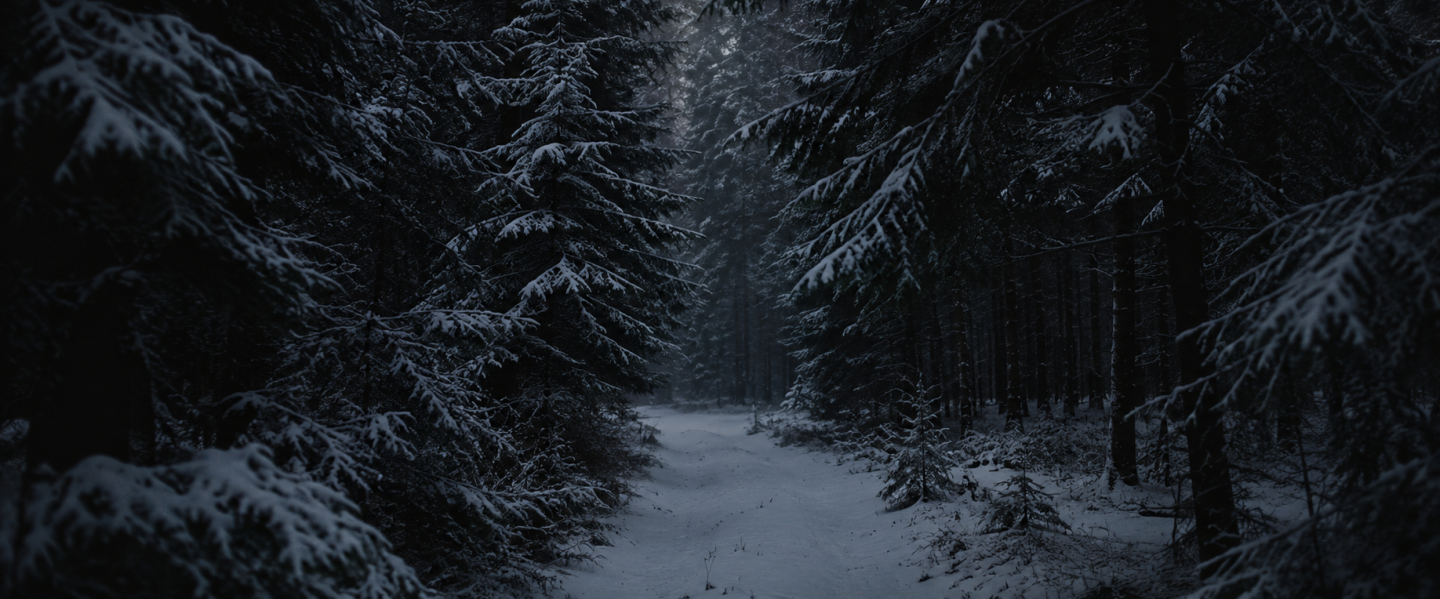


There are places we call home because they shelter us.
There are places we call home because they shaped us.
There are places we call home because part of who we became was born there, around a fire, under certain trees, beside certain people, during a season of life when the word belonging still felt simple.
But not every home remains home.
That is a hard sentence to write.
It is harder still when the place was once sacred.
Unplugged Pagan did not come to that sentence quickly. It did not come to it cleanly. It did not come to it without memory, grief, anger, gratitude, and the strange ache that comes when something that once held you no longer does.
But there comes a point where staying attached to a dead bond is no longer loyalty.
It is silence.
And Hávamál 127 has something to say about silence.
The Verse at the Door
Declaration 127 takes its name from stanza 127 of the Hávamál, commonly rendered in modern Heathen circles as:
“When you see misdeeds, speak out against them, and give your enemies no frið.”
Frith, or frið, is often understood as peace, safety, right relationship, and the bond that allows a community to exist without tearing itself apart.
That is why the line matters.
It does not say, “When you see misdeeds, keep quiet for the sake of peace.”
It does not say, “When you see misdeeds, preserve the appearance of harmony.”
It does not say, “When you see misdeeds, maintain the old relationship at all costs because it used to mean something.”
It says to speak.
It says to name the wrong.
It says not to give frith where frith has already been broken.
That is the piece I keep circling back to.
Because the deeper lesson of Hávamál 127 is not only about enemies outside the gate. It is also about what happens when the problem is already near the hearth.
Declaration 127 and False Peace
Declaration 127 was originally written as a response to folkism and racial exclusion in modern Heathenry, especially in opposition to the Ásatrú Folk Assembly and its claims about who Heathenry was for.
That history matters. Folkism tries to turn ancestry into ownership. It tries to turn roots into border fences. It tries to turn the gods, ancestors, runes, and stories into racial property.
Declaration 127 said no.
But if Declaration 127 is only treated as an anti-folkish sticker, then we miss part of its power.
At its core, Declaration 127 also rejects the idea that silence should be maintained in the name of frith when harm is being justified through sacred language, tradition, ancestry, or community reputation.
That is where it becomes useful beyond the narrow question of folkism.
Not because every broken community is folkish.
Not because every failed home is racist.
Not because every wound is the same wound.
But because the spiritual principle is larger than the original occasion:
False peace is not frith.
That is the line.
Peace that requires silence is not frith.
Belonging that requires self-erasure is not frith.
Hospitality that protects the powerful while ignoring the wounded is not frith.
Community that remembers your labour but forgets your humanity is not frith.
Home that only remains home if you stop telling the truth is not home.
When Home Was Real
To be clear, this is not a post about pretending the old home never mattered.
It did.
That is part of what makes leaving it difficult.
There are old Unplugged Pagan writings that carry that truth plainly. The Vé remembers sacred work at Raven’s Knoll, the creation of sacred space, the carrying of poles, the marking of place, the building of something that mattered. That memory was not fake. The bond was not imagined. The sense of sacred place was real.
That matters.
If a place never mattered, leaving it would mean very little.
If a community never held meaning, there would be no grief in releasing it.
If the fire never warmed us, there would be no ache when it became ash.
So no, this is not bitterness dressed up as theology.
This is not a denial of the past.
This is not an attempt to rewrite memory so that leaving becomes easier.
The old home mattered.
That is exactly why leaving it had to be done honestly.
Roots, Hoards, and What We Refuse to Cut
Unplugged Pagan has been wrestling with roots for a long time.
Roots are not always pretty. They are hidden. Tangled. Muddy. Difficult to display. But they are what feed the tree.
In earlier reflections, I wrote about the danger of cutting off roots while expecting the branches to remain healthy. A tree can look strong from the outside while damage is already happening beneath the surface.
That image still holds.
A community can have events, names, land, symbols, buildings, programs, schedules, banners, and public language. It can still look alive from the outside.
But appearance is not health.
The roots are older than the poster.
The roots are the first fires, the old labour, the forgotten volunteers, the awkward conversations, the hands that carried wood, the people who showed up before there was applause, the ones who helped build something and later found themselves standing outside of it.
When those roots are ignored, starved, severed, or treated as disposable, something important has already gone wrong.
And when gold and silver begin to matter more than kith and kin, the hearth has shifted.
That does not mean money does not matter. Money keeps roofs standing. It pays bills. It buys tools, fuel, food, insurance, repairs, and all the practical things that keep a place functioning.
But gold and silver are not kin.
They do not sit beside you when your spirit is tired.
They do not remember the first fire.
They do not carry the old stories.
They do not make a hall sacred.
They only make it affordable.
There is a difference.
The Moment the Header Came Down
When the old Unplugged Pagan header came down, that was not just a design choice.
It was a small funeral.
The old image was taken at Raven’s Knoll. For a long time, that mattered in a good way. It carried memory. It carried place. It carried old hopes, old gatherings, old people, and an older version of Unplugged Pagan that still believed itself rooted there.
But places change.
Or more honestly, our connection to them changes.
A grove can shelter us for a season and later become somewhere we no longer belong.
A fire can warm us once and later become ash.
A home can form us and still not hold us forever.
That does not make the warmth false.
It means time moved, people changed, and the bond reached its ending.
The header had to come down because Unplugged Pagan needed its own ground.
Not borrowed ground.
Not someone else’s grove.
Not a shrine to an old connection.
Its own ground.
That was not an act of hatred.
It was an act of boundary.
And sometimes boundary is the only honest ritual left.
Leaving Is Not Always Betrayal
People often treat leaving as betrayal.
Sometimes it is.
Sometimes people abandon what they should have tended. Sometimes people walk away because repair is harder than resentment. Sometimes leaving is cowardice with cleaner shoes.
But not always.
Sometimes leaving is what happens after every inner warning has already spoken.
Sometimes leaving is what happens when the bond has died but everyone keeps asking you to behave as though it lives.
Sometimes leaving is what happens when “home” becomes a word used to keep you quiet.
Sometimes leaving is the first truthful thing a person has done in years.
That is where Hávamál 127 matters.
It gives no blessing to false peace.
It does not tell us to remain politely attached to what has already broken frith.
It does not ask us to keep handing warmth to a place that no longer shelters us.
It says misdeeds should be named.
It says enemies should not be given frith.
And sometimes the enemy is not a person.
Sometimes the enemy is the lie that a dead bond is still alive.
Not Folkism, But the Same Warning
This needs to be said carefully.
This post is not claiming that the old home was folkish.
That is not the argument.
The argument is that Declaration 127 carries a principle that reaches beyond the original fight against folkism:
Sacred language must not be used to demand silence in the face of harm.
Folkism is one form of that harm. It uses ancestry, gods, and tradition to exclude people and claim ownership over the sacred.
But there are other ways sacred language can be misused.
“Community” can be used to silence people.
“Frith” can be used to avoid accountability.
“Home” can be used to shame people for leaving.
“Kith and kin” can be used as decoration while actual bonds are neglected.
“Hospitality” can be used to protect the host while ignoring the guest.
“The good of the place” can be used to excuse the cost to the people who helped make the place good.
That is why 127 still applies.
Not as an accusation of folkism.
As a warning against false frith.
The Hearth Test
The real test of a hearth is not how it looks when the festival is full.
The real test is what happens when someone is wounded.
Who notices?
Who checks in?
Who listens?
Who protects the relationship?
Who chooses repair over reputation?
Who remembers that people are not disposable once their labour is no longer needed?
Who carries wood when no one is watching?
Who remains when the ash has to be dealt with?
That is the hearth test.
Not the banner.
Not the website language.
Not the number of people gathered around the fire.
The hearth is revealed by the treatment of the living.
If the living must become silent to preserve the image of home, then home has already failed the hearth test.
Why Unplugged Pagan Left
So why did Unplugged Pagan choose to leave home?
Because memory is not obligation.
Because gratitude is not captivity.
Because a sacred place can matter deeply and still no longer be ours.
Because roots matter, but roots are not chains.
Because frith is not maintained by pretending the wound is not there.
Because Hávamál 127 does not permit silence in the face of misdeeds.
Because Declaration 127 reminds us that keeping peace with what harms others is not peace.
Because the path does not end when one grove is left behind.
Because the land is larger than one campfire.
Because the gods are not trapped on someone else’s property.
Because the fire can be carried.
Because Unplugged Pagan needed its own ground.
The Road Behind and the Road Ahead
There is grief in this.
There should be.
Leaving home without grief usually means it was never home to begin with.
But grief is not a command to return.
Grief is the price of having once loved something honestly.
The old home shaped this path. That can be honoured.
The old fire warmed this path. That can be remembered.
The old grove held meaning. That can be spoken without shame.
But none of that requires Unplugged Pagan to keep standing under a roof that no longer shelters it.
There is a line from the Hávamál, in spirit, that cattle die, kinsmen die, and we ourselves die. What remains is reputation, deeds, and the truth of how we carried ourselves.
Places can die to us too.
Connections can die.
Communities can die.
The stories we told ourselves about belonging can die.
And when they do, the Pagan path should not require us to pretend otherwise.
Ancestor work is not dragging a corpse around.
Memory is not a leash.
Gratitude is not a prison.
Sometimes the most honest Pagan act is to stand at the edge of the old place and say:
I remember.
I honour.
I release what is no longer mine to carry.
Closing Thought
Hávamál 127 does not only belong at protests.
Declaration 127 does not only belong on organization lists.
The lesson belongs at the actual hearth.
It belongs in the difficult moment when a person has to decide whether peace is still peace, or whether peace has become silence.
For Unplugged Pagan, the answer has become clear.
Home was real.
The memory mattered.
The work mattered.
The fire mattered.
But the bond reached its ending.
And when the bond is dead, pretending it still lives is not frith.
It is false peace.
So Unplugged Pagan leaves home in the spirit of Hávamál 127.
Not with hatred.
Not with denial.
Not by pretending the old place was never sacred.
But by refusing to let sacred memory become a chain.
The road remains.
The fire can be carried.
The roots can be honoured without living under the old tree.
And sometimes the only way to keep faith with the hearth is to walk away from the hall.
