Why Horses Deserve Better Than Convenience

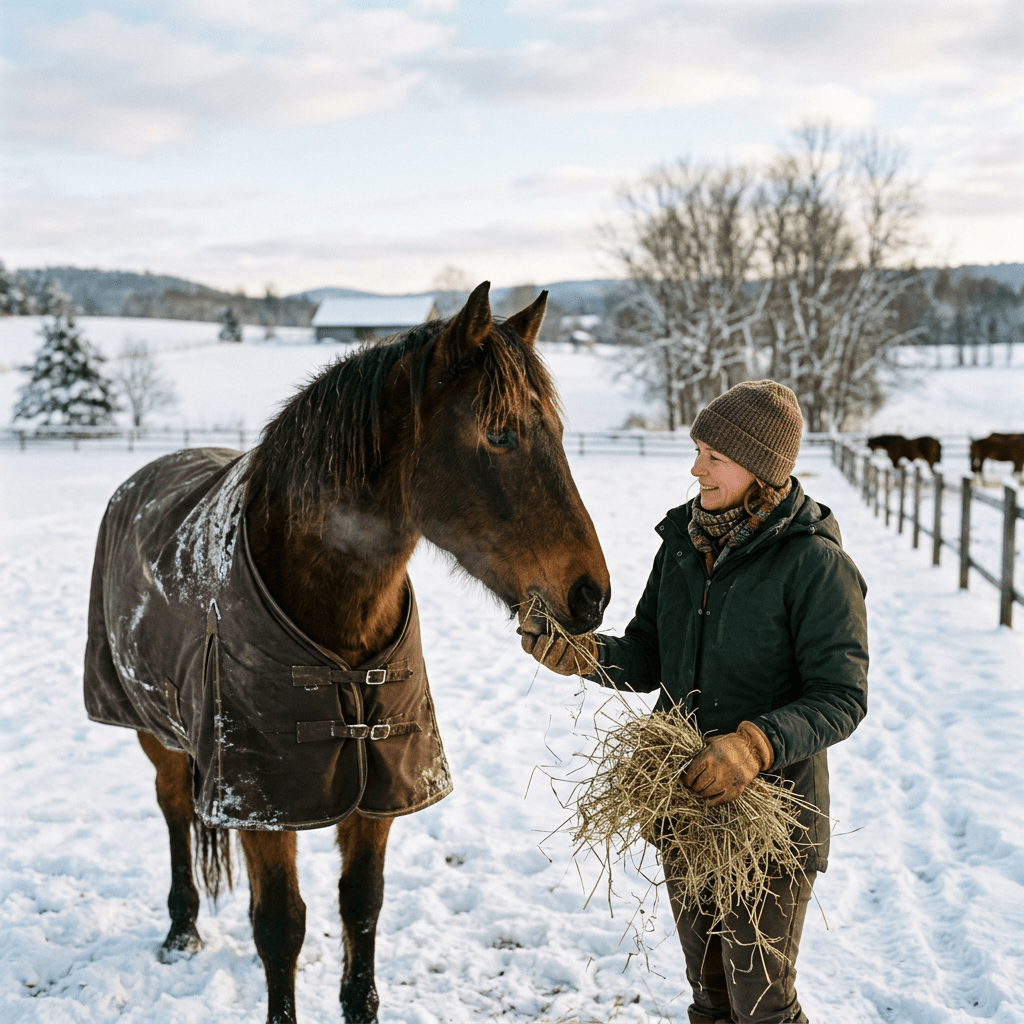
Person feeding hay to a brown horse wearing a blanket in a snowy field

There are some things I learned around horses that never really left me.

Back in my twenties, I looked after roughly twenty horses. Arabians, Quarter Horses, Arabian crosses, and the general barnyard mix of personalities, habits, problems, and stubbornness that come with animals that large and intelligent. I also owned my own horse, a half-Arab and French Canadian cross. I bought him when he was two months old and kept him until he was four.

I had dreams back then. I wanted to get into competition endurance riding. That was part of why Arabians appealed to me. Endurance riding is not just speed. It is condition, pacing, distance, judgment, and trust between horse and rider. It is knowing when to ask for more and knowing when the horse has given enough.

I was also accepted to the Oklahoma School of Farriers. That was another road that almost opened. Working on horses’ feet is not glamorous work, but it is some of the most important work there is. A horse stands or falls on its feet. The hoof is foundation, balance, pain, movement, and survival.

But I never made it there. I could not come up with the money. Eventually, I had to sell my horse too, and that one still sits somewhere in me. You do not raise a horse from two months old to four years old and then just shrug it off. You do what life forces you to do, but that does not mean it leaves cleanly.

So when someone asks me about horses, I do not answer from theory alone. I answer from the years when feed, water, hooves, fences, weather, and winter were not abstract ideas. They were chores. They were responsibility. They were the difference between care and neglect.

Round Bales and the Illusion of Care

When it comes to round bales, my honest answer is this: to me, round bales equal fat.

Not always. Not in every single case. There are people who manage them properly, and there are situations where they can make sense for a herd. But in my experience, far too often, round bales become the lazy way of looking after horses. Drop a big bale in the field and call it done.

That may be convenient for the human, but convenience is not the same thing as care.

Horses are not machines. They are not hay-processing units. They do not exist just to stand around a bale and burn through feed. They do not call horses hay burners for nothing, but that phrase should not become an excuse to stop paying attention.

With round bales, you lose control. You cannot properly monitor what each horse is eating. Is that horse actually eating enough? Is one horse being pushed off the bale by another? Is the older horse getting what it needs? Is the thin horse being bullied away? Is the easy keeper eating too much? Is the horse prone to founder getting fatter by the week?

Unless you are standing there watching closely, you do not really know. And with horses, not knowing is a problem.

Hay Quality Matters

Then there is the quality of the hay itself. With square bales, you can open a bale, smell it, shake it out, look at it, feel it, and decide whether it is worth feeding. You can catch dust. You can catch mold. You can catch bad sections. You can feed what is needed and throw away what is not.

With a round bale, especially once it has been sitting outside, you are dealing with a much bigger gamble. Mold matters. Dust matters. Hay quality matters. Moisture matters. Waste matters.

And with round bales, waste can be ridiculous. Horses will pull it apart, stomp it into the mud, manure on it, urinate on it, lie down in it, sleep in it, and then people still act as if the horse is eating clean feed.

Is it eating the hay, or is it lying in the hay? Is it eating the hay, or is it breathing in the hay?

That last question matters more than some people seem to realize.

Breathing Is Not Optional

If you have a horse prone to heaves or respiratory problems, round bales can make a bad situation worse. A horse standing with its nose buried in a big bale, breathing dust, mold, and particles day after day, is not a small concern. That is how you aggravate problems. That is how you take a horse that already struggles and make breathing harder than it needs to be.

And breathing is not optional.

That is where I get blunt. If the feeding system is making it harder for the horse to breathe, the system is wrong. I do not care how convenient it is. I do not care how much time it saves. I do not care how many people say, “That is how we have always done it.”

Care is not proven by what is easiest for the caretaker. Care is proven by what is best for the animal.

Hay Alone Is Not a Feeding Program

Feed is more than just throwing hay at a problem. When I was feeding horses, hay was part of the program, not the whole program. I used to feed an 18% dairy ration with molasses — dairy ration without urea, of course. I am not presenting that as a universal recommendation for every horse today. Feed programs should match the animal, the work, the age, the condition, and the advice of people who know what they are doing.

But the point remains: feeding was something I paid attention to. It was not just a bale tossed into a field and forgotten.

Horses need to be watched. Their weight needs to be watched. Their breathing needs to be watched. Their feet need to be watched. Their water needs to be watched. Their shelter needs to be watched.

Where Is the Shelter?

That is where this question gets bigger than hay. Because if someone is feeding round bales, chances are those horses are spending a lot of time outside. So then the next question becomes: where is the shelter?

Where do they get out of the wind? Where do they get dry? Where do they get relief from an Ontario winter?

Ontario winters are not gentle. When the temperature drops down around minus thirty-two Celsius, and it does happen, that is not just “a little cold.” That is dangerous cold. A young healthy horse with good weight, good shelter, good feed, and good management can handle a lot. But older horses, thin horses, sick horses, neglected horses, and horses with respiratory issues do not always make it through those winters.

Cold finds weakness. Wind finds weakness. Poor feed finds weakness. Neglect finds weakness. And animals pay the price for human shortcuts.

If you do not have a stable, think about getting one. If you do not have stalls, think hard about why. If you do not have a place to get that horse out of the wind, you need to fix that.

A shelter is not a luxury. A dry place is not a luxury. A place out of the wind is not a luxury. Not in this country. Not in this climate.

Hardship Does Not Erase Responsibility

People do what they do. I know that. I also know there are always circumstances. Money is real. Time is real. Land is real. Weather is real. Nobody who has actually cared for animals should pretend it is easy.

But hardship does not erase responsibility.

That is one of the hard teachings horses gave me. They do not care what you meant to do. They live with what you actually did.

You can love a horse and still fail it. You can have good intentions and still feed bad hay. You can call yourself a horse person and still miss the fact that the horse is coughing, dropping weight, standing alone, getting pushed off feed, or freezing in the wind.

That is why I do not romanticize lazy care. There is nothing spiritual about neglect. There is nothing old-world or rustic about letting an animal suffer because “that is how it has always been done.”

The Pagan Lesson Under the Barn Work

For me, this is where horsekeeping crosses into the same ground as paganism, hearth work, and land work. Real care is physical. It is not just words. It is not just identity. It is not just saying you honour animals, land, winter, ancestors, gods, spirits, or the old ways.

Honour is what you do when the weather turns bad. Honour is what you do when nobody is watching. Honour is clean hay, checked water, sound feet, shelter from the wind, and the humility to admit that convenience can become cruelty if you stop paying attention.

That is the part people do not always want to hear.

Round bales are not automatically evil. I am not saying that. A good dry round bale, properly stored, properly fed, used with the right horses, under the right management, can have its place.

But too often, round bales become a symbol of something else: drop it, forget it, assume they are fine.

That is not horsemanship. That is convenience dressed up as care. And horses deserve better than that.

They deserve to be seen. Not as decorations in a field. Not as hay burners. Not as something that can survive anything because they are big and tough. They deserve to be watched closely enough that you know when something is wrong.

What the Horses Left Behind

That is what I remember from those years. The smell of hay. The sound of chewing. The feel of winter air in the barn. The weight of water buckets. The importance of feet. The quiet trust of a horse that decides you are safe enough to stand beside.

I never became an endurance rider. I never became a farrier. I did not get to keep my horse forever. But the horses still taught me.

They taught me that care is not a theory. Care is not convenience. Care is not dropping a bale in a field and walking away.

Care is attention. Care is discipline. Care is doing the work even when it is cold, expensive, inconvenient, muddy, and hard.

And maybe that is the old lesson under all of it: anything living under your care becomes part of your oath, whether you speak that oath out loud or not.

A horse does not need your excuses. It needs clean feed. It needs water. It needs shelter. It needs room to breathe. It needs you to pay attention.

And if the way you are feeding makes it harder to see the animal clearly, then maybe the problem is not the horse. Maybe the problem is the method.
The Fire Before the Ledge

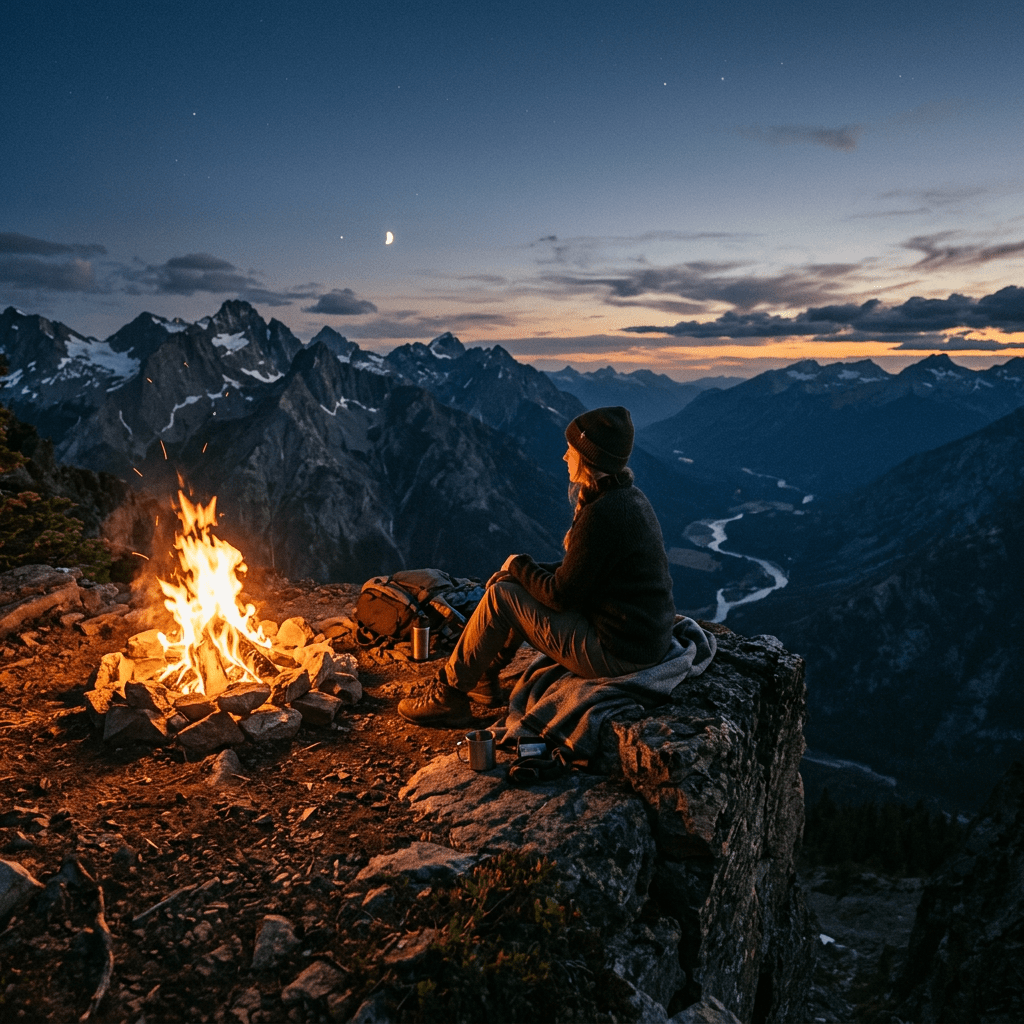
Person sitting by campfire on mountain cliff with snow-capped peaks and river valley at twilight

Before the ledge,
there was a fire.

Not a great fire,
not one that called crowds from distant roads,
but a small and stubborn flame
kept alive through long nights
by a man who had learned
that silence could be sacred
and loneliness could wear the face of prayer.

He called that place
Unplugged Pagan.

There he wrote beneath the fir trees
of Brigid’s flame
and Skadi’s winter breath,
of old gods, old wounds,
and the restless creature running
between root and branch
carrying rumours from one world to another.

He wrote of kith and kin,
of gifts that carried obligation,
of honour that should survive
even when friendship did not.

He wrote because the modern world
had grown too loud.

He wrote because sacred things
were being polished for display
while their roots were left to rot.

He wrote because somewhere inside him
was an old and wordless knowing:

that a place could call itself home
and still forget how to shelter people.

That a community could speak of kinship
while quietly weighing loyalty
against convenience.

That a gift could be accepted,
a hand could be welcomed,
a name could be remembered—

until remembrance became costly.

The fire taught him to watch.

To notice when language changed.

When stewardship became ownership.

When gathering became management.

When sacred land became an asset.

When the people who had carried stones,
lifted tents, tended flames,
and returned year after year
were slowly recast as customers.

He saw it first in the forest.

The roots still held.

The needles still covered the earth.

The old paths still remembered feet.

But something had shifted.

The trees were still standing,
yet the forest had begun
to forget itself.

So he wrote:

Do not cut away the fallen things.
Do not mistake what looks useless
for what keeps the ground alive.

Do not forget the roots.

But the world rarely listens
to warnings spoken softly.

Then came the ledge.

It did not appear all at once.

It formed beneath him
through years of labour,
through early mornings and late nights,
through promises made by people
who trusted his hands
more than they valued the man attached to them.

He built for others.

He solved.

He carried.

He returned.

He gave the strength of his body,
the attention of his mind,
and the better part of his faith
to structures he believed
would hold.

Then the ropes were cut.

No raven warned him.

No god stepped from the snow.

No ancestral voice said:

This is the morning
your life will divide itself
into before and after.

There was only the closing of a door,
the thin language of business,
and the terrible discovery
that loyalty is often praised most loudly
by those who do not intend to return it.

He did not fall cleanly.

He remained suspended
between rage and disbelief,
between the instinct to fight
and the exhaustion of having fought too long.

The fire from Unplugged Pagan
was still burning behind him.

Now it lit the ledge.

Its old questions followed him there:

What is honour
when honour is not returned?

What is a gift
after the giver betrays the bond?

What is kinship
when gold and silver
are placed upon the scale?

What is sacred
when those entrusted with it
choose control over care?

From those questions
he built another place.

He called it
Standing on the Ledge.

But it was not separate from the fire.

The ledge was where the fire had led him.

The pagan writing had taught him
to see betrayal as more than injury.

It was a breach of bond.

A tearing of frith.

A failure of stewardship.

A choice to take what had been freely given
and deny the meaning of the gift.

So he brought the old language
into the wreckage of the modern world.

He wrote of impact
as though naming the wound
might stop the bleeding.

He wrote of triage
because even a soul must be stabilized
before it can be rebuilt.

He wrote of systems
because chaos becomes less frightening
when given shape.

He wrote of gaining territory
because survival is not merely
standing still in the ruins.

It is claiming ground
from the forces that reduced you.

Yet behind every phase,
behind every framework,
behind each disciplined lesson,
there remained the firekeeper.

The same man who had once asked
what remained sacred
now asked what remained salvageable.

The same man who had written
about the health of forests
now studied the collapse of organizations.

The same man who warned
against cutting off roots
now searched through the roots of his own life
for something strong enough
to hold him.

Unplugged Pagan
gave Standing on the Ledge its soul.

Standing on the Ledge
gave Unplugged Pagan a wound
it could not romanticize.

The two became one voice.

One spoke in ritual,
the other in recovery.

One spoke of gods,
the other of systems.

One spoke of land,
the other of labour.

One asked what was sacred.

The other asked
what happens when sacred trust
is treated as expendable.

And together they spoke
of the same tragedy:

that people will accept your fire
without accepting responsibility
for keeping you warm.

They will gather under the roof
you helped raise
and later tell you
that you misunderstood your place.

They will call you family
when labour is needed.

They will call you difficult
when memory becomes inconvenient.

They will praise loyalty
until loyalty demands reciprocity.

They will speak of community
until community interferes
with ownership.

And still he wrote.

Some nights as a pagan.

Some nights as a survivor.

Most nights as both.

He wrote with Brigid’s flame
beside legal papers.

He wrote of frith
while sorting evidence.

He wrote of gods and ancestors
while calculating lost hours.

He wrote of forests
while charting organizational failure.

He wrote of betrayal
in two languages—

one ancient,
one administrative.

Neither language
made the loss less real.

He had chosen kith and kin
over gold and silver.

And found that those words
were easiest to honour
when no sacrifice was required.

He had believed gifts formed bonds.

He had believed labour formed belonging.

He had believed sacred language
placed limits upon conduct.

He had believed a home
was more than property.

He had believed a promise
was heavier than profit.

The tragedy was not merely
that he had been wrong.

It was that for a time
he had been right.

There had been warmth.

There had been laughter.

There had been a sense of place.

There had been hands around the fire
and voices calling one another kin.

That was what made the ending cruel.

A lie is easier to survive
when it was always a lie.

But what do you do
when something true
slowly chooses to become false?

What ritual returns a home
to the people it forgot?

What framework repairs
a community that remembers your work
but not your worth?

What phase comes after betrayal
when the betrayer still uses
the language of welcome?

He found no answer.

So he kept writing.

He wrote because silence
would leave the story
in the hands of those
who benefited from forgetting.

He wrote because memory
is sometimes the only grave
the truth is given.

He wrote because another person
would one day stand
where he had stood—

between the forest and the cliff,
between prayer and collapse,
between what had been promised
and what had actually been done.

And that person might need
more than comfort.

They might need a map.

A fire.

A warning.

A witness.

So he stood on the ledge
with Unplugged Pagan burning inside him.

Not behind him.

Not separate.

Inside him.

The flame and the fall
had become inseparable.

The old gods watched
without explanation.

The trees held their silence.

The hall beyond the forest
glowed with other people’s celebration.

The world continued
as though nothing sacred
had been broken.

But the firekeeper knew.

He knew what had been given.

He knew what had been taken.

He knew the difference
between a request for consideration
and a demand for obedience.

He knew the difference
between stewardship and possession.

He knew the difference
between community
and the performance of community.

And when dawn finally came,
it did not rescue him.

It only revealed
how much of the landscape
had been built upon forgetting.

Still, he remained.

One hand against the stone.

One hand over the flame.

A pagan on the ledge.

A survivor in the grove.

A man preserving the embers
of everything others had decided
was no longer profitable to remember.

And into the cold morning
he spoke—not loudly,
but clearly enough
for the roots to hear:

The fire came first.

The ledge came after.

And everything I built upon the ledge
was lit by what the fire taught me.

I kept both alive.

You forgot what either one was for.

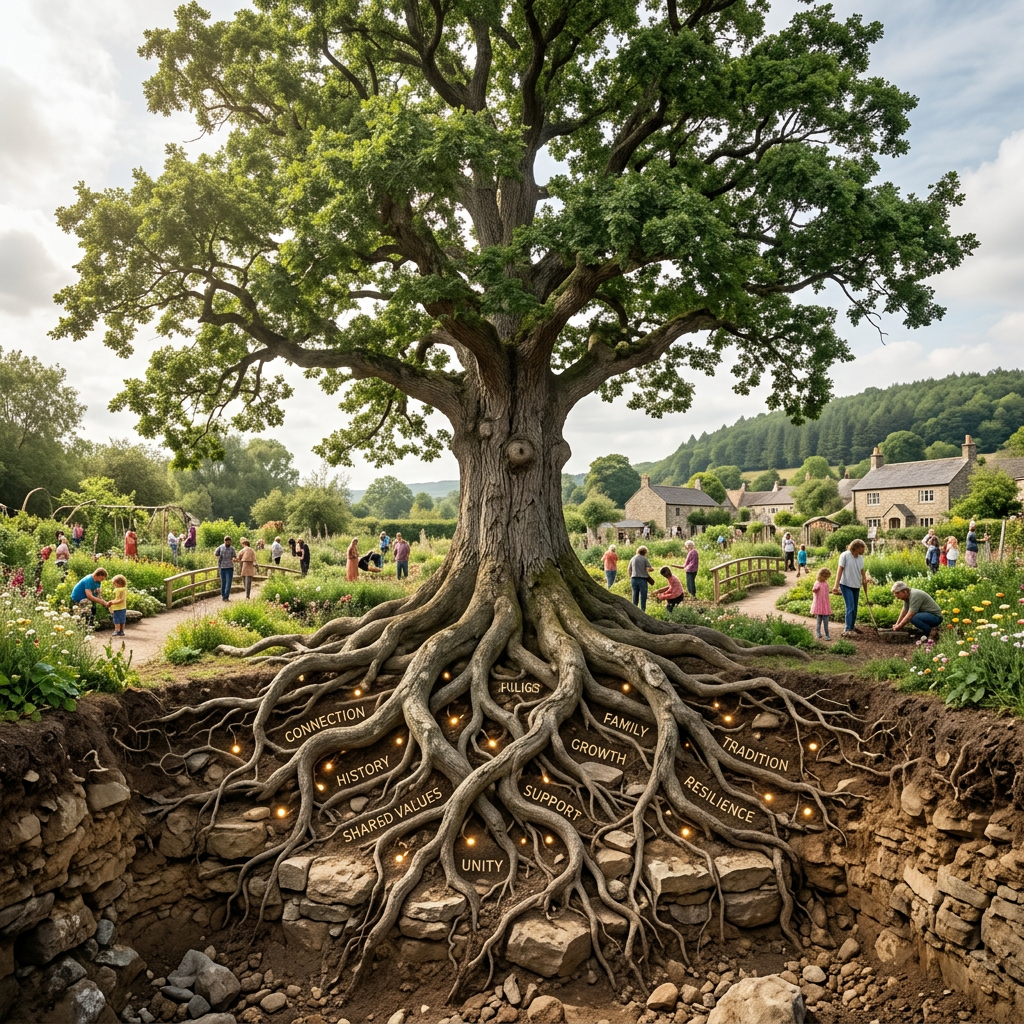
Don’t Cut Off the Roots

Large tree with roots labeled connection, history, shared values, unity, support, family, growth, resilience, tradition

Don’t Cut Off the Roots

Well, my dear Unplugged Pagans, this one may get a little metaphorical, so walk with me for a moment.

A tree is only as strong as the root system that supports it.

That sounds simple enough, but there is a lot of truth buried in that image. A tree can have a strong trunk. It can have healthy branches. It can stand tall, green, and impressive for everyone passing by to see. But if the roots are damaged, starved, ignored, or cut away, that tree is already in trouble.

It may not fall immediately.

It may not look sick right away.

It may still stand there for a season, maybe even several seasons, pretending by appearance that all is well.

But without its roots, it will weaken.

Without its roots, it will wither.

Without its roots, it will eventually die.

And lately, as I look around at life, community, memory, faith, and the places people build together, I find myself thinking about roots.

Some places seem to forget theirs.

Some places drift from the very people, stories, labour, rituals, memories, and quiet acts of care that made them what they were in the first place. Some places keep the name, the sign, the surface, the public face, and the outward shape, but slowly begin cutting away the roots beneath them.

And when that happens, something changes.

You may still have the trunk.

You may still have the branches.

You may still have the appearance of health.

But the life beneath it has been weakened.

This is not just true of trees. It is true of people. It is true of families. It is true of communities. It is true of spiritual places. It is true of pagan circles, old friendships, shared rituals, and the quiet ecosystems of belonging we often do not notice until they are gone.

Psychology tells us that human beings have a deep need to belong. We are not made only of individual willpower. We are also shaped by attachment, memory, recognition, and relationship. We come to know part of who we are through the people and groups we have stood beside. Sociology says something similar when it speaks of collective memory: communities remember through shared stories, shared places, shared practices, and shared meaning.

In plain language, roots matter.

Roots are not nostalgia.

Roots are not weakness.

Roots are not dead weight.

Roots are the living system that holds the tree in place.

I remember a time when someone decided that the pine needles on a forest floor were a problem. They saw the layer of fallen needles and thought it looked messy. They thought it needed to be cleaned up. Removed. Tidied. Made proper.

But the forest did not see those pine needles as garbage.

The forest knew better.

That layer of needles served a purpose. It held moisture. It slowed the drying of the soil. It sheltered small life. It fed the ground as it broke down. It helped support the fungal life beneath the surface. And that fungal life was part of the larger health of the forest.

Remove enough of that living layer, and the system changes.

The soil dries faster.

The balance shifts.

The small hidden relationships that kept things steady begin to weaken.

And then people stand back surprised when the trees start to suffer.

But the trees were not suffering because of one dramatic act. They were suffering because the quiet supports had been stripped away.

That is the lesson.

Sometimes what looks messy is actually protective.

Sometimes what looks old is actually foundational.

Sometimes what looks unnecessary is doing work you do not understand.

Sometimes the fallen needles are holding the forest together.

And so it is with our roots.

Our roots may be old stories. They may be elders. They may be former volunteers. They may be first fires, first rituals, first songs, first gatherings, first mistakes, first lessons. They may be the people who carried wood, washed dishes, watched gates, cleaned up after everyone went home, tended sacred spaces, held memory, welcomed strangers, and kept something alive before it had polish, structure, or public recognition.

Those people matter.

Those memories matter.

Those early acts of care matter.

And when a place forgets that, it risks becoming all canopy and no soil.

Pretty from a distance.

Weak underneath.

Now, to be clear, roots do not mean we never grow. Roots do not mean we stay frozen in the past. A healthy tree still reaches upward. A healthy forest still changes. Branches break. New shoots rise. Old trees fall and feed the next generation. Change is not the enemy.

But growth without roots is not growth.

It is drift.

It is performance.

It is a tree pretending it can live without soil.

For us as pagans, this should matter deeply.

We speak often of the land. We speak of ancestors. We speak of spirits, seasons, memory, offerings, fire, water, soil, and sacred place. But those words ask something of us. They ask us to pay attention to what holds life together beneath the surface.

They ask us not to confuse neatness with health.

They ask us not to confuse control with care.

They ask us not to confuse cutting away with cleansing.

Sometimes the sacred thing is not the polished altar.

Sometimes the sacred thing is the old layer of pine needles underfoot.

Sometimes the sacred thing is the story someone still remembers.

Sometimes the sacred thing is the person who has been quietly holding part of the root system while everyone else looked up at the branches.

So do not forget your roots.

Do not cut them off just because they are no longer convenient.

Do not dismiss them because they are old, complicated, imperfect, or covered in the debris of time.

Roots are rarely pretty.

Roots are tangled.

Roots are buried.

Roots are hard to show off.

But roots are what keep the tree standing when the weather turns.

And the weather always turns.

A forest is only as strong as its ecosystem. A person is only as steady as the truths they remain connected to. A community is only as healthy as the relationships, memories, and acts of care it refuses to forget.

So tend the roots.

Honour the soil.

Respect the old needles on the forest floor.

Remember what fed you.

Remember who helped build the path before you walked it.

And when you grow, grow upward from something real.

That is it. That is all for now, my Unplugged Pagans.

Godspeed.

Notes Beneath the Roots

This reflection draws on a few grounded ideas: the human need for belonging, social identity, collective memory, and the ecological role of forest-floor material, fungi, soil, and roots. In plain language, both people and forests depend on hidden systems of support.

The Hermit’s Cabin

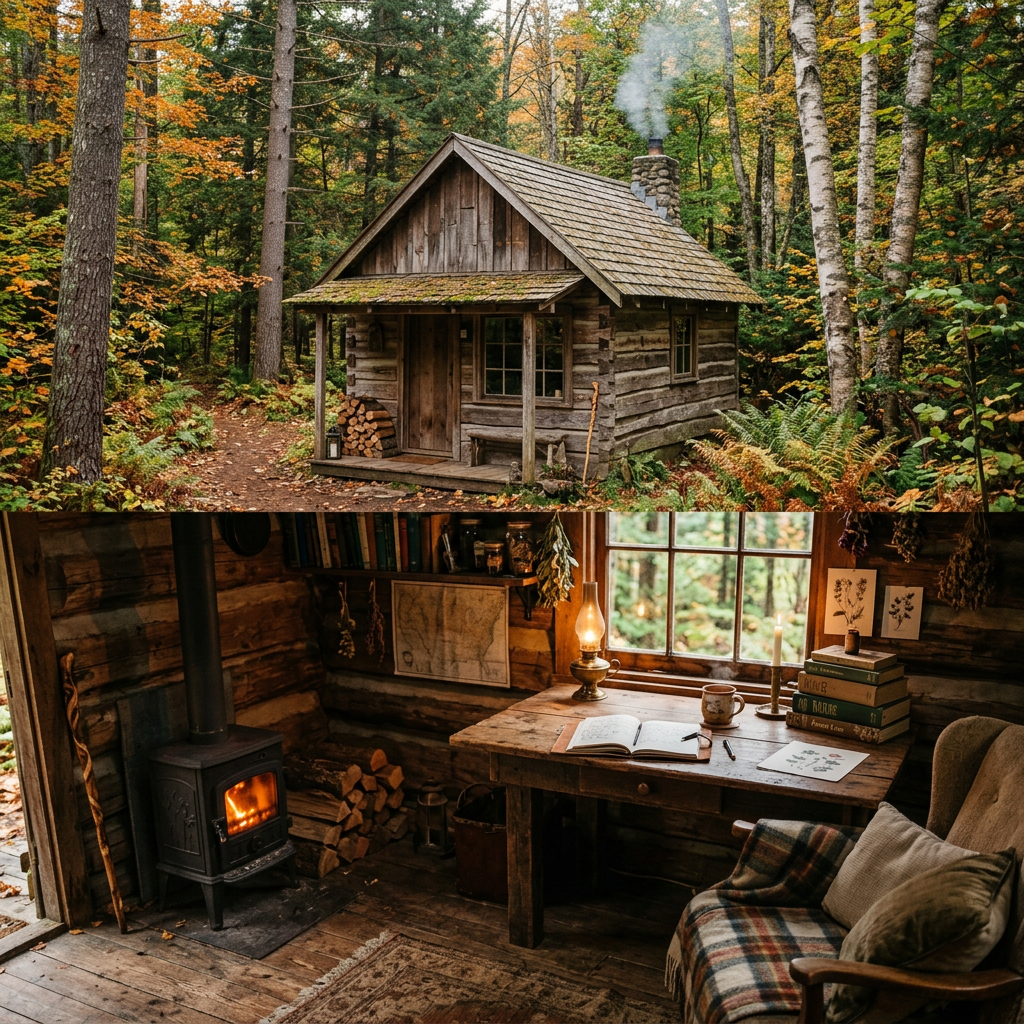
Small wooden cabin in forest with wood stove and cozy interior

Years ago, I wrote a short reflection about the perfect space for reading and writing.

At the time, it was mostly an image.

A cabin.

A quiet room.

Books close at hand.

A place to sit, read, think, write, and be left alone long enough for the mind to settle.

I said then that I might come back to it someday and add more.

Well, here we are.

And I think I understand the need better now.

Because the older I get, the less that cabin feels like fantasy.

It feels like a spiritual requirement.

Not Escape. Refuge.

There is a difference between running away and seeking refuge.

Running away is avoidance.

Refuge is recovery.

Running away says, “I do not want to face the world.”

Refuge says, “I need a place where the world cannot keep eating me alive.”

That is what the hermit’s cabin represents to me now.

Not some romantic disappearance from responsibility.

Not a dramatic exit from society.

Not a fantasy where bills, work, grief, family, health, memory, and obligation magically vanish at the tree line.

No.

The cabin is the place where a person can hear themselves again.

And in a noisy world, that is no small thing.

The Shape of the Room

I can see it clearly.

Not large.

It does not need to be large.

A small cabin tucked somewhere quiet. Trees close enough to feel like company, but not so close that the sky disappears. A little porch. A place for boots by the door. Maybe a woodpile stacked neatly along one side, because even dreams should come with chores.

Inside, there is a stove.

Not just for heat, though heat matters.

A stove changes the entire spirit of a room.

It gives the room a center.

It gives the cold somewhere to go.

It reminds you that comfort is not automatic. It is tended. It is fed. It is earned one split log at a time.

There would be a chair near the stove.

A real chair.

Not some decorative thing that looks good in a picture but punishes your back after twenty minutes.

A chair meant for long reading, long thinking, and the strange half-silence that comes when you stare into flame and realize your mind has finally stopped sprinting.

There would be a desk by a window.

That matters.

A desk should face something alive.

Trees. Field. Snow. Rain. Birds. Wind moving through branches. The ordinary world doing ancient things without needing applause.

That kind of view reminds a writer to stop being clever and start being honest.

Books as Companions

There would be books, of course.

Not endless shelves for performance.

Not a wall of books meant to impress visitors who were never invited in the first place.

Useful books.

Old favourites.

Myth and folklore.

Poetry.

History.

Psychology.

Sociology.

Pagan practice.

Field guides.

A few heavy books that demand a pencil in hand.

A few worn books that ask nothing from me except return.

Books are not just information.

They are company.

They are elders, tricksters, witnesses, argument partners, mirrors, maps, and occasionally good solid bricks for the rebuilding of a life.

In the hermit’s cabin, books would not be decoration.

They would be part of the hearth.

The Altar and the Workbench

There would be an altar, but not an overly polished one.

I have never been drawn to spiritual spaces that look too staged.

Give me something lived in.

A candle.

A bowl.

A stone picked up on a hard day.

A feather found by chance.

A small image or symbol for Brigid.

Something cold and clean for Skadi.

A branch, nut, or small token for Ratatoskr.

A piece of fir, or a cone, or even just the scent of evergreen in the room.

There would be incense sometimes.

There would be cards on the table.

There would be silence.

But the altar would not sit apart from the practical work of the room.

That matters to me.

The sacred does not need to be quarantined.

The altar and the workbench belong in conversation.

The candle and the notebook.

The prayer and the plan.

The old story and the next paragraph.

The ritual and the grocery list.

That is real life.

That is where practice lives.

A Room of One’s Own

Virginia Woolf wrote about the need for a room of one’s own, and I understand that more with every passing year.

A person needs space.

Not just square footage.

Not just storage.

Not just somewhere to sleep before work starts again.

Space.

Actual interior permission.

A door that closes.

A table that does not have to be cleared for someone else’s emergency.

A silence that is not immediately filled by demand.

A place where the mind can unfold without being interrupted halfway through the sentence.

For some people, that room is a studio.

For some, it is a garage.

For some, a garden shed, a basement corner, a spare bedroom, a library table, a parked car, a trail, a church pew, or a kitchen before sunrise.

For me, the image has always been the cabin.

The hermit’s cabin.

The place at the edge of things.

Close enough to the world to return.

Far enough away to remember who is returning.

The Hermit Is Not Empty

People sometimes misunderstand the Hermit.

They see isolation and think loneliness.

They see withdrawal and think failure.

They see solitude and think something has gone wrong.

But the Hermit is not empty.

The Hermit carries a lantern.

That part matters.

Solitude, at its best, is not the absence of life.

It is the tending of light.

The cabin is not where I would go to become less human.

It is where I would go to become more honest.

To read without rushing.

To write without performing.

To pray without explaining.

To sit with the gods, the ancestors, the old stories, the hard lessons, and the quiet stubborn flame that has somehow stayed alive through all of it.

Off-Grid, But Not Unrooted

There is also something appealing about the off-grid part of the dream.

Not because technology is evil.

I am not that naïve.

I use technology constantly. I write with it. I learn with it. I communicate through it. I build with it.

But there is a difference between using a tool and being swallowed by a system.

The cabin dream has less to do with rejecting the modern world and more to do with remembering that life does not have to be plugged into noise at every moment.

Wood heat.

Water carried or carefully stored.

Lantern light.

Simple food.

Books.

Paper.

Weather.

A rhythm that does not depend on a screen telling me what to care about next.

That is not poverty of life.

That is richness of attention.

The Sacred Need for Quiet

I think quiet has become one of the most underrated spiritual needs.

Not silence as punishment.

Not silence as abandonment.

Not the cold silence of being ignored.

I mean chosen quiet.

Restorative quiet.

The kind of quiet where thoughts stop shouting and start lining up.

The kind of quiet where grief can speak without being rushed.

The kind of quiet where a card reading has room to breathe.

The kind of quiet where a sentence arrives whole.

The kind of quiet where the gods do not need to compete with notifications.

That is the quiet I imagine in the hermit’s cabin.

Not dead silence.

Living quiet.

Stove ticking.

Wind outside.

Birds in the morning.

Rain on the roof.

Pen on paper.

Breath returning to its proper depth.

The Cabin I Can Build Now

Of course, I do not currently live in that perfect cabin.

Most of us do not live inside the image our soul keeps handing us.

But that does not make the image useless.

A vision can still teach.

The question is not only, “Can I build the cabin tomorrow?”

The question is, “What part of the cabin can I build now?”

A better reading chair.

A cleaner desk.

A candle before writing.

A shelf that holds the books I actually return to.

A morning ritual that does not begin with the phone.

A small altar that feels lived in, not staged.

A few minutes of fire, even if the fire is only a candle.

A little less noise.

A little more room.

A little more honesty.

Maybe that is how the hermit’s cabin begins.

Not with land, lumber, and a perfect life.

But with one protected corner.

One honest chair.

One flame.

One book.

One page.

The Place I Keep Returning To

So yes, I still think about that perfect space for reading and writing.

But I understand it differently now.

It is not just about comfort.

It is about attention.

It is about spiritual maintenance.

It is about the kind of solitude that does not make a person disappear, but helps them return with something worth carrying.

The hermit’s cabin is the place in my mind where the page, the hearth, the altar, and the self all meet without apology.

It is where Brigid gets her flame.

Where Skadi can stand outside in the cold without being feared.

Where Ratatoskr can chatter in the branches without taking over the whole room.

Where the Fir remains green at the edge of the clearing.

And where I sit, finally quiet enough to read, write, listen, and remember that a life does not have to be loud to be sacred.

Godspeed.